Welcome to 2026. If the last few years were about “promising” technology, this year is about delivery.
We are just one month into the new year, and the Indian technology landscape is already buzzing with massive updates. From the first Made-in-India semiconductor chips getting ready for the market to ISRO’s most ambitious human spaceflight missions, 2026 is set to be a historic year for the country.
Here is a detailed breakdown of the top technology trends and updates you need to know right now.
1. The “Make in India” Chip Revolution Begins
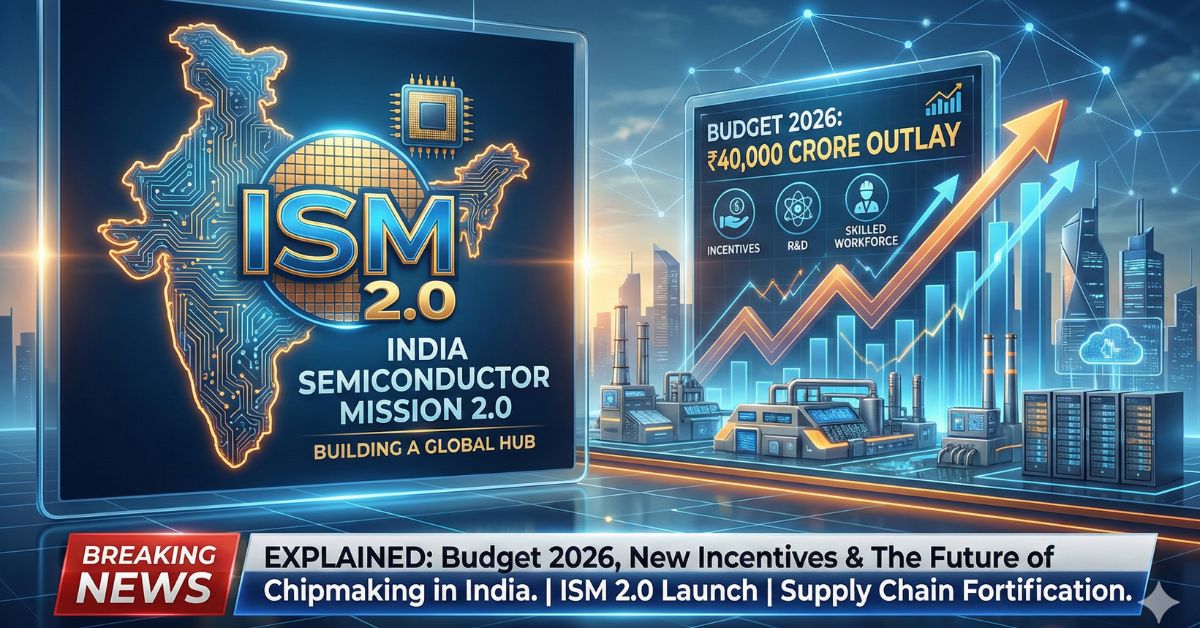
The biggest tech story of January 2026 is India finally entering the global semiconductor (chip) race. After years of planning under the India Semiconductor Mission (ISM), we are seeing real results.
- Commercial Production Starts: According to Union Minister Ashwini Vaishnaw, four major semiconductor plants are set to begin commercial production this year. This includes the massive Tata Electronics facility.
- Why it matters: Until now, India imported almost all its chips for phones, cars, and laptops. By making them locally, gadgets could eventually become cheaper, and India becomes less dependent on other countries like China.
- What’s Next? The government is preparing ISM 2.0. A draft is ready, and the Cabinet is expected to approve it by March 2026. This second phase will focus on expanding the ecosystem to include more complex chip designs.
2. ISRO’s Busy Calendar: Gaganyaan and Moon Missions
The Indian Space Research Organisation (ISRO) has a packed schedule before March 2026. The focus is entirely on sending Indians to space and bringing samples back from the Moon.
- Gaganyaan Mission: 2026 is the deciding year for India’s human spaceflight capability. ISRO is conducting final uncrewed tests (G1 missions) to ensure the safety of the crew module. If successful, we are one step closer to sending the first Indian astronaut (“Gaganaut”) to orbit.
- Chandrayaan-4: Following the success of Chandrayaan-3, the new mission aims to not just land on the Moon, but to collect soil samples and return them to Earth. This is a technology only a few nations possess.
- Seven Major Missions: ISRO has planned seven launches before March 2026, including commercial satellites that help earn revenue for the country.
3. The Rise of “Agentic AI” (Beyond Chatbots)
In 2024 and 2025, we used AI chatbots like ChatGPT and Gemini to write emails or answer questions. In 2026, the trend has shifted to Agentic AI.
- What is it? “Agents” are AI software that can do things for you, not just talk. Instead of asking an AI to “write a travel plan,” an AI Agent can book the flight, reserve the hotel, and add the dates to your calendar automatically.
- India’s Role: Reports show India has the highest adoption rate of Generative AI in the world (over 70%). Indian startups are now building specific AI agents for healthcare (booking appointments) and banking (fraud detection).
- Trust and Value: Companies are no longer experimenting. The focus for 2026 is “Trust.” With new regulations likely coming under the Digital India Act, AI models must be safe and accurate.
4. Smartphones: Galaxy S26 and the Budget iPhone
For gadget lovers, January and February 2026 are exciting months. The smartphone market is seeing a shift towards “On-Device AI” (where AI works without the internet) and better battery tech.
- Samsung Galaxy S26 Series: Expected to launch in February 2026, leaks suggest the S26 Ultra will feature a 200MP camera upgrade and a new processor designed specifically for heavy AI tasks.
- Budget iPhone (iPhone 17e?): Rumors are strong about Apple launching a more affordable iPhone model (possibly the iPhone 17e) in early 2026 to capture the mid-range market in India.
- Chinese Brands: Brands like OnePlus, Realme, and Xiaomi are launching phones with massive batteries (5500mAh+) and super-fast charging as the new standard for 2026.
5. 6G Readiness and Digital Infrastructure
While most of us are just getting used to 5G, the government and telecom companies are already laying the groundwork for 6G.
- Bharat 6G Alliance: India aims to be a lead developer of 6G technology, not just a consumer. Trials and patent filings for 6G speeds (which are 100 times faster than 5G) are a key agenda for 2026.
- Cloud 3.0: As AI grows, we need more data centers. “Sovereign Cloud” is a big trend where Indian data stays within Indian borders. Companies are building massive green data centers to support this demand without hurting the environment.
Key Takeaways for Readers
- Job Seekers: The semiconductor and AI sectors are hiring aggressively. Skills in chip design and “context engineering” (teaching AI) are in high demand.
- Consumers: Expect smarter phones, but prices might remain high for premium models.
- Students: Space tech and robotics are the new golden fields for education.
Read More : Jio AI Education Initiative
Frequently Asked Questions (FAQ)
Q1: When will India start making its own chips?
A: Commercial production from the first few plants, including Tata Electronics, is expected to start in 2026. This means “Made in India” chips will soon be in the market.
Q2: Is 6G launching in India in 2026?
A: No, 6G will not launch for consumers in 2026. The focus this year is on research, testing, and securing patents. Commercial launch is expected around 2029-2030.
Q3: What is the difference between AI and Agentic AI?
A: Normal AI (like a chatbot) gives you information. Agentic AI takes action for you, like booking tickets or filling out forms, without you needing to click every button.
Q4: Will mobile recharge prices go up in 2026?
A: Analysts predict that telecom companies might increase tariffs slightly to recover their investments in 5G and 6G research, but official announcements are yet to come.
Q5: What is the big ISRO mission for 2026?
A: The most anticipated mission is the final testing for Gaganyaan (sending humans to space) and Chandrayaan-4 (bringing moon soil back to Earth)