Cars on Indian roads are changing fast. More people want clean, efficient, and cost-effective vehicles. Two major types are leading this shift: fully electric vehicles (EVs) and hybrid cars. Both promise less pollution than petrol or diesel cars, but they work very differently and appeal to different needs. This article breaks down what each technology means, why the debate matters in India, and what drivers should know before choosing.
What Are Electric Vehicles?
Electric vehicles (EVs) run entirely on electricity stored in large battery packs. These batteries power an electric motor to move the car, giving EVs smooth and quiet rides with no tailpipe emissions. To refill energy, EVs need to be plugged into a charger at home or public charging stations. Government and industry initiatives in India are expanding these networks, making EVs easier to use in cities and on highways.
What Are Hybrid Cars?
Hybrid cars combine two systems: an internal combustion engine (usually petrol) and an electric motor. The engine and electric motor work together to reduce fuel use and emissions. The battery in a hybrid gets charged mainly through regenerative braking and the engine itself, so drivers don’t need to plug in the car. There are different hybrid types, including mild hybrids, full hybrids, and plug-in hybrids (PHEVs). PHEVs can be charged like EVs but still use petrol once the electric range ends.
Key Differences in Technology
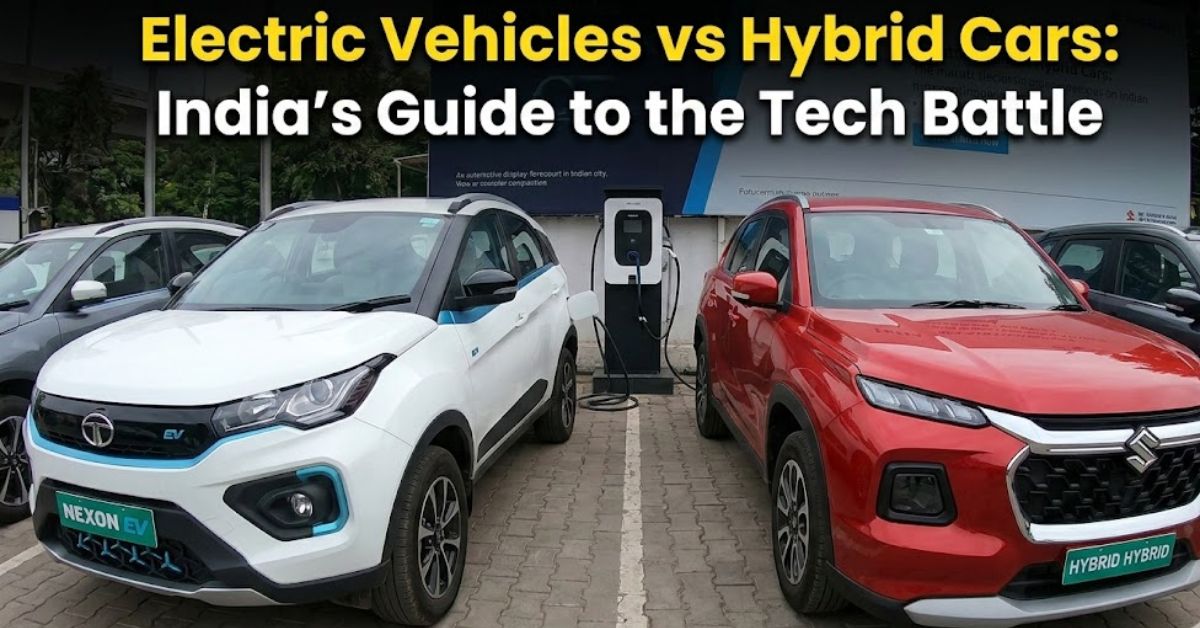
The most important distinction is how the cars draw power. EVs rely solely on batteries and electric motors, meaning zero emissions while driving. Hybrids use both an engine and electric motor, which improves fuel efficiency but still burns fossil fuel.
Because EVs use big batteries, they need a network of charging points. India is strengthening this infrastructure in many cities, but rural areas still have limitations. Hybrids do not need charging stations, making them easier to use nationwide for long trips without range concerns.
Cost and Running Expenses
EVs tend to cost more upfront than hybrids, mainly due to battery costs. However, electricity is often cheaper than petrol or diesel, and EVs have fewer moving parts, meaning lower maintenance over time. Hybrids usually cost less to buy but maintain both an engine and electric system, which can lead to higher service costs.
Tax policies also influence prices in India. EVs are currently taxed at lower rates than hybrids, making them more affordable in some cases. Governments at central and state levels offer incentives for electric vehicles but not for hybrids, pushing EV adoption faster.
Which Is Better for the Environment?
Pure EVs produce no tailpipe emissions, helping improve air quality in cities. But the overall environmental impact depends on how electricity is generated. Hybrids still burn fuel, so they release some emissions, though significantly less than traditional petrol cars. Both options offer better environmental performance than internal combustion vehicles.
Why the Debate Matters in India
India aims to reduce pollution and meet its climate commitments, making cleaner transport essential. EV adoption is supported by federal and state policies that encourage charging infrastructure and lower taxes for electric vehicles. However, charging networks are still limited in many parts of the country, which makes hybrids a useful alternative for buyers concerned about range and convenience.
Sales data show growing interest in hybrids alongside EVs, as models from major manufacturers become more available. Rising fuel prices and traffic congestion also make hybrid technology attractive for many Indian drivers.
What Happens Next?
Manufacturers and policymakers are pushing both technologies forward. Major Indian automakers are investing heavily in EV portfolios, and new models are launching every year. At the same time, hybrid cars remain an important bridge technology until charging infrastructure improves further.
Read More : Tesla vs Traditional Automakers
Consumers will likely see more affordable EV options and expanded charging networks, making electric cars a practical choice for more people. Hybrids may continue to appeal to drivers seeking longer range without depending on charging stations.
FAQs (Simple Answers)
1. What is the main difference between an EV and a hybrid?
An EV runs only on electricity, while a hybrid uses both an engine and an electric motor.
2. Are EVs cheaper to run than hybrids in India?
EVs usually have lower running and maintenance costs, but they can cost more initially. State incentives and charging access can change the total cost.
3. Do hybrids need charging stations?
No. Most hybrids recharge their batteries through braking and the engine. Plug-in hybrids can be charged like EVs.