When you look for a first car in India, the checklist is usually simple: it needs to be affordable, easy to drive, and cheap to maintain. But in the last few years, one more box has been added to that list—Safety.
Enter the TATA Tiago. Often jokingly referred to as “Lord Tiago” by Indian auto enthusiasts due to its robust build quality in a segment dominated by “tin-can” cars, the Tiago has changed the game. Whether you are a college student, a small family, or a retired couple looking for a city runabout, this hatchback promises a lot.
But is it perfect? Does the 3-cylinder engine vibrate too much? Is the service actually cheap? As we step into 2026, let’s break down everything you need to know about the TATA Tiago (Petrol, iCNG, and EV) in this detailed, no-nonsense review.
1. Design and First Impressions: Ideally “Indian”
The Tiago doesn’t look like a budget car. Unlike the boxy WagonR or the dated Alto, the Tiago has a European flair to it.
Exterior
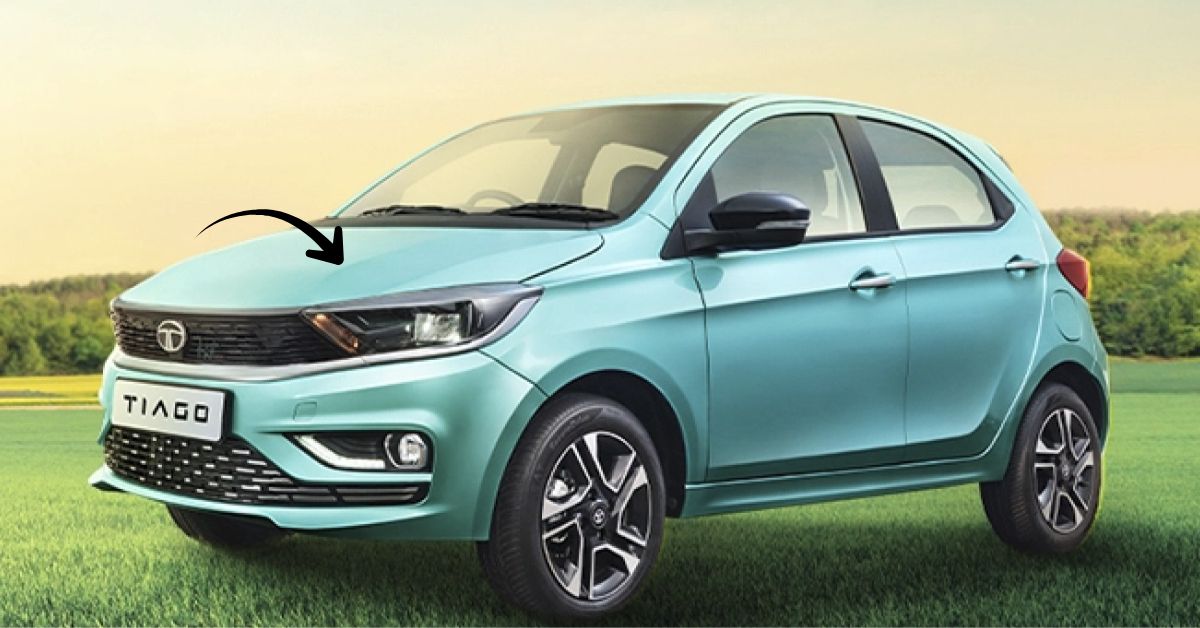
The “Humanity Line” grille (a signature Tata element) connects the sharp headlamps, giving it a smiling face. The bonnet is raised—partly for pedestrian safety norms and partly giving it a butch stance.
- Wheels: You get 15-inch alloy wheels in the top variants (XZ+), which look sporty. The lower variants get steel wheels which are durable for bad roads.
- Build: The moment you open the door, you feel the “heaviness.” It doesn’t feel flimsy. This is the heavy steel sheet metal that earns it those safety stars.
Interior and Comfort
Step inside, and the cabin feels surprisingly premium for the price.
- Dashboard: It has a dual-tone theme. The plastics are hard (expected at this price), but the texture looks good.
- Seats: The front seats cushion you well. I’ve seen people 6-feet tall fit comfortably in the driver’s seat. However, the rear seat is best for two adults and a child. Three adults will be a tight squeeze.
- Tech: The Harman infotainment system (7-inch) is the star here. The audio quality is arguably the best in the segment—punchy bass and clear vocals. It supports Android Auto and Apple CarPlay (wired).
2. Engine and Performance: The Real-World Drive
TATA offers the Tiago in three “flavors.” Let’s see which one suits you.
A) The Petrol Engine (1.2L Revotron)
- Specs: 86 PS Power | 113 Nm Torque.
- The Drive: In the city, it’s peppy. The low-end torque is good, meaning you don’t have to change gears constantly in traffic. On the highway, it can cruise comfortably at 80–100 km/h.
- The Flaw: It is a 3-cylinder engine. When you start the car, you will feel a slight vibration on the gear lever and steering. It’s not a dealbreaker, but it’s not as silent as a Hyundai engine.
B) The iCNG (Twin Cylinder Technology)
This is where TATA played a masterstroke.
- The Problem with old CNG cars: The huge cylinder in the back ate up the entire boot space. You had to put luggage on the roof.
- The Tiago Solution: They split the cylinder into two smaller ones and placed them under the boot floor.
- Result: You get a usable boot. You can actually fit two cabin bags or a week’s worth of groceries even with CNG.
- Performance: You can start the car directly in CNG mode (a segment-first). The power drop is minimal; you won’t feel breathless overtaking city buses.
C) The Tiago EV (Electric)
- Battery Options: 19.2 kWh (Medium Range) & 24 kWh (Long Range).
- Range: The Long Range claims ~315 km. In real-world driving with AC on, expect 190–210 km.
- The Drive: It is whisper quiet. The “Sport Mode” is genuinely fun and can leave petrol cars behind at a traffic signal. It is the perfect second car for city errands.
3. Ride Quality and Handling
If you live in a city with potholes (which is most of us), you will love the Tiago.
- Suspension: It is tuned slightly on the stiffer side but absorbs bumps beautifully. You don’t get that “tossing around” feeling that you get in tall-boy hatchbacks.
- Steering: The steering is light at low speeds (great for parking) and weighs up as you go faster (great for highway confidence).
- Cornering: Thanks to the Corner Stability Control, the car feels planted even if you take a turn slightly fast.
4. Safety: The 4-Star Shield
This is the Tiago’s biggest selling point.
While competitors in this price range often score 0 to 2 stars in crash tests, the TATA Tiago scored a solid 4 Stars in Global NCAP.
Standard Safety Features:
- Dual Airbags (Driver + Co-driver)
- ABS with EBD (prevents wheel lock-up during sudden braking)
- Rear Parking Sensors
- Corner Stability Control
Real-Life Example:
I recall a user story from a Tiago owners’ group where a driver was rear-ended by a sedan at a traffic light. The sedan’s bumper was crushed, but the Tiago only had a minor dent on the rear tailgate. That is the build quality difference.
5. Pros and Cons: The Honest Truth
No car is perfect. Here is what you need to know before signing the cheque.
| Pros (Why you buy it) | Cons (What to watch out for) |
| Safety: 4-Star Global NCAP rating. | Engine Noise: The 3-cylinder engine is noisy at high RPMs. |
| Audio: 8-Speaker Harman system is superb. | AMT Jerks: The Automatic (AMT) version can be jerky during gear shifts. |
| Ride Quality: Absorbs potholes very well. | AC Cooling: The AC takes a bit longer to cool the cabin in peak summer compared to rivals. |
| CNG Boot: Usable boot space in CNG variant. | Fit & Finish: Panel gaps can be inconsistent in some units. |
6. Maintenance and Ownership Costs
Is the Tiago heavy on the pocket? Surprisingly, no.
- Service Interval: Every 6 months or 7,500 km (Checkup) and Oil change every 1 year or 15,000 km.
- Average Cost: A paid service typically costs between ₹4,000 to ₹6,000 for Petrol variants.
- Spare Parts: Parts are widely available and reasonably priced.
Maintenance Tips for Long Life:
- Warm Up: Since it’s a 3-cylinder engine, let the car idle for 30 seconds in the morning before driving. This reduces engine wear.
- CNG Owners: Get the CNG leak check done during every service. Replace spark plugs strictly as per the manual for smooth pickup.
- AMT Owners: While waiting at a red light, shift to ‘N’ (Neutral). Keeping it in ‘D’ with the brake pressed heats up the transmission.
7. Who Should Buy This Car? (User Scenarios)
- The College Student: Buy the Tiago Petrol Manual. It looks cool, sounds good, and is safe for new drivers.
- The Daily Commuter: Buy the Tiago iCNG. The running cost is less than ₹3-4 per km, and you still have boot space for your laptop bag and gym kit.
- The Techie/Eco-Conscious: Buy the Tiago EV. If you can charge at home, the running cost is virtually free (under ₹1 per km), and it’s super smooth to drive.
Read More : Maruti’s First EV is Here
8. Conclusion: The Final Verdict
The TATA Tiago is not just a car; it is a statement that “Safety is not a luxury.”
If you prioritize a silent cabin and resale value above all else, you might look at the Maruti Swift or Hyundai Grand i10 Nios. But, if you want a car that feels solid, keeps your family safe, drives well on bad roads, and offers a fantastic music system, the Tiago is unbeatable.
My Advice: If your budget allows, go for the XT or XZ+ variants. The base variants miss out on too many essential features. For city dwellers, the Tiago iCNG is currently the most practical “value-for-money” car in India.
Drive Safe, Wear Your Seatbelt!
9. Frequently Asked Questions (FAQ)
Q1: Is the Tiago underpowered for highway driving?
Ans: Not really. The 86 PS power is adequate for Indian highways. You can cruise at 100 km/h easily. However, quick overtaking at high speeds might require shifting down a gear.
Q2: What is the real-world mileage of the Tiago Petrol?
Ans: In bumper-to-bumper city traffic, expect 12–14 km/l. On highways, with steady driving, you can easily get 18–20 km/l.
Q3: Is the AMT automatic gearbox good?
Ans: It is a “budget” automatic. It gets the job done and relieves your left leg in traffic, but you will feel a “head nod” (slight pause) when it shifts gears. It is not as smooth as a CVT or Torque Converter.
Q4: Does the Tiago have a rusting problem?
Ans: Early models (2017-18) had some complaints about rust near the fuel lid. However, TATA has significantly improved the paint and galvanization quality in the newer 2024-2026 BS6 Phase 2 models.
Q5: Can the Tiago EV charge at a normal plug point?
Ans: Yes! You can plug it into any standard 15A socket (the one used for ACs or Fridges) at your home. It takes roughly 8-9 hours for a full charge.