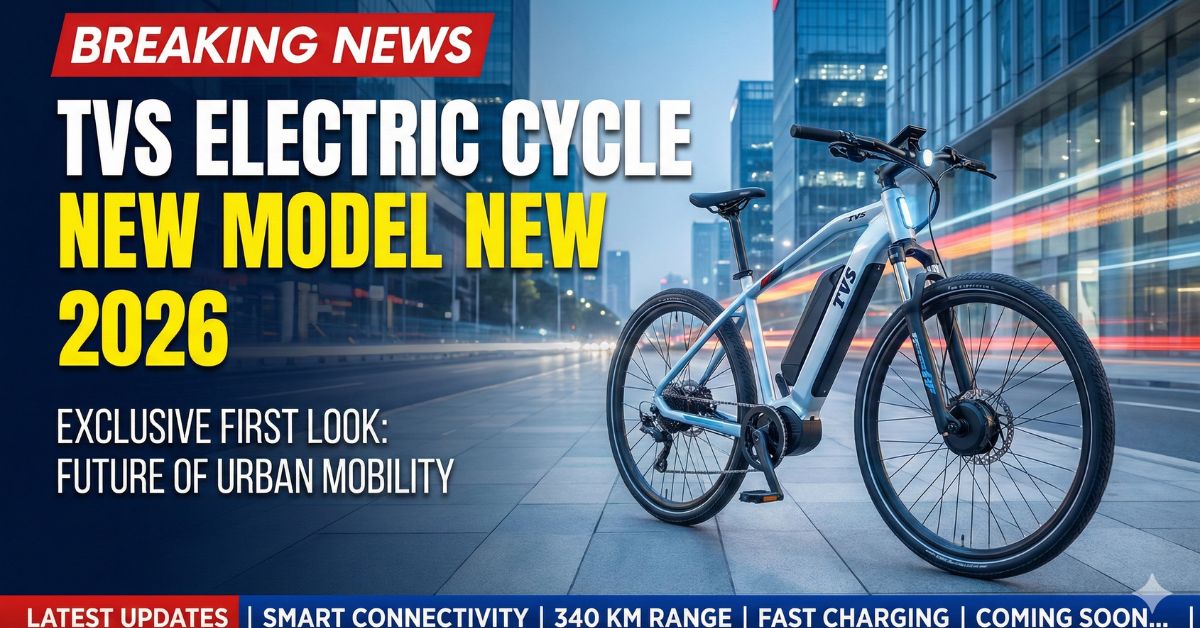
Imagine zipping through stuck traffic in Bangalore or Delhi without sweating, burning zero petrol, and tracking your calories on your phone—all while riding a stylish cycle from a brand you’ve trusted for decades.
This isn’t a sci-fi movie. This is the reality of the TVS Electric Cycle, a highly anticipated move by TVS Motor Company into the world of electric pedal-assist bicycles (E-bikes). As we step into 2026, the buzz around TVS entering the micro-mobility segment is louder than ever.
In this guide, we explore what makes the TVS Electric Cycle a game-changer, its smart technology, and why it might be the perfect ride for you this year.
Why Is Everyone Talking About Electric Cycles?
The Indian automobile market is shifting. With petrol prices touching the sky and city traffic becoming a nightmare, young Indians and office-goers are looking for alternatives.
- The Problem: Scooters get stuck in traffic and require license/registration. Regular cycles are tiring for long distances (10+ km).
- The Trend (2026): “Micro-mobility.” This is where the Electric Cycle (E-cycle) comes in. It gives you the speed of a slow scooter with the freedom of a bicycle.
TVS, known for the popular iQube electric scooter, is now leveraging its partnership with the Swiss e-bike brand EGO Movement to bring world-class electric cycles to Indian roads.
Automobile Meets Technology: How It Works
A TVS Electric Cycle isn’t just a bicycle with a battery strapped to it. It is a smart integration of automobile engineering and modern software.
Features & Smart Technology (2026 Expectations)
Based on TVS’s recent tech updates and global trends, here is what the upcoming TVS Electric Cycle is expected to pack:
- Smart App Connectivity:Just like the iQube, the cycle will likely connect to the TVS Connect App. You can view battery health, ride stats, and even calorie burn counts directly on your phone.
- Detachable Battery Pack:No need to find a parking spot with a plug point. Remove the battery, take it upstairs, and charge it in 3–4 hours.
- Multi-Mode Riding:
- Pedal Mode: Ride it like a normal cycle (burn calories).
- Assist Mode: The motor helps you (easy commuting).
- Throttle Mode: Twist and go without pedaling (for when you are tired).
- Safety First:Expect dual disc brakes and built-in LED headlamps for night riding safety, a standard in TVS’s premium design philosophy.
Real-Life Benefits for Indian Users
Why should a student in Pune or a professional in Chennai buy this?
Old vs. New: How It Beats Traditional Rides
| Feature | Regular Bicycle | Petrol Scooter | TVS Electric Cycle |
| Effort | High (Sweaty) | Zero | Low (Adjustable) |
| Speed | 10–15 km/h | 40–60 km/h | 25 km/h (Govt Limit) |
| Fuel Cost | ₹0 | High (Petrol) | Minimal (Electricity) |
| License | No | Yes | No |
| Range | Human limit | 200 km+ | 40–60 km (Avg) |
Price, Mileage & Performance
- Expected Price: ₹35,000 – ₹60,000
- Note: TVS will likely position this as a premium product (competing with Hero Lectro and EMotorad), offering better build quality than cheap imported kits.
- Mileage (Range): 40 km to 70 km per charge (depending on how much you pedal).
- Top Speed: Capped at 25 km/h (auto-cutoff as per Indian ARAI rules).
Pros & Cons
Pros:
- Eco-friendly and silent.
- Removable battery adds convenience for apartment dwellers.
- TVS service network reliability (a major advantage over unknown Chinese brands).
- Great styling inspired by European designs.
Cons:
- Initial cost is higher than a regular cycle (₹5k vs ₹40k).
- Not suitable for long highway travel (speed limited to 25 km/h).
- Theft risk (requires good locking systems).
Who Should Buy This?
- College Students: For going to campus without asking parents for petrol money.
- Office Commuters (5–10 km): Who want to save time in traffic.
- Fitness Enthusiasts: Who want to cycle longer distances without exhaustion.
- Senior Citizens: The pedal assist makes cycling easy on the knees.
Future Scope of EV Technology in India
By late 2026, the “Made in India” electric cycle market is predicted to boom. TVS is not just launching a product; they are building an ecosystem. We can expect fast-charging cycles, GPS anti-theft tracking, and even subscription models where you pay for the battery separately to reduce upfront costs.
As cities become more congested, the two-wheeler giant’s move into pedal-assist tech proves that the future of transport isn’t just about faster cars—it’s about smarter, smaller rides.
Conclusion
The TVS Electric Cycle represents a shift in how India moves. It bridges the gap between the humble bicycle and the motorized scooter. If you are looking for a daily ride that saves money, keeps you fit, and looks futuristic, this upcoming launch in 2026 is worth waiting for. It’s not just a cycle; it’s your personal freedom gadget.
FAQs
1. Do I need a license to ride the TVS Electric Cycle?
No. In India, electric cycles with a motor power of less than 250W and a top speed of 25 km/h do not require a driving license or registration.
2. What is the expected price of the TVS Electric Cycle?
While official prices are yet to be announced, industry estimates suggest a range between ₹35,000 and ₹55,000 depending on the battery size and smart features.
3. Can I ride it if the battery dies?
Yes! That is the best part. Unlike a scooter, if the battery runs out, you can simply pedal it like a normal bicycle to reach your destination.
4. How long does it take to charge?
A standard Lithium-Ion battery on such cycles usually takes 3 to 4 hours to charge from 0 to 100% using a regular home socket.
5. Is it safe for Indian roads?
Yes. TVS is expected to build these cycles with robust frames, good suspension, and disc brakes specifically designed to handle Indian road conditions (potholes and speed bumps).