Gone are the days when buying a car in India was only about “Kitna deti hai?” (How much mileage does it give?). In 2026, the new question on every Indian buyer’s mind is, “Is it connected?”
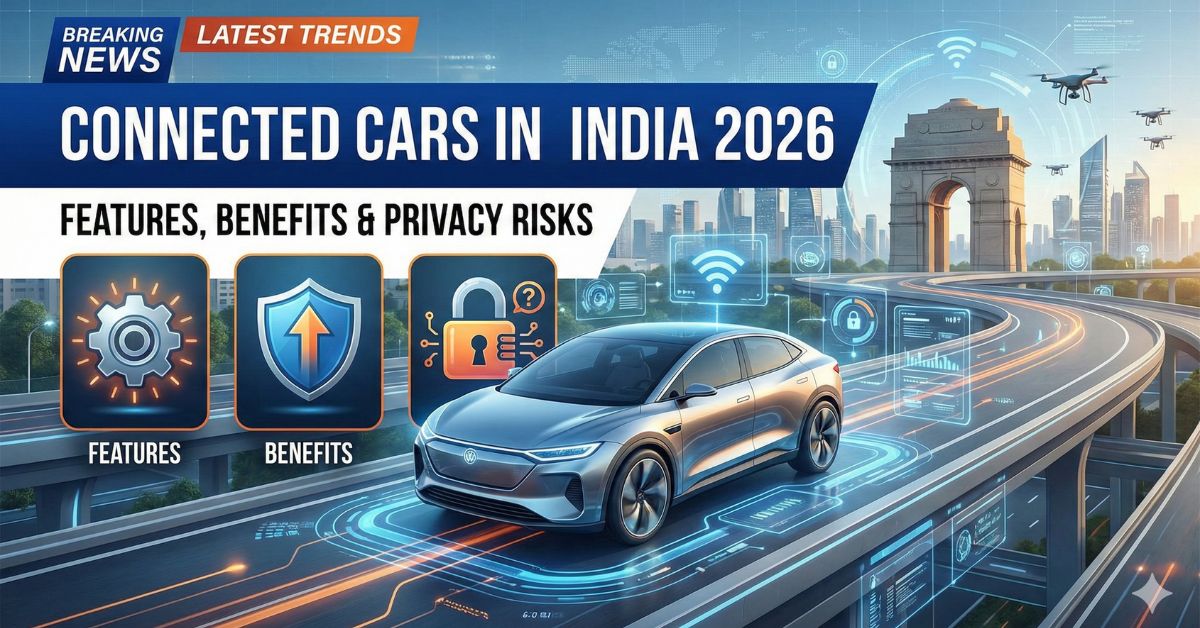
The Indian automobile sector is witnessing a massive shift. Cars are no longer just mechanical boxes for transportation; they have evolved into intelligent, data-driven gadgets—essentially smartphones on wheels. From unlocking your car with a mobile app to tracking it live while sitting in your office, Connected Car Technology has moved from a luxury feature to a mass-market necessity.
Here is a detailed look at this booming trend, how it works, and why it matters for Indian drivers today.
What Is Connected Car Technology?
In simple terms, a connected car is a vehicle equipped with internet access, usually through an embedded SIM card (e-SIM) or a wireless local area network. This allows the car to share data with other devices both inside and outside the vehicle.
It is part of the Internet of Things (IoT) ecosystem. Just like your smart TV or smartwatch communicates with your phone, your car now communicates with the manufacturer, your smartphone, and increasingly, with other vehicles and road infrastructure.
The 2026 Boom: Why It Is Trending Now
According to recent industry reports from early 2026, the adoption of connected cars in India is growing at a record pace. While this technology was once limited to high-end German luxury cars, it is now a standard feature in popular mass-market models from Maruti Suzuki, Tata Motors, Hyundai, and Mahindra.
1. The 5G Effect
With the wide rollout of 5G across Indian cities, connected cars have become faster and more responsive. The lag (latency) between your command and the car’s action has vanished. This allows for real-time traffic updates, instant emergency alerts, and smoother Over-The-Air (OTA) software updates that fix bugs without you needing to visit a service center.
2. Localization of Tech
Global tech giants and Indian automakers are now collaborating to create features specifically for Indian conditions. For instance, voice assistants in cars now understand Indian accents and even mixed languages (Hinglish). You can now tell your car, “Accha gaana play karo” or “Call Mom,” and it understands perfectly.
Key Features Drivers Actually Use
While the brochures list dozens of technical terms, Indian drivers are finding practical value in three main areas:
- Security & Anti-Theft: This is the biggest selling point. If a thief tries to break in, the owner gets an instant alert on their phone. If the car is stolen, it can be tracked live via GPS, and in some advanced models, the engine can be immobilized (switched off) remotely by the police or the owner.
- Remote Control: Given India’s extreme summer heat, the ability to switch on the car AC remotely 10 minutes before entering the vehicle is a favorite feature.
- Vehicle Health Monitoring: The car app tells you if your tyre pressure is low or if the engine needs service, saving you from a breakdown in the middle of a busy highway.
Why It Matters: The “Data” Revolution
This technology is not just about convenience; it is changing the economics of car ownership.
Insurance is changing. Insurance companies are starting to offer “Pay-How-You-Drive” policies. If the connected car data shows that you are a safe driver who doesn’t speed or brake harshly, you could get a lower insurance premium.
Safety is improving. The new wave of Vehicle-to-Everything (V2X) technology allows cars to “talk” to each other. For example, if a car ahead of you applies sudden brakes on a foggy Delhi morning, your car can receive a warning signal before you even see the danger, potentially preventing a pile-up.
The Challenges: Privacy and Cybersecurity
With great connectivity comes great risk. As cars become more like computers, they become vulnerable to hacking. Cybersecurity experts have raised concerns that if a hacker gains access to a car’s software, they could control critical functions like steering or braking.
Furthermore, Data Privacy is a hot topic. Connected cars collect massive amounts of personal data—where you go, how fast you drive, and even your music preferences. Under India’s Digital Personal Data Protection (DPDP) regulations, carmakers are now under strict pressure to ensure this data is stored securely within India and not misused.
What Happens Next?
The government and industry bodies are pushing for safer standards. At the recent SIAT 2026 (Symposium on International Automotive Technology) in Pune, leaders emphasized that future mobility in India will be defined by software, not just hardware.
Read More : Car Won’t Start When Turning Key?
We can expect the government to introduce stricter cybersecurity ratings for cars, similar to the crash test safety ratings (Bharat NCAP).
FAQ: Connected Car Tech in India
Q1: Do I need to pay monthly for connected car features?
A: Usually, yes. Most manufacturers offer the first 1 to 3 years as a free trial. After that, you typically have to pay a subscription fee (like a data recharge) to keep using the smart features.
Q2: Can I install connected tech in my old car
A: You cannot get the full built-in experience, but you can buy “OBD dongles” (aftermarket devices) that plug into your car’s dashboard port. These connect to your phone and provide basic tracking and health data.
Q3: Does this technology work in rural areas?
A: It depends on mobile network coverage. Since these cars use SIM cards (like Jio, Airtel, VI), features like live tracking and remote commands might face issues in areas with poor network signals.
Q4: Is it safe to connect my phone to rental or public cars?
A: You should be careful. If you connect your phone to a smart car via Bluetooth, it often syncs your contacts and call logs. Always remember to delete your phone’s profile from the car’s system before returning a rental vehicle.
Q5: Which affordable cars in India have this tech?
A: Many popular models now offer this, including the Tata Nexon (iRA), Hyundai Venue (Bluelink), Maruti Suzuki Baleno (Suzuki Connect), and Kia Sonet (Kia Connect).