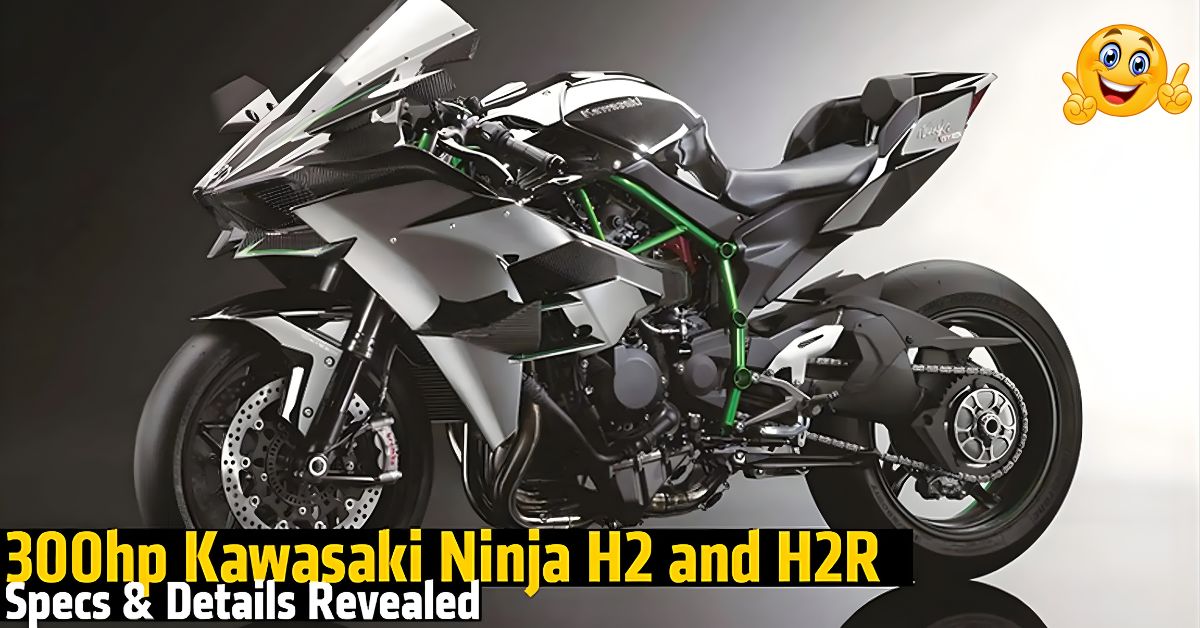
The Kawasaki Ninja H2R stands at the extreme edge of motorcycle engineering, occupying a category of its own in the world of hypersport machines. It is a track-only superbike built for riders who demand unrestrained performance and are willing to handle the responsibility that comes with it. In 2025, the Ninja H2R continues to push boundaries with its supercharged engine, unmatched acceleration, advanced aerodynamics and an engineering philosophy centered around absolute power. This updated guide explores everything—top speed, price, technical specifications, and a professional assessment of what the H2R truly offers to its ideal rider.
What Makes the Kawasaki Ninja H2R Unique in 2025
The Ninja H2R is not designed for public roads. It is a closed-circuit, purpose-built hypersport motorcycle engineered for performance beyond what is legally permissible on streets. Every component, from its supercharged 998 cc engine to its carbon-fiber aerodynamic wings, reflects Kawasaki’s ambition to create an extreme machine unrestricted by typical regulations. Unlike conventional superbikes, the H2R exists to demonstrate innovation and mechanical excellence rather than practicality. This is why it is hand-built, limited-production, and treated more like a technological masterpiece than a regular motorcycle.
Engine, Power Output and Real Performance
At the heart of the Ninja H2R lies a supercharged 998 cc liquid-cooled inline-four engine. Kawasaki’s supercharger system is a major contributor to its explosive performance, pushing the boundaries of what a production motorcycle engine can achieve. The 2025 model produces 310 PS at 14,000 rpm, with the number rising to an astonishing 326 PS when ram-air effect comes into play at high speeds. Torque figures reach around 165 Nm at 12,500 rpm, allowing the H2R to accelerate with a force that surpasses nearly every other production bike on the planet.
Kawasaki Ninja H2R Top Speed
The Kawasaki Ninja H2R is capable of reaching speeds that place it in ultra-exclusive territory. Under ideal conditions on a fully closed, controlled track, the H2R can achieve a top speed of approximately 400 km/h. This number is not practical or attainable on normal roads, which is why the bike is strictly non-street-legal. Its acceleration is equally breathtaking, capable of covering short distances in remarkably short times due to the massive power-to-weight ratio.
Aerodynamics, Frame and Structural Engineering
The Ninja H2R’s power is only one part of its equation. To handle such performance, Kawasaki engineered a trellis frame that offers both rigidity and controlled flex. This ensures stability during extreme speed runs while still allowing responsive cornering. The aerodynamic wings on the H2R are not decorative—they are functional carbon-fiber structures designed to generate downforce, improving grip and high-speed stability. Kawasaki uses wind tunnel testing to refine airflow, ensuring the motorcycle remains planted as speeds climb to levels few machines can reach.
The frame, swingarm, and hardware are engineered with durability to handle both the power and heat generated during high-intensity track riding. Suspension is fully adjustable front and rear, allowing riders to fine-tune the motorcycle based on circuit demands. This customization is essential because the H2R’s true nature emerges only when properly dialed in for track conditions.
Read More: BMW G 310 R
Braking, Handling and Rider Control Systems
Stopping a machine capable of 300–400 km/h requires uncompromising braking hardware. The H2R features high-performance disc brakes with premium calipers that deliver sharp, progressive braking response. Even under heavy braking at extreme speeds, the system maintains stability and confidence, an essential requirement for track-level performance.
Handling is remarkably precise for a machine with so much power. The combination of aerodynamics, balanced chassis geometry, and advanced electronics contributes to its controllability. The electronics suite includes traction control, launch control, intelligent ABS variants, and other systems engineered to support the rider without diminishing the raw thrill the H2R delivers.
Price of Kawasaki Ninja H2R in India (2025)
In India, the Kawasaki Ninja H2R is priced around ₹79.90 lakh (ex-showroom) in 2025. Due to this being a track-only machine, on-road pricing varies dramatically based on registration limitations and insurance variations. For many buyers, the H2R is treated as a collector’s item or a track tool rather than a daily-use motorcycle.
Maintenance and ownership costs are significantly higher than conventional superbikes. The tyres, fuel requirements, servicing frequency, and overall upkeep reflect its position as one of the most powerful motorcycles available. It demands premium treatment, proper storage, high-octane fuel, and professional servicing to maintain peak performance.
Practicality: Who Is the Ninja H2R Made For?
The H2R is not for everyday riders. Its extreme power output, track-only nature, aggressive ergonomics, and running costs make it impractical for regular street riding. It is crafted for experienced riders who have access to private tracks or closed-course environments. It also appeals to collectors, motorsport enthusiasts, and riders who want to experience mechanical limits beyond the capabilities of conventional superbikes.
Anyone considering the H2R must evaluate riding skills, responsibility, maintenance capability, and access to appropriate riding environments. It is not a beginner’s motorcycle nor a machine meant for casual weekend rides. Instead, it occupies a niche: riders who want the absolute peak of motorcycle performance and understand the intensity of managing such a machine.
Technical Specifications of Kawasaki Ninja H2R (2025)
Engine and Performance
The Kawasaki Ninja H2R is powered by a 998 cc inline-four engine with a supercharger and DOHC 16-valve layout. Power output reaches 310 PS, with torque at 165 Nm. With ram-air induction at high speeds, the H2R’s output increases further, showcasing Kawasaki’s engineering mastery. The engine is paired with a 6-speed transmission featuring quick-shift capabilities.
Chassis and Dimensions
Its trellis frame balances strength with agility. A 17-litre fuel tank supports longer track sessions without constant refueling. Kerb weight is approximately 216 kg, giving the H2R a power-to-weight ratio unmatched by most production motorcycles.
Suspension and Brakes
The bike features premium high-spec suspension units designed for tuning and high-speed stability. Braking relies on top-grade discs and calipers engineered to handle extreme speeds and temperatures generated under aggressive riding.
Aerodynamics and Design
The carbon-fiber wings and aerodynamic panels are engineered for maximum downforce, enabling the bike to remain stable during extreme acceleration and high-speed riding. This aerodynamic profile is central to the H2R’s phenomenal top-speed capabilities.
Verdict: Is the Kawasaki Ninja H2R Worth Buying in 2025?
The Ninja H2R remains one of the most powerful two-wheeled machines ever created. It is not designed for practicality, commuting, or casual ownership. Instead, it is built for those who seek track dominance, unfiltered power, and engineering excellence. If you are an experienced rider with access to proper riding environments and you understand the commitments of owning an extreme machine, the H2R offers an unmatched experience. It is a pinnacle product—exclusive, demanding, and extraordinarily rewarding when used as intended.
However, if your priorities include versatility, comfort, or street legality, the H2R is not suitable. It is a machine without compromises, designed for a very specific rider profile.