The Dodge Tomahawk remains one of the most outrageous, unbelievable and mechanically extreme concept vehicles ever created. Even decades after its first unveiling, this machine continues to stun enthusiasts with its almost impossible engineering, unheard-of performance claims and design philosophy that pushed the boundaries of what a motorcycle could be. Built by Dodge as a radical engineering experiment rather than a road-legal production machine, the Tomahawk still stands alone in the world of two-wheeled design. In this updated guide, we explore the top speed figures, price details, complete specifications and the expert-level analysis behind why the Tomahawk remains one of the craziest concept bikes ever imagined.
What Made the Dodge Tomahawk So Radical
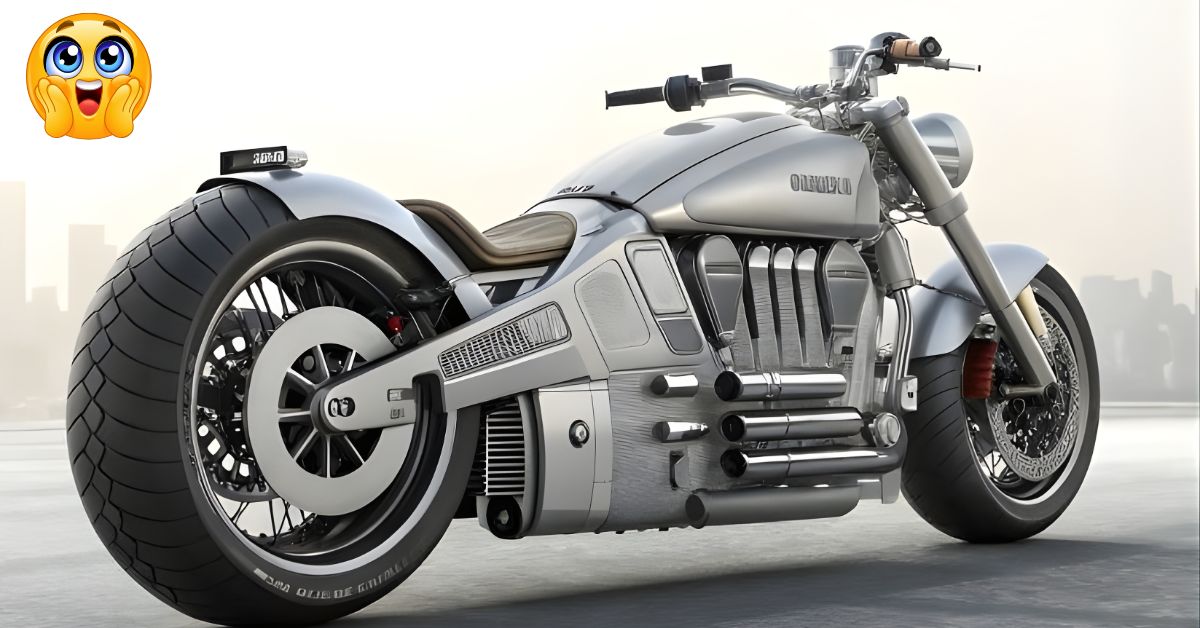
Dodge introduced the Tomahawk in 2003 as a design exercise that challenged the accepted limits of motorcycle engineering. It was not built for practicality, legality or mass production; it was created as a bold demonstration of engineering audacity. The Tomahawk was essentially powered by the same monstrous engine found in the Dodge Viper, transforming it from just another concept motorcycle into an engineering spectacle. Its appearance alone set it apart with its four-wheel layout, wide stance, exposed metal bodywork and futuristic character that looked closer to a sci-fi movie prop than a conventional motorbike.
The company never intended to manufacture it for public roads. Instead, the Tomahawk represented Dodge’s willingness to push technological boundaries. The vehicle embodied extreme speed projections, experimental vehicle control strategies and a raw mechanical presence that captivated global audiences instantly.
Engine and Powertrain – A Viper Heart on Two Wheels
The most astonishing feature of the Dodge Tomahawk is its engine. Dodge installed an 8.3-liter V10 engine from the Dodge Viper, producing approximately 500 horsepower and around 712 Nm of torque. This engine alone made the Tomahawk unlike anything the motorcycle world had seen before. No production motorcycle in history had come close to this displacement, cylinder configuration or power figure.
Transferring such immense power to a two-wheel formatted vehicle posed significant engineering challenges. Dodge therefore designed a unique four-wheel configuration: two front wheels and two rear wheels arranged closely enough that the Tomahawk still leaned into corners like a motorcycle. The engine was paired with a manually operated gearbox, with power sent through a sophisticated drive system that attempted to control the tremendous torque generated.
Dodge Tomahawk Top Speed – The Most Controversial Number in Bike History
The most talked-about specification of the Dodge Tomahawk is its claimed top speed of 640 km/h (approximately 400 mph). This figure has sparked debate for years. Many engineers believe the top speed is theoretically possible due to the massive power and aerodynamic potential, but practically impossible without extreme modifications, a specially prepared surface and perfect conditions.
No verifiable test has ever confirmed the Tomahawk reaching this speed. Nevertheless, the claim cemented its legacy as the wildest performance figure ever attached to a motorcycle-like vehicle. Even if the real top speed were half of the claimed figure, the Tomahawk would still stand as one of the fastest machines ever conceived in the motorcycle world.
Chassis, Wheels and Handling – A Unique Four-Wheel Motorcycle
The chassis of the Tomahawk was as bold as its engine. Instead of the traditional two-wheel layout, Dodge opted for a dual-wheel setup at both the front and rear. Each pair of wheels was independently sprung and connected through a complex system that allowed the vehicle to lean. This system was extremely experimental and had never been used on a performance machine before.
The wheels were milled from billet aluminum, giving them an aggressive, industrial appearance. The suspension components were custom engineered to manage the extreme weight of the V10 engine and the high speeds the bike could potentially reach. Braking was equally ambitious, with massive disc setups designed to control the enormous kinetic energy the machine could produce.
Read More: Kawasaki Ninja H2R
Design, Aerodynamics and Aesthetics
The design of the Dodge Tomahawk was minimalistic yet futuristic. The exposed mechanical components, massive engine block, sculpted metal bodywork and the iconic twin-headlight front made it instantly recognizable. The body used aluminum and handcrafted metalwork that showcased Dodge’s attention to visual detail.
Aerodynamically, the bike was unconventional. The wide stance and naked styling meant high-speed stability would rely more on weight and geometry rather than streamlined airflow. Still, the Tomahawk looked like a futuristic weapon—a piece of art that blurred the line between motorcycle, concept vehicle and engineering sculpture.
Price of Dodge Tomahawk – A Machine for Collectors and Museums
Although the Dodge Tomahawk was never mass-produced or sold as a street-legal motorcycle, Dodge did create a limited series of display-only collector units. These versions were produced by Chrysler’s design division and sold through select outlets to enthusiasts and collectors.
The price for these limited units was reported to be around $555,000 each, placing the Tomahawk among the most expensive motorcycle-like creations ever offered. The high cost reflected not only the engineering but also the exclusivity and concept nature of the machine. Today, these units are considered highly valuable collector items, displayed in museums, private collections and automotive exhibitions around the world.
Real-World Usability – Practicality vs. Engineering Art
The Dodge Tomahawk was never intended for real-world riding. It lacked necessary safety equipment, emission systems and road-legal certifications. Its immense power, experimental wheel structure and extreme weight made it unsuitable for any normal road. Even track use would require special conditions, given the power output and structural limitations.
However, the Tomahawk’s goal was never practicality. It was a celebration of engineering creativity—an object meant to shock, inspire and push boundaries. For many, the Tomahawk represents what happens when engineers and designers are allowed full creative freedom without regulatory limits. It is less a motorcycle and more a mechanical sculpture that redefines what is possible.
2025 Expert Verdict – Why the Dodge Tomahawk Still Dominates Imagination
Even in 2025, the Dodge Tomahawk stands unmatched in terms of concept audacity. No brand has attempted anything remotely similar since its release. The combination of an 8.3-liter V10 engine, four-wheel motorcycle dynamics, futuristic styling and the legendary 640 km/h top-speed claim ensures its place as one of the craziest concept bikes ever built.
For collectors, the Tomahawk remains a piece of automotive art. For engineers, it is a case study in pushing boundaries. For enthusiasts, it is a machine of pure imagination—proof that when constraints are removed, engineering can become almost limitless.
The Tomahawk is not just a motorcycle. It is one of the most extreme expressions of performance engineering ever created.