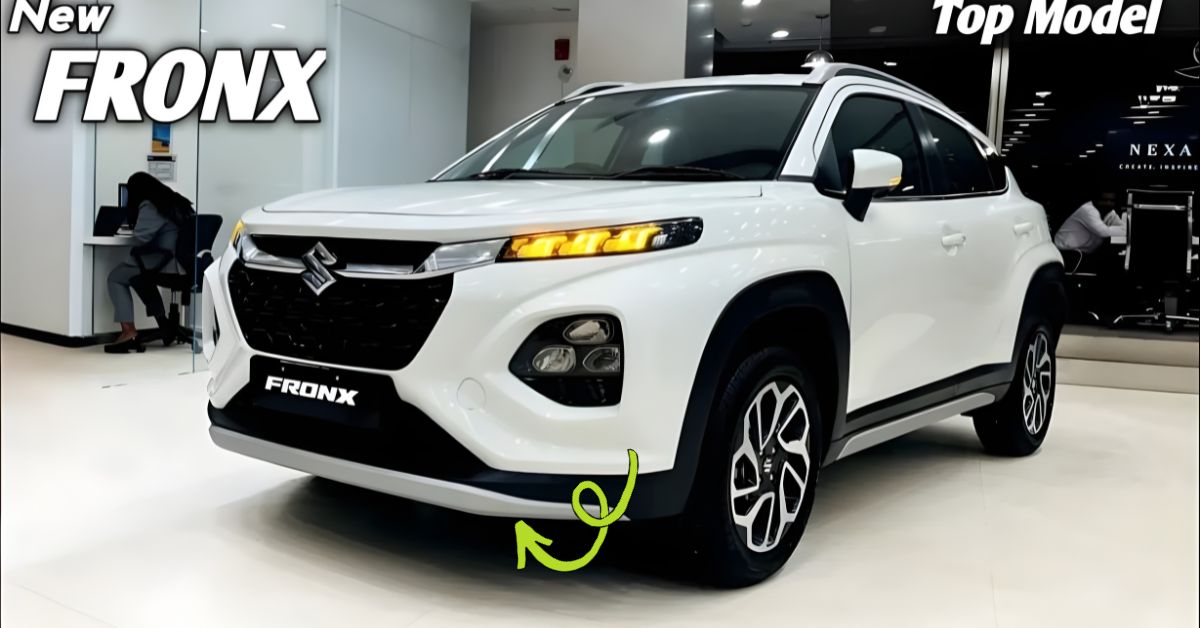
The Maruti Fronx 2026 is poised to be one of the most transformative updates in the compact crossover segment, signaling a paradigm shift in Maruti Suzuki’s mass-market strategy towards advanced powertrain technology. For an EV-focused analyst, the real excitement does not lie in the expected facelift of its petrol variants but rather in the highly anticipated introduction of the new in-house developed strong hybrid system, and the longer-term shadow of a potential fully electric iteration that will reshape the conversation around efficiency, driving dynamics, and affordability in the Indian automotive landscape. This comprehensive, deep-dive analysis leverages current industry trends, confirmed technology roadmaps, and expert projections to provide a full picture of what to expect from the Fronx lineup in 2026, giving prospective buyers and industry watchers a necessary outlook on its mileage, real-world performance metrics, and the eventual on-road price.
The Strong Hybrid Revolution: Decoding the Exceptional Maruti Fronx 2026 Mileage
The most significant, game-changing aspect of the Maruti Fronx 2026 is the likely debut of the company’s domestically developed series strong-hybrid powertrain, which is a monumental step away from its existing mild-hybrid technology and the Toyota-sourced strong-hybrid systems used in its larger models. This new architecture is designed to make strong hybrid efficiency accessible to the mass market, fundamentally altering the expectations for fuel economy in a compact crossover. Instead of the engine and motor working in parallel to drive the wheels, a series hybrid typically uses the internal combustion engine (ICE)—in this case, an expected new 1.2-litre, 3-cylinder Z-Series petrol unit—primarily as a generator to charge the battery pack. The wheels are then predominantly or exclusively driven by the electric motor, which means that for most city driving scenarios, the car operates effectively as an EV.
This sophisticated technological switch is projected to yield absolutely remarkable fuel efficiency figures. While the current 1.0L Boosterjet turbo-petrol engine offers an ARAI-certified mileage of about $21.5\text{ kmpl}$, the strong hybrid variant is realistically targeting an ARAI-certified mileage of over $35\text{ kmpl}$, which, if achieved, would make the Maruti Fronx 2026 the most fuel-efficient vehicle in its segment by a significant margin. Such a high efficiency rate is not just a marketing number but represents a substantial reduction in the total cost of ownership, placing the Fronx in a league of its own against its ICE and mild-hybrid rivals. For the discerning Indian consumer, this ultra-high mileage translates directly into tangible long-term savings, a crucial factor that Maruti Suzuki has historically leveraged with unparalleled success. Furthermore, the possibility of a concurrent launch of the Fronx Flex Fuel Vehicle (FFV) variant, capable of running on E85 ethanol-blended petrol, underscores Maruti’s multi-pronged approach to future mobility, ensuring compliance with evolving governmental biofuel mandates while offering diverse, energy-efficient solutions to the market.
Performance Dynamics: From Hybrid Thrust to EV Potential
Analyzing the performance of the Maruti Fronx 2026 requires a dual perspective, considering both the expected hybrid setup and the long-term potential for a pure electric version, given the overall industry transition towards electrification. The new series strong hybrid powertrain, while focused on mileage, will also fundamentally change the driving experience by prioritizing electric torque delivery. In a series hybrid, the electric motor’s instantaneous and linear torque will offer a far more responsive and smoother acceleration from a standstill compared to the current ICE variants, mitigating the typical power-lag often associated with small-capacity petrol engines, especially in heavy traffic conditions. The electric motor driving the wheels will result in silent operation during low-speed, battery-powered cruising, lending the Fronx a premium, refined feel that is currently absent in this price bracket. We can anticipate power figures that may not be drastically higher than the current $99\text{ bhp}$ turbo-petrol, but the delivery of that power, aided by electric boost, will make the car feel notably quicker and more tractable in real-world driving situations, particularly during quick overtakes on the highway or navigating congested urban stretches.
Read
Looking beyond the strong hybrid, the question of a pure electric Maruti Fronx EV remains an area of intense speculation and strategic positioning for the company. While some reports suggest a later 2027 or even 2029 launch for a fully electric Fronx, the brand’s commitment to the new dedicated EV architecture, as evidenced by the upcoming e-Vitara, lays the groundwork for smaller, mass-market EVs. A future Maruti Fronx 2026 EV, built on a highly localized platform derivative, would likely feature a battery pack sized for city-focused duties, potentially a unit in the $25\text{ kWh}$ to $30\text{ kWh}$ range. Such a configuration would enable a practical, real-world driving range of approximately $250\text{ km}$ to $300\text{ km}$ on a single charge, catering perfectly to the compact crossover’s primary use case as a stylish urban commuter. The performance in this EV guise would be immediate and engaging, characteristic of electric vehicles, offering the silent, vibration-free operation that EV buyers desire, with zero tailpipe emissions, making it an irresistible proposition for environmentally conscious and tech-savvy urban buyers. The eventual success of an EV variant will be intrinsically linked to the level of component localization, including the battery cells, which is the key to maintaining Maruti’s hallmark of competitive pricing.
Read More :Toyota Corolla
The Financial Outlook: Anticipating the On-Road Price of the Maruti Fronx 2026
Pricing is arguably the most sensitive and crucial factor for any mass-market vehicle in India, and the Maruti Fronx 2026 must strike a delicate balance between offering revolutionary technology and maintaining accessibility. The current top-end petrol variant of the Fronx hovers around the $12\text{ Lakh}$ (ex-showroom) mark. The introduction of a sophisticated, in-house developed strong hybrid system, coupled with other technological and safety upgrades, necessitates a moderate price increment. Industry experts project that the strong hybrid variants of the new Fronx could be priced in the range of $\text{₹}10.5\text{ Lakh}$ to $\text{₹}14.5\text{ Lakh}$ (ex-showroom), depending on the specific trim and feature set. This pricing would position the Fronx Hybrid competitively against mid-to-high-end trims of its compact SUV rivals, while offering a significantly superior efficiency proposition, effectively giving the consumer a strong value justification for the slightly higher initial outlay.
To arrive at the final On-Road Price for the Maruti Fronx 2026 strong hybrid, one must account for the mandatory additions of Road Tax/Registration, Insurance, and any applicable TCS (Tax Collected at Source), which can collectively add anywhere from $10\%$ to $20\%$ to the ex-showroom price, varying significantly across Indian states. Taking the top-end hybrid variant, an estimated ex-showroom price of $\text{₹}14.5\text{ Lakh}$ could result in a final on-road price nearing $\text{₹}16.5\text{ Lakh}$ to $\text{₹}17\text{ Lakh}$ in major metropolitan areas, a figure that places it squarely against premium compact SUVs but with the undeniable long-term running cost advantage of the hybrid powertrain. For the baseline petrol and CNG variants that will also see a facelift, the price hike will be more marginal, maintaining the Fronx’s aggressive positioning at the entry point of the compact crossover segment, likely starting from around $\text{₹}7\text{ Lakh}$ to $\text{₹}7.5\text{ Lakh}$ (ex-showroom).
The eventual, purely electric Maruti Fronx EV, if launched, presents a more challenging pricing puzzle. While Maruti’s localization efforts aim to lower battery costs, EV technology still carries a premium. Given the expected competitive environment with established models like the Tata Nexon EV, a potential Fronx EV could be strategically priced to undercut the competition, starting in the range of $\text{₹}12\text{ Lakh}$ to $\text{₹}18\text{ Lakh}$ (ex-showroom). This bracket would make it one of the most accessible and trustworthy EV crossovers, aligning perfectly with Maruti’s reputation for affordability and widespread service network reach. However, the initial rollout is heavily focused on the strong hybrid model, which is a more immediate and cost-effective transition for the mass market looking for exceptional mileage without range anxiety.
Technological Advancement: Safety, Features, and Future-Proofing
Beyond the core mechanical and efficiency upgrades, the Maruti Fronx 2026 is expected to receive crucial feature and safety enhancements that are now becoming mandatory for competitive survival in the highly contested compact SUV space. Most notably, the strong likelihood of introducing a Level 2 ADAS (Advanced Driver Assistance Systems) suite, based on test mules spotted with LiDAR sensors, marks a significant commitment to safety from Maruti Suzuki. Features such as Autonomous Emergency Braking (AEB), Adaptive Cruise Control (ACC), and Lane Keep Assist (LKA) will not only elevate the Fronx’s safety quotient significantly but also make it a more relaxing and confident vehicle to drive on long highway journeys, a necessary step to meet consumer expectations set by newer rivals. The structural integrity will also be critical, with consumers now placing a high value on official crash test ratings, and Maruti will be under pressure to secure a respectable rating from Bharat NCAP for the updated model.
Interior amenities are also slated for a refresh to keep the cabin feeling premium and modern. The inclusion of a highly sought-after factory-fitted electric sunroof, a feature missing from the current model but standard on many competitors, is a strong possibility, especially on the top-end Alpha and Zeta variants of the Maruti Fronx 2026. Updates to the connectivity suite will involve a refreshed or larger high-definition infotainment screen, improved telematics integration through the Suzuki Connect platform, and enhanced digital instrument cluster functionalities to clearly display the complex energy flows and efficiency data from the new strong hybrid system. The combination of remarkable fuel efficiency, advanced safety features like ADAS, and a premium, connected cabin will cement the Fronx’s position not just as a fuel-efficient vehicle, but as a genuinely advanced, future-ready compact crossover that delivers a compelling mix of technology, performance, and value.
The journey of the Maruti Fronx 2026 represents more than just a model update; it is a clear statement of intent from India’s largest carmaker regarding its strategy for a rapidly hybridizing and electrifying market. By pioneering a cost-effective, high-efficiency strong hybrid system in a mass-market compact crossover, Maruti Suzuki is once again playing to its core strength: delivering maximum value and class-leading mileage to the Indian consumer. The phenomenal expected $35\text{ kmpl}$ efficiency is the headline, but the underlying narrative is the thoughtful integration of new safety and performance technology that will allow the Fronx to maintain its dominant market position well into the latter half of the decade. This is not just a car to watch; it is a crucial benchmark for the future of hybrid mobility in the country. The successful execution of this strategy will secure the Maruti Fronx 2026‘s place as an outstanding option for the new-age driver seeking style, efficiency, and advanced features without compromising on the critical factor of affordability.
The decision to purchase a vehicle is a significant long-term financial and lifestyle commitment, and choosing the Maruti Fronx 2026 is increasingly shaping up to be a profoundly strategic move, particularly for the forward-thinking buyer. This is not simply a refreshed model; it represents Maruti Suzuki’s decisive leap into the future of mass-market mobility, blending the segment-defining style of the compact coupe-crossover with genuinely transformative, localized, next-generation technology. When considering the current automotive landscape—characterized by soaring fuel prices, stricter emission norms, and rapidly advancing safety standards—the intrinsic value proposition of the Fronx 2026 shifts from a good choice to an absolutely essential and future-proof investment. Its projected advantages over its lifecycle are deeply rooted in three core pillars: Unmatched Economic Viability, Advanced Future-Proof Technology, and Sustained Brand Reliability.
Unmatched Economic Viability: Lowering the Total Cost of Ownership
The single most compelling reason to invest in the Maruti Fronx 2026 is its groundbreaking economic equation, directly addressing the buyer’s perennial concern: the total cost of ownership (TCO). While the initial on-road price for the strong hybrid variant is expected to carry a premium over its non-hybrid counterparts, projected to be in the range of $\text{₹}16.5\text{ Lakh}$ to $\text{₹}17\text{ Lakh}$ for a top-end model, this higher upfront investment is rapidly offset by extraordinary savings over the vehicle’s lifespan. The strong hybrid system, targeting an ARAI-certified mileage exceeding $35\text{ kmpl}$, is the key differentiator here. In real-world urban driving conditions, where the engine spends a significant amount of time off, and the electric motor drives the wheels silently and efficiently, a mileage figure of $25\text{ kmpl}$ to $30\text{ kmpl}$ is realistically achievable.
Consider the cumulative savings: compared to a current turbo-petrol compact SUV that delivers a real-world city mileage of about $12\text{ kmpl}$ to $15\text{ kmpl}$, the Fronx Hybrid user will experience a near-$100\%$ reduction in annual fuel expenditure. For a high-mileage user driving $1,500\text{ km}$ per month, this equates to saving tens of thousands of rupees annually, directly translating the premium paid for the hybrid technology into tangible, recovered capital within a manageable ownership period of three to four years. Furthermore, hybrid vehicles generally benefit from lower taxation in certain jurisdictions and are inherently exempt from the regulatory risks associated with diesel vehicles, such as the ten-year lifespan restriction in the NCR region, ensuring uninterrupted utility. This combination of hyper-efficiency, coupled with Maruti’s established, highly affordable, and widespread service network—which ensures predictable and low-cost maintenance over five to ten years—solidifies the Fronx 2026’s position as the most financially sensible compact crossover purchase for the long run.
Advanced Future-Proof Technology: Safety, Refinement, and Regulatory Compliance
The Maruti Fronx 2026 is designed not just for the present but is deliberately engineered to remain relevant and competitive deep into the next decade, primarily through its strategic adoption of advanced, future-proof technologies. The most prominent inclusion is the long-awaited Level 2 ADAS (Advanced Driver Assistance Systems) suite, featuring systems like Adaptive Cruise Control, Autonomous Emergency Braking, and Lane Keep Assist. This is a game-changer for the mass-market segment, offering a genuine layer of active safety that mitigates driver error and drastically improves safety in both congested urban settings and during high-speed highway cruising. As global and domestic safety regulations (like Bharat NCAP) become increasingly stringent and consumers place higher value on official crash ratings, the presence of ADAS future-proofs the vehicle against rapid obsolescence.
Beyond safety, the strong hybrid powertrain fundamentally alters the driving experience, injecting a level of refinement previously unattainable in this segment. The nature of the series hybrid system means that the electric motor is primarily responsible for propulsion at city speeds, resulting in near-silent operation, instantaneous torque delivery for quick starts, and a completely jerk-free, smooth acceleration profile, a stark contrast to the often-jerky nature of conventional automated-manual transmission (AMT) or even mild-hybrid units. This sophisticated and comfortable driving dynamic, combined with the expected aesthetic updates like the electric sunroof and larger high-definition infotainment displays, elevates the daily commute from a necessity to an genuinely enjoyable experience. Moreover, Maruti’s strategic work on Flex Fuel Vehicle (FFV) capabilities for the Fronx ensures that the platform is ready for India’s ambitious transition to higher ethanol blends (E20, E85), offering an additional layer of regulatory compliance and fuel source flexibility that guarantees usability regardless of evolving government energy policies.
Sustained Brand Reliability and Superior Residual Value
A crucial, often overlooked, future benefit of buying the Maruti Fronx 2026 is the sustained value retention and superior resale value that Maruti Suzuki has historically commanded in the Indian market. While the depreciation curve of any new vehicle is steep, Maruti vehicles typically depreciate at a slower rate than their direct competitors, a phenomenon fueled by the brand’s unparalleled market trust, low maintenance costs, and the sheer ubiquity of its service and parts network across the entire country. The new strong hybrid technology is expected to amplify this advantage. As fuel costs continue to rise and the market increasingly recognizes the TCO benefits of hybrids, a pre-owned Fronx Hybrid, with its proven $25\text{ kmpl}$ plus real-world efficiency, will become an exceptionally sought-after commodity.
In five to seven years, a hybrid vehicle that offers running costs comparable to a CNG car but with the convenience and performance of a petrol-automatic will likely attract a significant premium in the used car market, effectively lowering the owner’s net cost of ownership dramatically. The decision to localize the strong hybrid powertrain components is strategic, ensuring that long-term spare part availability and replacement costs remain manageable, avoiding the high import duties and complexity often associated with advanced technology from foreign manufacturers. In essence, purchasing the Maruti Fronx 2026 is an investment in a machine engineered for longevity, low operational expense, and high future demand, providing not only peace of mind but a tangible, sustained financial return on the initial purchase.