The return of the Tata Sierra nameplate is one of the most anticipated events in the Indian automotive calendar. More than a simple SUV launch, it marks the revival of a legendary brand that pioneered the three-door lifestyle SUV segment in India decades ago. In its modern avatar, the Sierra is set to return as a high-tech, premium vehicle, leading with an Electric Vehicle (EV) powertrain before potentially introducing Internal Combustion Engine (ICE) versions.
The Tata Sierra 2025 is being positioned to sit above the Harrier and Safari, bridging the gap toward the premium large SUV market while championing Tata’s commitment to electrification and safety. This comprehensive 1500-word review delves into the expected price, crucial launch date, highly anticipated design features, the revolutionary interior, performance projections (especially the EV range), and the segment-defining safety features of the reborn icon.
Launch Date and Expected Price in India
Since the Tata Sierra is currently in its final pre-production phases, the following details are based on credible industry leaks and official announcements regarding its market debut.
Expected Launch Window
The Tata Sierra is widely expected to debut in its fully electric form (Tata Sierra EV) first.
- Target Launch Date: Late 2025 to Early 2026.
- The ICE (Internal Combustion Engine) variants, if planned, are likely to follow 6-12 months after the EV launch.
Expected Price Range
The Sierra will be positioned above the flagship Tata Safari, reflecting its larger footprint and premium EV technology.
| Variant Series | Configuration | Expected Ex-Showroom Price (Approx.) | Market Positioning |
| Tata Sierra EV (Entry) | Medium Range Battery Pack | ₹25 Lakh | Premium Large EV SUV Segment |
| Tata Sierra EV (Top) | Long Range Battery Pack / AWD | ₹32 Lakh | Direct competitor to high-end global EVs |
| Tata Sierra ICE (Expected) | Diesel Automatic / Petrol Automatic | ₹20 Lakh – ₹28 Lakh | Premium D-segment SUV |
The Sierra EV’s pricing suggests it will directly challenge competitors in the burgeoning premium electric SUV segment, offering a strong value proposition bolstered by the trust in the Tata brand’s EV technology.
Design: Modern Nostalgia and the Glasshouse Legend
The design of the new Sierra successfully marries the iconic elements of the original with Tata’s modern, impactful ‘Impact 3.0’ design philosophy.
Exterior Evolution
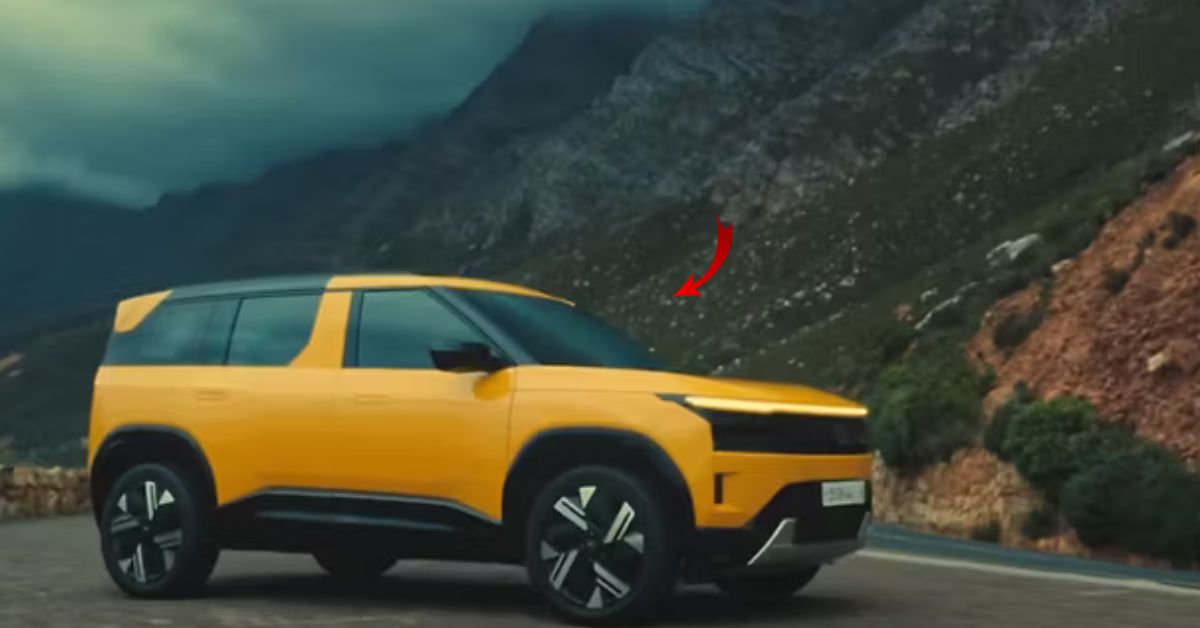
The key feature of the original Sierra was its distinctive three-door body style with the massive rear glasshouse. The new model will adopt a more conventional five-door layout for practicality but retains the essence of that iconic rear window.
- Signature Glasshouse: The rear portion features a massive, almost vertical blacked-out glass section, blending seamlessly into the roof to recreate the iconic visual identity of the original.
- Front End: It borrows design cues from the Nexon and Harrier/Safari facelifts, featuring a sleek, connected LED DRL strip running across the bonnet (The Digital DRL Signature). The main headlamp units are placed low on the bumper, housed in a triangular cluster.
- Dimensions: Expected to be slightly larger than the Safari, providing an imposing stance and guaranteeing significant road presence.
Built on a Flexible Architecture
The Sierra will utilize the highly adaptable Acti.ev platform (Tata’s advanced EV architecture) for the electric version, which is optimized for battery integration and superior packaging. This platform can also be modified to accommodate the upcoming ICE powertrains.
Engine and Powertrain Options (EV Focus)
The initial focus will be entirely on the Electric powertrain, leveraging Tata’s dominance in the EV space.
1. Tata Sierra EV: Specifications and Range
The Sierra EV is expected to use a version of the battery architecture found in the Nexon and Punch EVs, scaled up for the larger vehicle.
| Specification | Details (Expected) |
| Battery Pack Size | $\mathbf{60 \text{ kWh} \text{ to } 70 \text{ kWh}}$ (Expected variants) |
| Max Power Output | $180 \text{ PS} \text{ to } 220 \text{ PS}$ (Multi-motor configuration possible) |
| Torque Output | $350 \text{ Nm} \text{ to } 400 \text{ Nm}$ |
| Range (ARAI Certified) | $\mathbf{500 \text{ km} \text{ to } 550 \text{ km}}$ |
| Drivetrain | $2\text{WD}$ (Front or Rear) standard, with $4\times4 \text{ AWD}$ option for the top variant. |
- Charging: The Sierra EV will support fast DC charging (likely $50 \text{ kW} \text{ to } 100 \text{ kW}$ capacity), allowing a $10 \text{ per cent} \text{ to } 80 \text{ per cent}$ charge in under an hour.
2. Tata Sierra ICE (Expected Powertrains)
If Tata launches an ICE variant, it is highly likely to feature the powerful engines already seen in the Harrier/Safari line-up:
- Diesel: $2.0 \text{ Litre}$ Kryotec Turbo-Diesel (approx. $170 \text{ PS} / 350 \text{ Nm}$).
- Petrol: New $1.5 \text{ Litre}$ Turbo-Petrol TGDi (approx. $160 \text{ PS} / 250 \text{ Nm}$).
Interior Quality, Features, and Space
The Sierra’s cabin is designed to be its biggest selling point—luxurious, technologically advanced, and incredibly spacious.
Premium and Spacious Cabin
The dedicated EV platform allows for a flat floor and maximum utilization of interior space, creating a cabin that feels wider and more expansive than the Safari. The fit and finish are expected to take a significant leap, challenging premium SUVs globally.
- Seating Configuration: Primarily a 5-seater, positioning it as a lifestyle SUV with a vast amount of luggage room. This will differentiate it from the 6/7-seater focus of the Safari.
- Digital Cockpit: Expected to feature the largest dual-screen setup in the Tata lineup: $12.3 \text{-inch}$ Digital Instrument Cluster and a large $14 \text{-inch}$ Central Infotainment Screen.
- Luxury Features:
- Panoramic Sunroof: Massive, near-full-length sunroof to enhance the airy feel provided by the large side windows.
- Lounge Seating: Potential for electric ottoman seats or highly adjustable powered front seats with cooling/heating functions.
- Premium Audio: JBL or Harman-Kardon-tuned audio system with multiple speakers.
Performance, Driving Dynamics, and Mileage
The Sierra EV’s performance will prioritize instantaneous, silent acceleration, while the underlying chassis promises a refined, comfortable ride.
Real Driving Review (Projected)
- Acceleration: EV torque delivery is immediate and silent. The Sierra EV is expected to offer brisk acceleration, feeling quick despite its size, especially in the $4\times4$ AWD variant.
- Ride Quality: The modern platform and heavy battery placement contribute to a low centre of gravity, which is excellent for stability. The suspension will be tuned for a plush, absorbent ride, minimizing vertical movement and focusing on passenger comfort, ideal for long-distance cruising.
- Handling: The handling is expected to be predictable and secure, benefiting from the heavy, low-mounted battery pack. While not designed to be a corner carver, the Sierra will feel highly composed on winding roads.
Mileage/Range Practicality
An expected real-world range of $400 \text{ km} \text{ to } 450 \text{ km}$ on the highway from the top-end battery pack will eliminate range anxiety for most inter-city travel. The ability to charge overnight at home makes the EV a compelling proposition compared to the cost and complexity of maintaining a large diesel engine.
Read more : Honda City
Safety Rating and ADAS Technology
Following Tata’s established reputation, the Sierra is expected to set a new standard for safety in the premium segment.
Expected Safety Rating
- Target: 5-Star Bharat NCAP Safety Rating is virtually guaranteed, given Tata’s track record and the robust construction of its modern platforms. The platform is designed to handle the massive energy of a high-speed collision.
Advanced Safety Features (ADAS Level 2)
The Sierra will be loaded with preventative safety technology, likely featuring Tata’s most advanced ADAS suite:
- ADAS Level 2: Full suite including Adaptive Cruise Control (ACC), Lane Keep Assist (LKA), Traffic Sign Recognition (TSR), and Automatic Emergency Braking (AEB) with pedestrian detection.
- Standard Safety: 6 to 7 Airbags (Standard), Electronic Stability Program (ESP), Hill Descent Control, and a comprehensive $360 \text{-degree}$ Surround View Camera System for easy maneuvering.
The Sierra’s safety package will position it as one of the safest premium family vehicles on the market.
Complete Specifications Summary (Expected EV Long Range)
| Category | Specification | Detail (Expected) |
| Powertrain | Engine/Motor Type | High-Efficiency Permanent Magnet Synchronous Motor |
| Battery Pack Size | $60 \text{ kWh} \text{ to } 70 \text{ kWh}$ | |
| Max Range (ARAI) | $500 \text{ km} \text{ to } 550 \text{ km}$ | |
| Drive Type | $2\text{WD}$ and $4\times4 \text{ AWD}$ options | |
| Dimensions | Length (Approx.) | $4450 \text{ mm}$ (Larger than Harrier) |
| Ground Clearance | $200 \text{ mm}$ (Approx.) | |
| Seating | 5-Seater Premium SUV | |
| Safety | Airbags | 6-7 Airbags (Standard) |
| Active Safety | Level 2 ADAS (ACC, AEB, LKA) | |
| Safety Rating Target | 5-Star Bharat NCAP | |
| Key Features | Infotainment Screen | $14 \text{-inch}$ Touchscreen (Expected) |
| Comfort | Ventilated Seats, Panoramic Sunroof, Dual-Zone AC |
Final Verdict: The New Premium Lifestyle Pioneer
The Tata Sierra 2025 is shaping up to be a defining moment for Tata Motors. It is not just fulfilling nostalgia; it is pioneering the next generation of premium Indian SUVs. The decision to launch it as an EV first underscores Tata’s vision for the future, offering a blend of silent, powerful performance and unmatched efficiency.
The Sierra promises a lifestyle vehicle—spacious, safe, high-tech, and uniquely styled—that sits perfectly for the buyer looking for something distinctive and genuinely premium, without compromising on the long-distance capability and robustness that the Tata badge guarantees. The Sierra is not just returning; it is aiming to become the new benchmark for aspirational, sophisticated motoring in India.