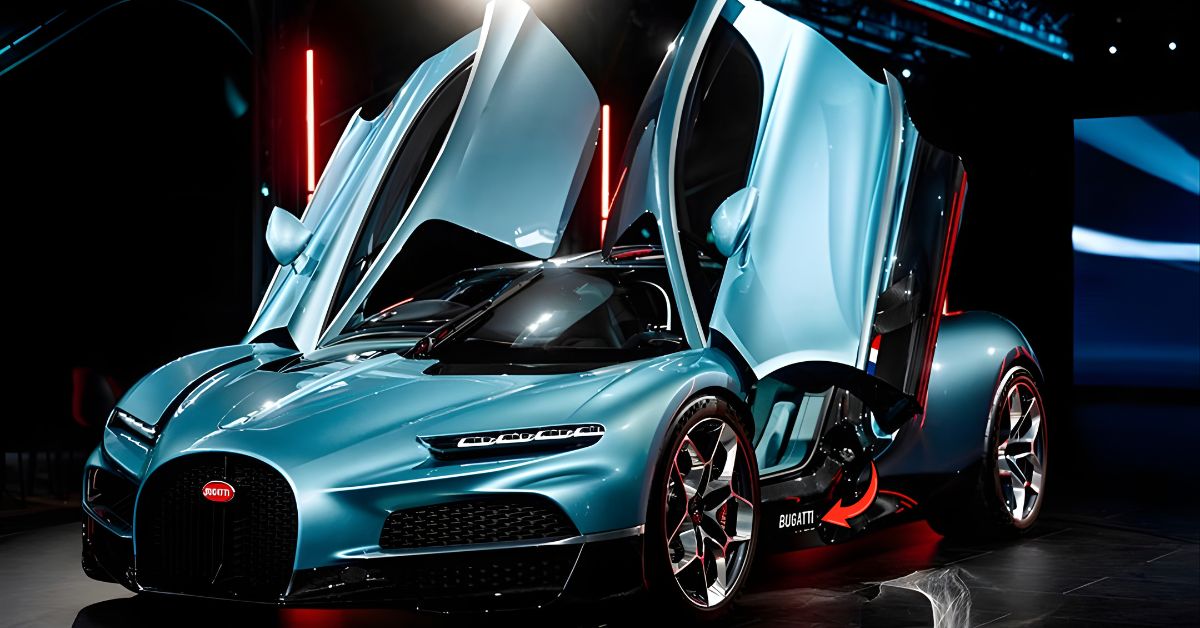
The name Bugatti Tourbillon is a direct and audacious statement of intent. Named after the most intricate and complex mechanism in horology, the Tourbillon is the successor to the legendary Chiron, yet it represents far more than just an evolution. It signifies a profound paradigm shift for the Molsheim marque, seamlessly marrying the purity of natural aspiration with the electrifying immediacy of a modern hybrid system. This machine is a technical and artistic masterpiece, built not merely to break speed records, but to redefine the very concept of the analog-digital hypercar in the late 2025 automotive landscape.
As automotive engineers and analysts, we approach the Bugatti Tourbillon not just as a vehicle, but as a study in physics, design, and uncompromising mechanical ambition. This detailed review dissects the car’s monumental specifications, its purpose-driven aerodynamics, the complexity of its hybrid heart, and the sheer mechanical artistry displayed within its cabin.
Design and Aerodynamics: A Sculpted Masterpiece of Airflow
The design of the Bugatti Tourbillon is a direct consequence of its performance requirements. Every single line, curve, and inlet is optimized to manage the staggering energy generated by its powertrain and to stabilize the chassis at speeds well over 400 km/h. Unlike concept cars laden with superfluous design elements, the Tourbillon is defined by functional beauty. The famous Bugatti Line, the C-shaped curve along the side profile, is retained but sharpened, creating a visual tension that flows seamlessly into the vehicle’s aggressive rear haunches.
Crucially, the Bugatti Tourbillon is fundamentally shaped by aerodynamic management. The most significant element is the intricate network of air tunnels that channel air over, under, and through the body. Large side air intakes feed the V16 engine, while complex underbody diffusers and vents manage the air pressure beneath the car, generating massive downforce without the need for excessive drag-inducing wings at low speeds. The active rear wing, integrated into the tail, deploys dynamically based on speed and braking forces, serving as an air brake and high-speed stabilizer. The overall aesthetic is cleaner, more sculptural than the Chiron, yet it projects an even greater sense of focused, technical capability.
The V16 Hybrid Performance: The Pinnacle of Analog Power
The heart of the Bugatti Tourbillon is arguably the most captivating engine unveiled in a generation. Bugatti refused to follow the industry trend of smaller, turbocharged engines and instead commissioned a naturally aspirated 8.3-liter V16 engine, developed in collaboration with Cosworth. This engine alone delivers a monumental 1,000 horsepower and revs up to a spine-tingling 9,000 RPM. This commitment to a large-displacement, naturally aspirated engine provides a visceral, linear power delivery and a soundtrack that is destined for legend—a mechanical symphony utterly distinct from the muffled whoosh of forced induction.
This internal combustion engine is augmented by a state-of-the-art triple electric motor hybrid system. Three electric motors are utilized, two on the front axle and one on the rear, adding an astonishing 800 horsepower of electric boost. The result is a combined output of 1,800 horsepower. This immense power is managed through an all-wheel-drive system and an 8-speed dual-clutch transmission. The 25-kilowatt-hour battery pack is mounted centrally, ensuring optimal weight distribution and providing enough juice for an electric-only range of approximately 60 kilometers, allowing the Tourbillon to glide silently through cities when required.
The performance metrics speak for themselves:
- 0-100 km/h (0-62 mph): Under 2.0 seconds
- 0-200 km/h (0-124 mph): Under 5.0 seconds
- 0-300 km/h (0-186 mph): Under 10.0 seconds
- Top Speed: Electronically limited to 445 km/h (276 mph)
This performance is a feat of engineering, especially considering the added weight of the hybrid system. The Bugatti Tourbillon’s performance architecture is a masterclass in exploiting both the high-rpm analog power of the V16 and the instant, massive torque delivery of electrification.
Read More: Toyota Glanza
Interior Features: Horological Masterpiece and Mechanical Art
If the exterior is a lesson in fluid dynamics, the interior of the Bugatti Tourbillon is a lesson in mechanical artistry and horology. The cabin is deliberately pared back to prioritize the driving experience, yet every component is crafted with meticulous attention to detail.
The centerpiece is the fixed-hub instrument cluster, the direct inspiration for the car’s name. Crafted by Swiss watchmakers, this cluster is a mechanical, analog tourbillon mechanism constructed from over 600 components, made from materials like titanium and precious stones. Weighing just 700 grams, this mechanical sculpture displays speed, engine RPM, and critical vehicle data. Because the cluster is mounted directly to the steering column, it remains stationary while the rim of the steering wheel rotates around it. This novel design ensures the driver’s sightline to critical information is never obscured, no matter the steering angle.
The rest of the cabin follows suit, eschewing large digital screens for a more tactile, mechanical feel. The dash features analog aluminum and glass switches, offering satisfying clicks and movements. While most modern hypercars rely on massive digital displays, the Tourbillon hides a single, deployable touchscreen that rotates out of the dashboard only when required for navigation or specific system settings, maintaining the car’s dedication to the purest possible driving experience. The materials—hand-stitched leather, aerospace-grade aluminum, and structural carbon fiber—are executed to standards unmatched in the automotive world.
Exclusivity and Global Price Details
The Bugatti Tourbillon is destined to be one of the rarest and most expensive production automobiles ever created. Its production run is strictly limited, ensuring its immediate legendary status and investment value.
- Production Limit: Only 250 units will be built globally. This is a significantly lower volume than the Chiron (500 units) and guarantees its exclusivity for the ultra-high-net-worth collector.
- Global Base Price: The starting price for the Bugatti Tourbillon is set at €3.8 million (approximately $4.1 million USD).
This price point is before taxes, mandatory options, and the extensive customization and personal commission work that every Bugatti owner undertakes. The final delivered price for a bespoke model can easily exceed $5 million. Deliveries are scheduled to begin in 2026, and given Bugatti’s reputation, the entire production run is expected to be sold out almost immediately upon official allocation. This high price is not merely a cost of materials; it is the cost of absolute engineering and artistic singularity.
Conclusion: The Mechanical Masterpiece
The Bugatti Tourbillon is the ultimate expression of the combustion-era hypercar. It stands as a defiant mechanical sculpture in a world rapidly embracing full electrification. By blending the organic, high-revving thrill of a naturally aspirated V16 engine with the immediate, silent thrust of three electric motors, it achieves a dynamic blend of performance that is technically unmatched.
From the exquisite, Swiss-engineered instrument cluster to the aerodynamic bodywork honed at speeds nearing 450 km/h, the Bugatti Tourbillon is a machine designed to be felt, heard, and seen as a landmark achievement. It is a triumphant, 1,800-horsepower tribute to mechanical perfection, cementing Bugatti’s legacy not just in speed, but in the enduring art of engineering.