Delhi is taking a big step towards cleaner transport with its upcoming Delhi EV Policy 2026. The government is planning new incentives, better charging infrastructure, and stricter rules on petrol and diesel vehicles.
This article explains what the new policy includes, why it matters, and how it will affect people in India.
What is Delhi EV Policy 2026?
The Delhi EV Policy 2026 is an updated version of the earlier policy launched in 2020. The current policy has been extended until March 2026, and a new version (often called EV Policy 2.0) is expected soon.
The main goal is to increase the use of electric vehicles (EVs) and reduce air pollution in the capital.
Delhi already has one of the highest EV adoption rates in India, with around 14% of new vehicle registrations being electric in 2025.
Key Features of Delhi EV Policy 2026
Strong Subsidies for Buyers
The government plans to offer attractive financial benefits to encourage people to switch to EVs:
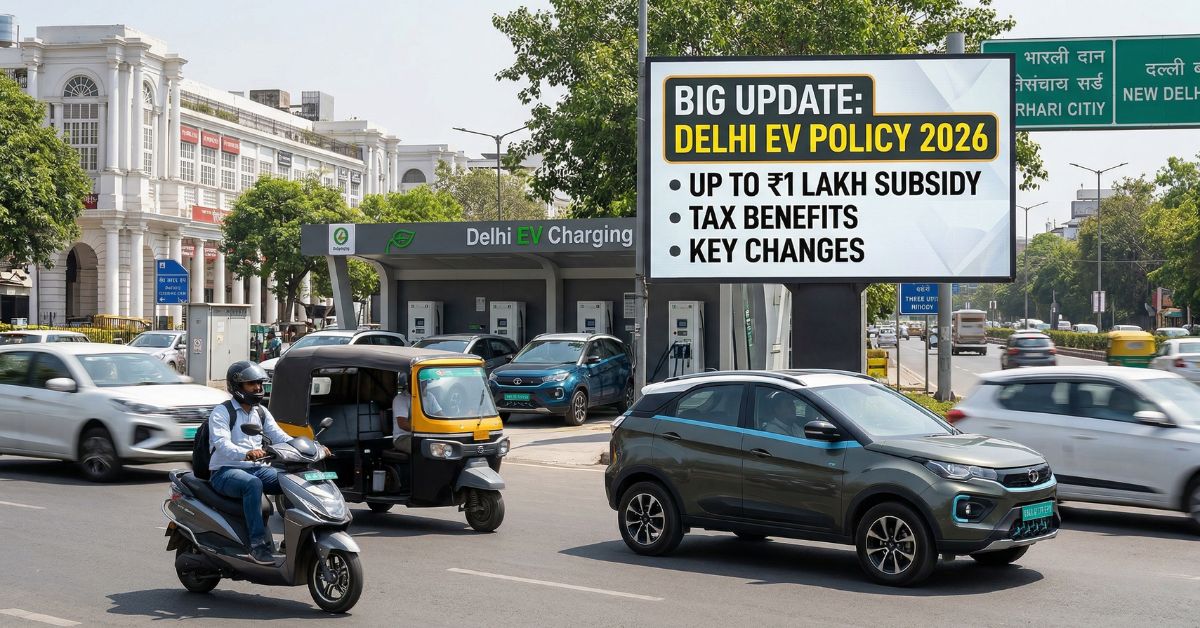
- Up to ₹1 lakh incentive for electric cars
- Subsidies for two-wheelers up to ₹30,000 in the first year
- ₹50,000 incentive for electric auto-rickshaws
- Extra benefits for scrapping old petrol or diesel vehicles
There may also be support for converting old vehicles into electric ones.
100% Road Tax and Registration Fee Waiver
One of the biggest benefits is that EV buyers in Delhi do not have to pay road tax or registration fees.
This reduces the overall cost of owning an EV.
Focus on Charging Infrastructure
The policy aims to expand charging stations across the city. Delhi is also planning to seek central support to improve battery swapping and charging networks.
The government is targeting a strong charger-to-vehicle ratio to make EV use easy.
Scrappage Policy for Old Vehicles
People who replace old petrol or diesel vehicles with EVs will get extra incentives.
This is important because older vehicles are a major source of pollution in Delhi.
Push for Electric Public Transport
Delhi is already increasing its electric bus fleet:
- Over 6,000 electric buses planned soon
- Target of 14,000 e-buses by 2028
This will make public transport cleaner and more efficient.
Possible New Rules Under EV Policy 2.0
The upcoming policy may include stricter rules:
- Possible ban on new petrol/diesel two-wheelers by 2026–27
- Focus on battery recycling systems
- Incentives mainly in the first few years to boost early adoption
These steps aim to speed up the shift to electric mobility.
Why This Policy Matters
Delhi is one of the most polluted cities in the world. Vehicles are a major reason for this.
The EV policy is designed to:
- Reduce air pollution
- Cut fuel dependency
- Support clean energy goals
- Promote new technology and jobs
Impact on People in India
Even though the policy is for Delhi, it has a wider impact:
- Other states may follow similar EV policies
- EV prices could become more affordable
- Charging infrastructure will improve across India
- Auto companies will focus more on electric vehicles
Challenges and Concerns
While the policy is ambitious, there are some challenges:
- Delay in subsidy payments in the past caused issues
- Charging stations are still not reliable everywhere
- Land availability for chargers is limited
- Safety concerns around vehicle conversions
These issues need to be addressed for success.
What Happens Next?
The Delhi government is finalising the new EV Policy 2.0, which is expected to be implemented after March 2026.
Read More : Good News: Tata Harrier 2026 Launched: Price, Petrol Powerful Engine, Features & Full Details
More details on incentives, rules, and timelines will be announced officially soon.
FAQs(Delhi EV Policy 2026)
1. What is the main goal of Delhi EV Policy 2026?
The main goal is to increase electric vehicle use and reduce air pollution in Delhi.
2. How much subsidy can I get on an EV?
You can get up to ₹1 lakh for electric cars and smaller incentives for bikes and autos.
3. Are there tax benefits for EV buyers?
Yes, EVs get 100% exemption from road tax and registration fees.
4. Will petrol vehicles be banned in Delhi?
There may be restrictions in the future, especially for two-wheelers, but final rules are not yet confirmed.
5. When will the new EV policy start?
The new policy is expected to come after March 2026.