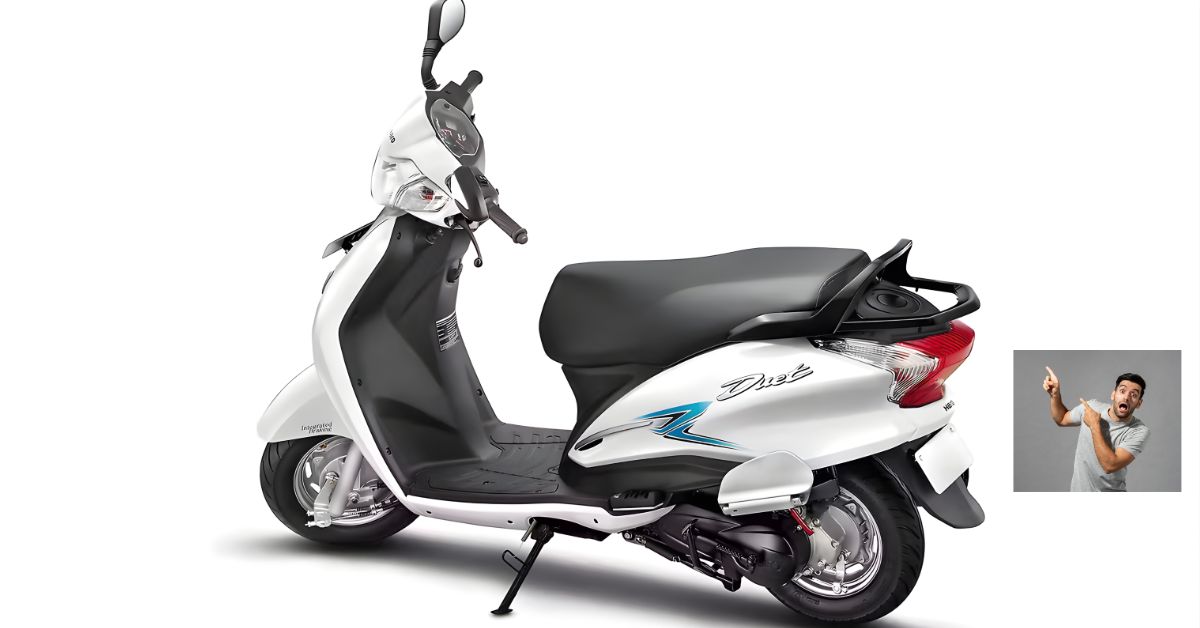
The Hero Duet Scooty holds a significant, albeit retired, place in the history of the Indian scooter market, representing a pivotal moment in Hero MotoCorp’s journey to establish its own identity in the automatic scooter segment following its separation from Honda. While the petrol-powered Duet model has been formally discontinued due to the costly transition to BS6 emission norms and shifting market preferences towards its more premium siblings, the vehicle’s legacy is defined by its robust metal body, its reliable $110\text{cc}$ engine, and its focus on practical, family-centric commuting, attributes that established a strong foundation for its current successors. Analyzing the Duet today serves as an excellent benchmark for understanding the core value propositions that defined the budget scooter segment and helps contextualize the forthcoming, highly anticipated electric resurrection of the nameplate, the Hero Duet Electric, which is poised to carry forward its legacy of affordability and practicality into the future of electric mobility.
The Original Proposition: Analyzing Hero Duet Scooty Mileage and Commuter Performance
The original Hero Duet Scooty was powered by an indigenously developed $110.9\text{cc}$ air-cooled, four-stroke engine that delivered a respectable power output of approximately $8.31\text{ bhp}$ and $8.30\text{ Nm}$ of torque. This performance profile was expertly tuned for city commutes, offering smooth, effortless acceleration that was more than adequate for carrying two adults and luggage without feeling strained, and ensuring easy maneuverability through dense traffic. Unlike many of its competitors, the Duet was notably appreciated for its all-metal body construction, which not only contributed to a feeling of solidity and durability but also made it more resilient to the typical minor dents and scrapes of urban riding, a factor valued by pragmatic Indian buyers.
When it came to efficiency, the Hero Duet Scooty offered a compelling figure, with the ARAI-certified mileage hovering around $63.8\text{ kmpl}$ for its final iteration, a highly competitive number that was a key selling point in the segment. In real-world conditions, owners consistently reported achieving a practical mileage in the range of $45\text{ kmpl}$ to $50\text{ kmpl}$, which, coupled with its $5.5$-litre fuel tank capacity, provided a decent operating range of over $240\text{ km}$ on a full tank, making it a highly economical choice for daily use. Features like the telescopic front suspension—a significant upgrade over older scooter architectures in the segment—contributed substantially to ride comfort, offering superior damping and handling over uneven roads, further solidifying its reputation as a reliable and comfortable family scooter.
The Financial Footprint: Evaluating the Last Recorded On-Road Price
Since the petrol-powered Hero Duet Scooty is discontinued, an analysis of its price focuses on its last recorded ex-showroom rates, which provide crucial insight into the segment’s budget positioning and the value Hero offered. At the time of its discontinuation, the last recorded average ex-showroom price for the Hero Duet Scooty was situated around $\text{₹}49,972$ for the base variants. This aggressive price point was a strategic move by Hero to attract cost-conscious buyers and aggressively challenge the dominant players in the $110\text{cc}$ category.
Read More: Yamaha FZ-S FI
To estimate the final On-Road Price based on its last valuation, factoring in RTO registration, road tax, and insurance, which typically added around $15\%$ to $20\%$ to the ex-showroom cost in major cities, the final on-road cost of the Duet was very accessible, often falling into the $\text{₹}58,000$ to $\text{₹}62,000$ bracket. This exceptional affordability was the cornerstone of its market appeal, making it one of the most budget-friendly, metal-bodied scooters available, offering features like an external fuel filler cap and a mobile charging port at a price where many rivals offered more basic specifications, a clear demonstration of Hero’s focus on packing practical value into an accessible price.
Enduring Value and the Future Rationale: Why Duet Buyers Were Justified and the Electric Future
While the petrol Duet is no longer available as a new purchase, analyzing its rationale reveals compelling reasons why its original buyers made a sound investment and why the nameplate is poised for a successful resurrection. The primary reason to buy the Hero Duet Scooty was its uncompromised practicality and ruggedness delivered at a low cost. The all-metal body offered superior durability and longevity compared to fiber-bodied alternatives, reducing the vulnerability to body damage which is commonplace in city traffic. This longevity, combined with Hero’s ubiquitous and affordable service network—the most extensive in the country—translated into low long-term maintenance costs and predictable servicing, guaranteeing years of trouble-free ownership. Furthermore, features like the external fuel filler and the convenient mobile charging port under the seat were not just novelties but genuine enhancements to daily convenience, streamlining routine chores for the average commuter.
Looking to the future, the legacy of the Hero Duet Scooty is being brilliantly repositioned through the expected launch of the Hero Electric Duet E, an upcoming electric scooter that is anticipated to redefine the electric budget segment. This electric successor is rumored to carry forward the Duet’s core ethos of affordability and practicality, with leaked specifications suggesting an aggressive ex-showroom price point around $\text{₹}52,000$, placing it directly against entry-level electric rivals. By leveraging an efficient battery pack and a feature set that could include a digital display and advanced safety mechanisms, the Hero Duet Electric is poised to offer a compelling mix of low initial cost and minimal running expense, ensuring the Duet name continues to represent the smart, economical choice for the next generation of commuters seeking a reliable transition into electric mobility. The brand’s strong market trust ensures that the future benefits of the Duet nameplate will center around sustained high demand, guaranteeing a reliable resale value, and access to Hero’s expanding network of service centres trained for both conventional and new-age electric components.
The narrative surrounding the Hero Duet Scooty is often limited to its discontinuation and its status as a reliable but simple $110\text{cc}$ commuter, yet a deeper examination reveals several key design and technological nuances that made it a segment standout, and which are now poised to become foundational elements for its highly anticipated electric successor. The Duet was the embodiment of Hero MotoCorp’s push for indigenous excellence post-split from Honda, and its unique feature set targeted the multi-user family segment with surgical precision, offering practical solutions that competitors in the same price band often overlooked. Understanding these subtle engineering choices is critical to grasping the machine’s overall value proposition and how the nameplate is positioned for its future role in electric mobility.
Engineering for Endurance: The Duet’s Metal Body Trade-Offs and Features
One of the most defining and often discussed characteristics of the Hero Duet Scooty was its all-metal body panel construction, a deliberate design choice that set it apart from rivals that were increasingly moving towards lighter, but less robust, fibre bodywork. This commitment to metal provided exceptional durability and a tangible sense of solidity, qualities that resonated strongly with the Indian family buyer who prioritized longevity and resistance to everyday wear and tear, ensuring that minor scrapes and bumps did not result in costly, complex panel replacements. However, this same metal construction introduced a notable trade-off in the form of a slightly heavier kerb weight, hovering around $116\text{ kg}$, which impacted its initial pickup and overall agility when compared to its lighter, fibre-bodied competitors like the Maestro Edge. This weight translated into slightly more lethargic performance off the line and a potential minor reduction in the theoretical top speed, but it simultaneously contributed to superior stability, particularly at higher speeds and over uneven surfaces, enhancing the rider’s feeling of control and safety, a highly valued attribute in a family vehicle.
Beyond the sheet metal, the Duet integrated small but highly appreciated features that defined its user-centric approach. It included a practical mobile charging port under the seat, a feature that was not standard across the segment at the time and proved invaluable for the modern commuter. Furthermore, its instrument cluster was a neat combination of analogue speed display and a digital odometer and trip meter, providing a sensible balance between traditional clarity and modern data logging, accompanied by a thoughtful side stand indicator, a safety feature that was a valuable addition to prevent accidental ride-offs. The convenient external fuel filler cap system, which eliminated the hassle of opening the seat at the petrol pump, was activated by a sophisticated remote central locking mechanism integrated with the ignition, a premium touch that drastically streamlined the refuelling process and highlighted the Duet’s focus on maximizing user convenience for daily errands.
The Electric Horizon: The Hero Duet Nameplate’s Second Life
The discontinuation of the petrol-powered Hero Duet Scooty was largely a decision of commercial strategy, driven by lower sales volumes relative to the massive investment required to upgrade the platform to the stringent BS6 Phase 2 emission standards, rather than any fundamental flaw in its design or performance. Hero MotoCorp instead chose to focus its resources on its more successful $125\text{cc}$ Destini model. However, the Duet name, with its connotations of affordability and rugged practicality, has been strategically reserved for its inevitable electric successor, the Hero Duet Electric, signalling a clear intent to dominate the entry-level EV scooter segment.
Industry intelligence and leaked specifications surrounding this electric resurrection are extremely promising, positioning the Hero Duet Electric to become one of the most compelling value propositions in the EV space. It is rumored to offer an aggressive ex-showroom price point, potentially in the $\text{₹}52,000$ to $\text{₹}60,000$ range, making it a direct challenger to budget electric rivals. Crucially, the electric model is projected to leverage an advanced lithium-ion battery pack and a modern electric motor to deliver a competitive real-world range, potentially exceeding $150\text{ km}$ on a single charge in certain configurations, and with the likelihood of rapid charging capabilities to minimize downtime. The new Duet Electric is expected to retain the practicality of its predecessor, incorporating a large under-seat storage compartment and a sturdy build, while introducing modern electric-specific features like a fully digital display with connectivity, enhancing the overall digital ownership experience and ensuring the Duet name continues to serve as the definitive, economical, and future-ready choice for the mass-market Indian family.
The enduring relevance of the Hero Duet Scooty, despite its formal retirement from the petrol lineup, stems from a series of highly pragmatic engineering and feature choices that catered precisely to the core Indian family market, making it an invaluable reference point for the segment’s evolution. While its highly competitive ARAI-certified mileage of 63.8 kmpl and its powerful positioning near the ₹50,000 ex-showroom price were the headline figures, the true differentiation lay in its unique blend of robustness and convenience features that few rivals could match at that accessible price tier. The all-metal body construction was not merely a design choice but a fundamental promise of durability, giving the scooter a structural solidity and resistance to minor damage that fibre-bodied competitors could not replicate, which justified its slightly higher kerb weight of 115 kg—a trade-off for longevity that resonated deeply with budget-conscious, long-term owners. This commitment to physical robustness was further complemented by thoughtful convenience features, notably the external fuel filler cap accessible via the multi-function ignition key, which eliminated the daily hassle of dismounting and opening the seat for refueling, alongside the inclusion of a dedicated mobile charging port within the generous under-seat storage area, addressing the modern commuter’s needs long before these features became commonplace.
The suspension setup of the Hero Duet Scooty also represented a significant value-add, featuring telescopic hydraulic shock absorbers at the front, a system that offered dramatically superior ride comfort and stability over the older bottom-link suspension prevalent in some rival base models, translating into a smoother, more controlled ride across broken city roads. Its instrument console provided a practical blend of a traditional analogue speedometer with a digital odometer and trip meter, ensuring clarity and useful journey tracking without the complexity or cost of a full digital panel. The safety system utilized Hero’s Integrated Braking System (IBS), which functioned identically to the combined braking systems found in competitors, ensuring that the application of the rear brake lever automatically engaged a portion of the front brake, significantly improving braking efficiency and reducing the risk of skidding, a critical safety element for novice and everyday riders.
The Commuter Gauntlet: The Hero Duet Scooty Against Its Main Rivals
When the Hero Duet Scooty was active in the market, it faced a relentless competitive environment, primarily targeting the massive user base of the segment-defining models while trying to carve out its own niche through superior practicality and metal body assurance. Its most direct and formidable rival was the Honda Activa, the undisputed market leader, which commanded the highest trust and resale value, although the earlier generation Activa models the Duet competed against often featured less advanced suspension and lacked the convenience of an external fuel filler, giving the Duet a distinct advantage in functional features. The TVS Jupiter was another key competitor, known for its excellent fuel efficiency, practical amenities, and superior handling, positioning itself as the most credible challenger to the Activa’s dominance, and forcing the Duet to compete aggressively on price and its unique metal-body promise.
In the youth-focused segment, the Honda Dio provided a sporty, aggressively styled alternative to the Duet’s more sober family design, appealing to college students and young riders who prioritized aesthetics and flair over pure utility. Hero’s own stable presented a domestic challenge, with the Hero Maestro Edge being its fibre-bodied, sportier cousin, often sharing the same engine but offering different body styling and targeting a younger demographic. Furthermore, the TVS Scooty Zest 110 targeted the compact, lightweight commuter market, often appealing more to women with its ease of handling and light weight, offering competitive mileage but without the heavy-duty robustness of the Duet’s metal chassis. This diverse competitive field underscores how the Hero Duet Scooty succeeded by creating a narrow, essential niche: the most affordable, highly practical, feature-rich scooter built with the structural integrity of a metal body, a clear and decisive value proposition that ensured its relevance until the prohibitive cost of BS6 engine updates led to its strategic withdrawal.