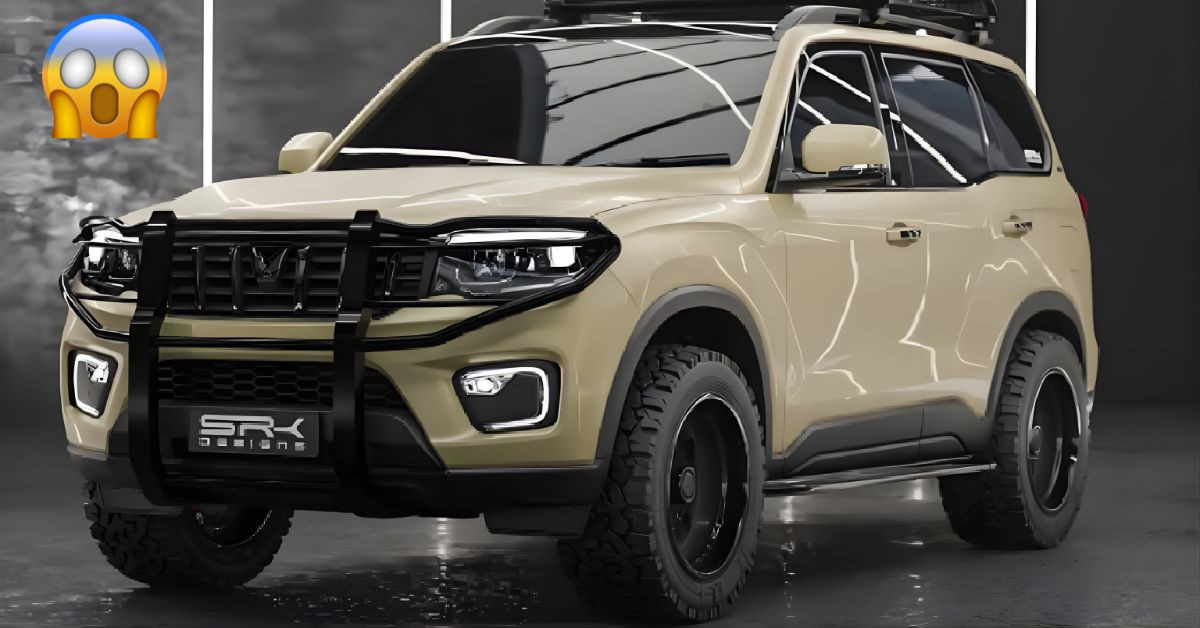
The current Mahindra Scorpio N has already achieved legendary status, successfully transitioning the iconic Scorpio nameplate into a modern, technologically advanced, and crucially, five-star Global NCAP-rated body-on-frame SUV. The impending launch of the Mahindra Scorpio N 2026 facelift is therefore not about fixing flaws, but about strategically enhancing the product’s premium quotient and feature density to maintain an unassailable lead against increasingly sophisticated monocoque rivals. This mid-cycle update is less about mechanical revolution and more about technological refinement and luxury integration, directly addressing the few areas where the current generation faced stiff competition. This deep-dive expert analysis outlines the anticipated performance and mileage metrics, forecasts the inevitable on-road price adjustments, and lays out the compelling strategic reasons why the Mahindra Scorpio N 2026 is set to become the most definitive and future-proof choice in the true SUV segment.
Unchanged Dominance: Performance, Powertrain, and the Mileage Reality of the Mahindra Scorpio N 2026
The fundamental engineering principle behind the Mahindra Scorpio N 2026 is the preservation of its core strengths: immense power and rugged, ladder-frame construction. Mechanically, the SUV is confidently expected to retain its highly successful, segment-leading engine options with only minor tuning enhancements for compliance and refinement. The potent $2.0\text{-litre}$ mStallion Turbo-Petrol engine, delivering a forceful $200\text{ PS}$ of power and $380\text{ Nm}$ of torque, will continue to offer blistering highway performance that rivals European luxury SUVs. Similarly, the workhorse $2.2\text{-litre}$ mHawk Turbo-Diesel engine, available in two states of tune with the higher variant producing $175\text{ PS}$ and $400\text{ Nm}$ of torque, will remain the powerhouse for off-road enthusiasts and heavy haulers. Both engines will continue to be paired with the choice of a slick 6-speed manual or the smooth 6-speed torque converter automatic transmission, with the formidable 4XPLOR four-wheel-drive system retaining its crucial role in the top-end diesel trims, offering low-range gearing and terrain modes for genuine off-road capability that sets it apart from all front-wheel-drive rivals.
Regarding Mahindra Scorpio N 2026 mileage, despite the minor engine refinements, the figures are expected to remain consistent with the current model’s specifications, which is a necessary trade-off for the SUV’s sheer size, weight, and power. The diesel variants are expected to maintain an ARAI-certified fuel efficiency hovering around $15.4\text{ kmpl}$ to $15.9\text{ kmpl}$ for the manual and automatic versions respectively, while the turbo-petrol variants will deliver around $12.1\text{ kmpl}$. Real-world city mileage, given the SUV’s robust power and typical traffic usage, is more realistically expected to be in the $10\text{ kmpl}$ to $12\text{ kmpl}$ range for the diesel and the single digits for the petrol automatic. While these numbers are not class-leading in terms of efficiency alone, they are respectable for a true, large, body-on-frame SUV of this immense power and size. Mahindra’s focus remains on delivering an unbeatable power-to-weight ratio and a driving experience defined by torque and commanding presence, making the acceptable mileage a justified compromise for the performance received.
Luxury Infusion: Feature Upgrades and the Anticipated On-Road Price
The true transformation of the Mahindra Scorpio N 2026 is concentrated within the cabin, where Mahindra is investing heavily to elevate the interior into a genuinely premium and technologically sophisticated space, directly countering the feature-rich cabins of its primary monocoque competitors. The most significant and talked-about addition is the long-awaited Panoramic Sunroof on higher variants, a feature that will drastically enhance the cabin’s sense of space and airiness, fulfilling a major demand from the premium SUV buyer. This is complemented by a complete overhaul of the driver’s interface, featuring a large, fully digital TFT instrument cluster that replaces the current analog-digital setup, allowing for richer graphics, more comprehensive navigation integration, and dynamic display of vehicle information. The central infotainment unit is also slated for an upgrade, likely expanding to a larger $12.3\text{-inch}$ touchscreen, ensuring seamless wireless integration of Apple CarPlay and Android Auto and better overall functionality.
Luxury and convenience features are receiving significant boosts, with the probable introduction of ventilated seats for both the front passengers and potentially the second-row captain seats in the 6-seater version, a critical comfort feature for the Indian climate. Furthermore, the audio experience is expected to be significantly enhanced with a potential switch to a premium Harman Kardon audio system with Dolby Atmos support, similar to that seen in the updated XUV700, and the addition of convenience elements like powered front seats with a driver memory function and an Auto-Park function further cementing its premium aspirations. This extensive feature list necessitates an adjustment to the price structure. Based on these substantial upgrades, the Mahindra Scorpio N 2026 is anticipated to see a price increase of approximately $4\%$ to $6\%$ across the board. Given the current top-end pricing, this suggests the top-spec Z8L Diesel Automatic 4WD variant could reach an ex-showroom price of $\text{₹}25.5\text{ Lakh}$ to $\text{₹}26.5\text{ Lakh}$. Factoring in the substantial registration, road tax, and insurance costs, the final On-Road Price for the top-end Mahindra Scorpio N 2026 is likely to hover around $\text{₹}30\text{ Lakh}$ to $\text{₹}31\text{ Lakh}$ in major metro cities, a price that remains highly competitive when considering the blend of its mechanical toughness and the new luxury feature set.
The Undeniable Rationale: Why the Mahindra Scorpio N 2026 is the Definitive Purchase
Choosing the Mahindra Scorpio N 2026 is a decision rooted in prioritizing capability, safety, and commanding road presence over marginal efficiency gains. The first and most compelling reason to buy is its unmatched body-on-frame toughness and 4×4 capability within its price segment. This rugged construction is not merely a specification; it translates to genuine longevity, structural durability, and the ability to confidently tackle the worst of Indian roads and challenging off-road terrain where monocoque SUVs simply cannot follow, making it the ideal vehicle for both family touring and adventurous explorations. The second critical advantage is its proven five-star Global NCAP safety rating, which, combined with the expected expansion of the Level 2 ADAS suite to lower-to-mid variants, ensures the SUV offers the highest level of passive and active safety available in its class, providing invaluable peace of mind for the entire family. Features like Adaptive Cruise Control and Autonomous Emergency Braking, backed by the vehicle’s robust structure, reinforce its position as a true fortress on wheels.
Read More: Mahindra Thar
Future Benefits: Sustained Demand, Customization, and Resale Value
The long-term benefits of investing in the Mahindra Scorpio N 2026 are strongly supported by market dynamics and its engineering philosophy. Firstly, the sustained market demand and iconic status of the Scorpio nameplate guarantee excellent residual value. The facelift’s infusion of high-end features like the Panoramic Sunroof and the Harman Kardon audio system future-proofs the vehicle’s appeal, ensuring its desirability remains strong in the pre-owned market and minimizing depreciation. Secondly, the ladder-frame architecture of the Mahindra Scorpio N 2026 makes it a versatile platform for customization and long-term expedition readiness. Its robust construction is ideal for supporting extensive aftermarket modifications such as heavy-duty suspension upgrades, specialized off-road bumpers, and rooftop tents, enabling owners to continuously upgrade and adapt the vehicle to suit evolving adventure needs without compromising structural integrity, a feature almost impossible to replicate in modern monocoque designs. The blend of immense power, luxury-level features, and unquestionable off-road pedigree ensures the Scorpio N 2026 is not just a vehicle for the next few years, but a durable, high-value asset built for a decade of commanding ownership.
The narrative surrounding the Mahindra Scorpio N 2026 is not confined solely to its engine output or feature list; it is a complex story of strategic market positioning, leveraging the brand’s unique body-on-frame heritage, and a calculated move to inject high-end luxury features into a rugged platform. The facelift’s significance lies in its ability to simultaneously appeal to two distinct segments: the traditional Scorpio buyer demanding unbreakable durability and off-road grit, and the modern family seeking the technological sophistication and comfort typically associated with monocoque chassis SUVs.1 A closer look at the exterior design revisions and the competitive landscape reveals the depth of Mahindra’s strategic intent for the 2026 model year.
The Exterior Statement: Design Refinements and The Ladder-Frame Aesthetic
While the fundamental, tall, and muscular silhouette of the Mahindra Scorpio N 2026 will be faithfully retained, preserving its instantly recognizable road presence and that coveted “Big Daddy” stance, the exterior will undergo subtle yet crucial visual updates to ensure it remains fresh and contemporary against sleeker rivals. The front fascia is expected to feature a redesigned grille with bolder vertical chrome or dark chrome slats, lending the SUV an even more aggressive and premium look, complemented by revamped LED Daytime Running Lights (DRLs) and updated front and rear bumpers with sharper cuts and more pronounced faux skid plates. These design tweaks are vital for addressing the perception that ladder-frame SUVs can look dated. A significant, but less visible, change is the likely upgrade to larger $19$-inch alloy wheels on the top variants, a move that enhances the side profile’s muscularity and fills the wheel wells more effectively, adding a premium visual flair while offering a slight improvement in high-speed handling, although the $18$-inch options will likely continue to be the workhorse choice for ruggedness. Importantly, the Scorpion Tail design element at the rear quarter glass, a signature nod to the original Scorpio’s heritage, will be retained, connecting the new generation with its iconic past. These exterior revisions are designed to give the Mahindra Scorpio N 2026 a refreshed and modern identity without compromising its core off-road DNA.
The Battle Lines: Mahindra Scorpio N 2026 Against Its Diverse Rivals
The Mahindra Scorpio N 2026 operates in a highly complex segment, one that pits traditional body-on-frame (BoF) construction against modern monocoque chassis designs, each appealing to a different priority set.2 The most direct and consistent rival remains the Tata Safari, which, after its own recent facelifts and feature additions like a panoramic sunroof and Level 2 ADAS, competes fiercely on price, features, and comfort, but crucially lacks the option of a true 4×4 drivetrain and relies on a monocoque chassis, making the Scorpio N the undisputed champion for buyers who demand genuine off-road capability and uncompromising durability. Similarly, the MG Hector Plus and Hyundai Alcazar also compete on monocoque platforms, excelling in on-road refinement, fuel economy, and feature abundance, such as ADAS and segment-specific convenience options, appealing primarily to city-based buyers for whom occasional highway usage is the maximum demand, a segment where the Scorpio N’s heavier, rugged frame naturally makes ride comfort a secondary priority to its toughness.
For the buyer who specifically seeks the durability and high resale value associated with a ladder-frame chassis, the true rival is the much higher-priced Toyota Fortuner. While the Fortuner commands a significant premium, sometimes exceeding $\text{₹}40\text{ Lakh}$ on-road, the Mahindra Scorpio N 2026 effectively democratizes that rugged capability, offering a near-identical level of structural integrity and superior power figures for both its petrol and diesel engines, all at an on-road price that is roughly $50\%$ less than its Japanese counterpart. Furthermore, within its own stable, the Mahindra XUV700 acts as the brand’s refined monocoque alternative, offering even more advanced digital technology and ADAS features than the Scorpio N, appealing to the buyer who prioritizes high-speed on-road handling and ultimate comfort, illustrating Mahindra’s clever strategy of offering a perfect, segment-specific SUV for every type of premium buyer.3 The Scorpio N’s unique position, bridging the gap between rugged utility and premium features, ensures it occupies a critical and irreplaceable niche in the Indian automotive market.
The Electric and Hybrid Revolution: Pioneers of Future Mobility
The most transformative segment is undoubtedly the electric and advanced hybrid space, led by models that promise long range and cutting-edge technology. The Maruti Suzuki eVitara stands as a monumental entry, representing the brand’s first serious, volume-focused electric SUV, built on a dedicated scalable platform with expected ranges exceeding $450\text{ km}$ and a dual-battery option, directly targeting the mass premium segment. Following this, the Tata Sierra EV is poised to be an iconic revival, blending nostalgic design with Tata’s new modular electric architecture and boasting a luxurious cabin, demonstrating the potential for aspirational electric vehicles in the Indian market. Mahindra is aggressively pushing its Born Electric (BE) portfolio, with models like the Mahindra XUV.e8—the electrified version of the XUV700—expected to redefine the high-end electric SUV space with its triple-screen cockpit and all-wheel-drive capability, while the future-forward Mahindra BE.05 concept promises a striking, sporty coupe-SUV design built from the ground up as an EV. In the premium international segment, the launch of the Hyundai Ioniq 6 sedan and the smaller, design-focused Volvo EX30 will introduce buyers to global EV platforms known for their aerodynamic efficiency and minimalist Scandinavian design.
The Core SUV War: Compact and Mid-Size Dominance
The mid-size SUV segment remains the single most contested space, characterized by continuous feature escalation and relentless refinement. The Kia Seltos 2026 is expected to receive further major updates focused on advanced digital interfaces and hybrid powertrain options, maintaining its fierce rivalry with the Hyundai Creta, which is itself slated for an all-electric iteration, the Hyundai Creta EV, built upon its proven platform to offer a familiar yet electrified package. Renault is set to make a highly anticipated comeback with the New Renault Duster, featuring a modern platform, the option of a strong hybrid powertrain, and a suite of advanced driver assistance systems (ADAS), directly challenging established rivals like the Maruti Suzuki Grand Vitara and the Toyota Urban Cruiser Hyryder, both of which rely on highly efficient strong-hybrid technology for a significant advantage in city mileage. In the compact crossover space, the Tata Punch Facelift and the highly localized Volkswagen Tera will continue to battle for entry-level market share, focusing on rugged styling and essential features at a budget-friendly price point.
Enduring Mass Market and Speciality Vehicles
Beyond the high-growth SUV and EV segments, certain models remain crucial to the market’s stability. The core Maruti Suzuki range is undergoing a silent modernization, with the Maruti Suzuki Baleno 2026 expected to integrate advanced hybrid systems to maintain its segment-leading efficiency and curb competition from the high-value Tata Altroz. In the utility and performance segment, the Mahindra Thar is expected to evolve with subtle design and feature enhancements, preserving its unique position as the ultimate lifestyle off-roader, while the larger Mahindra XUV900 is set to enter the market as a high-end, premium coupe-SUV offering maximum luxury and digital integration on a monocoque platform. Finally, the introduction of niche, fully imported models such as the BYD Seal premium electric sedan further diversifies the top end of the market, offering buyers products that prioritize performance and battery