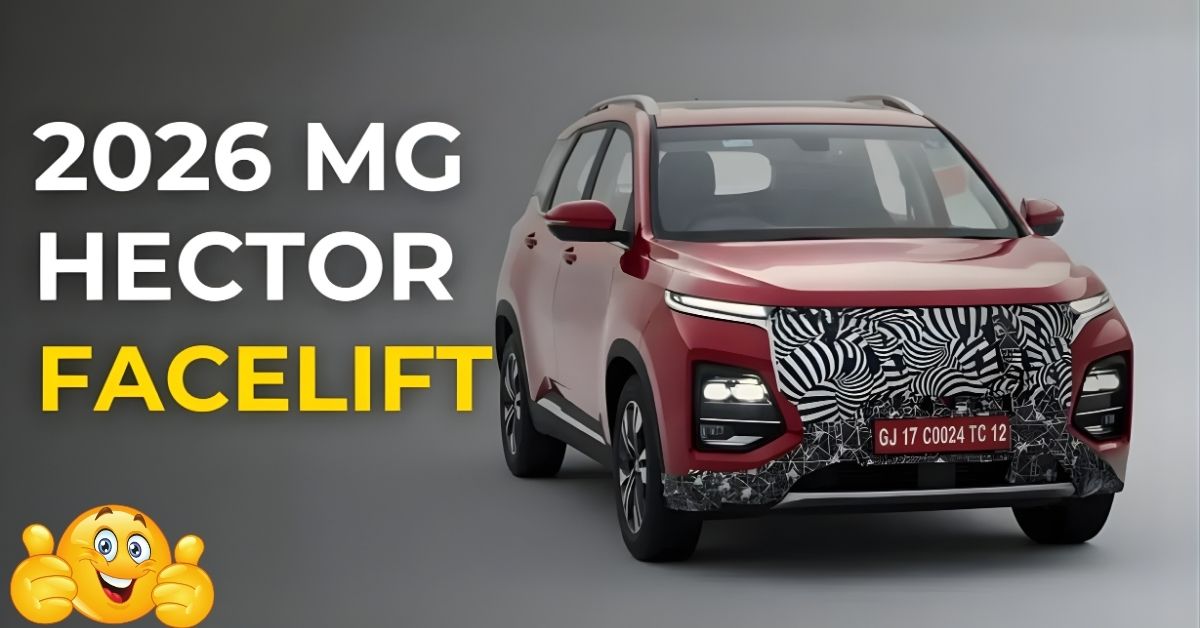
When MG first launched the Hector in 2019, it single-handedly shifted the goalposts in the mid-size SUV segment. It was all about size and technology. The 2026 facelift isn’t a generation change, but rather a surgical strike to keep it modern and feature-relevant against its ever-evolving competition.
The big news? An updated honeycomb-style grille, redesigned 18-inch alloy wheels, and a significant improvement in the cabin with a new dual-tone interior theme and, crucially, a much-needed snappier infotainment system.
The five-seater MG Hector Facelift 2026 launches with an introductory ex-showroom price starting from ₹11.99 Lakh for the base Style variant (1.5L Turbo Petrol-MT). The price goes up to ₹18.99 Lakh for the top-spec Savvy Pro variant (Petrol-CVT). For the six and seven-seater Hector Plus, the prices start from ₹17.29 Lakh.
This pricing is incredibly competitive, especially at the entry-level, throwing a serious challenge to rivals like the Tata Harrier and the Mahindra XUV700. But does the drive match the price tag? Let’s dive in.
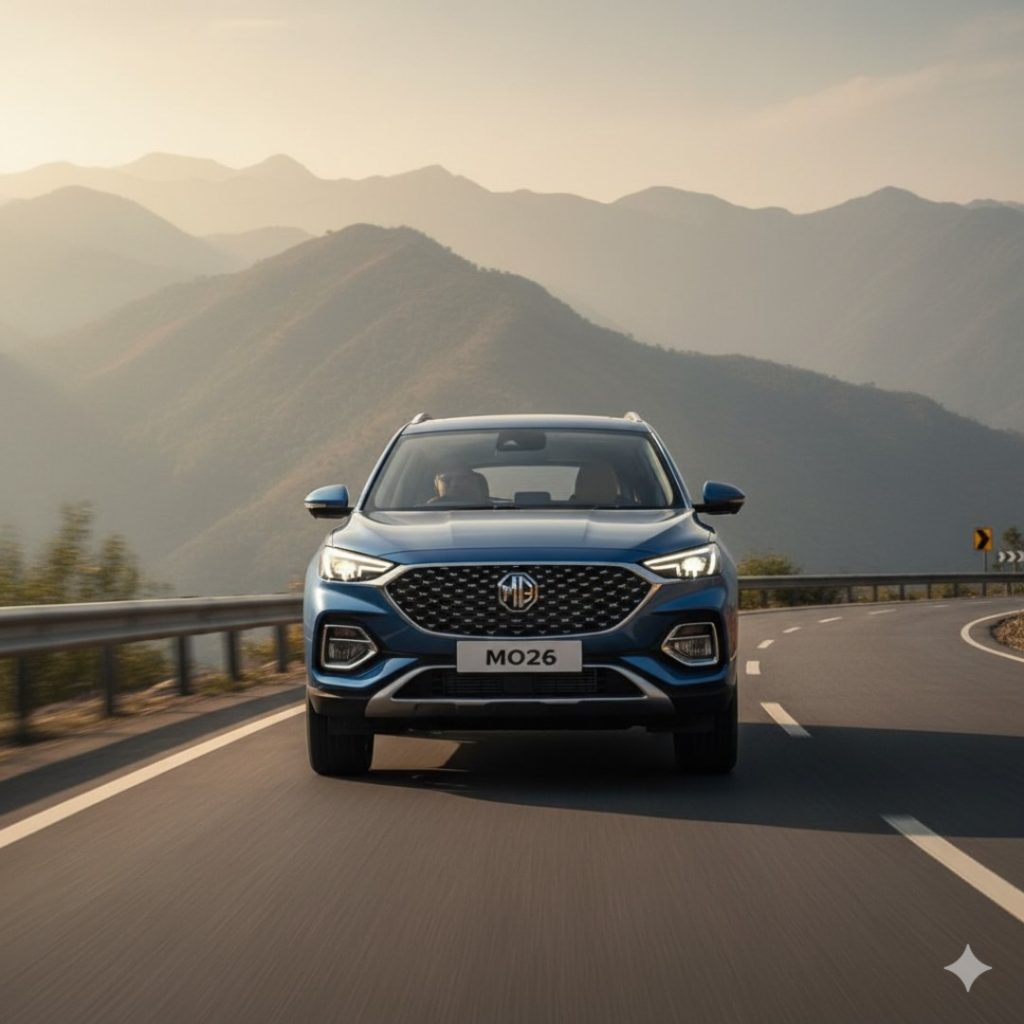
Himalayan or Western Ghats road
Quick Specs Table: Key Highlights
The 2026 Hector retains the same tried-and-tested engine options, which, frankly, is a smart, reliable move by MG.
Specification
1.5L Turbo Petrol
2.0L Turbo Diesel
Engine Type
4-Cylinder Turbocharged Intercooled
4-Cylinder Turbocharged (Fiat-Sourced)
Power Output
143 PS (141 bhp) @ 5000 rpm
170 PS (168 bhp) @ 3750 rpm
Torque Output
250 Nm @ 1600-3600 rpm
350 Nm @ 1750-2500 rpm
Transmission
6-speed Manual / CVT Automatic
6-speed Manual Only
ARAI Mileage
12.34 – 13.79 kmpl
15.58 kmpl
Length/Width/Height
4699 / 1835 / 1760 mm
4699 / 1835 / 1760 mm
Wheelbase
2750 mm (Best in Segment)
2750 mm (Best in Segment)
Boot Space
587 Litres
587 Litres
Fuel Tank Capacity
60 Litres
60 Litres
Exterior Design & Road Presence
The ‘Aura Hex’ Grille: Still the Biggest
The Hector has always been about making a statement, and the 2026 facelift is no different. The sheer size gives it undeniable road presence. The revised ‘Aura Hex’ grille, with its new honeycomb-like pattern, is still massive, but it feels a bit more integrated and refined than the previous chrome-heavy version. The split-headlamp design (LED DRLs on top, main cluster lower down) remains, which is the signature look of this segment now.
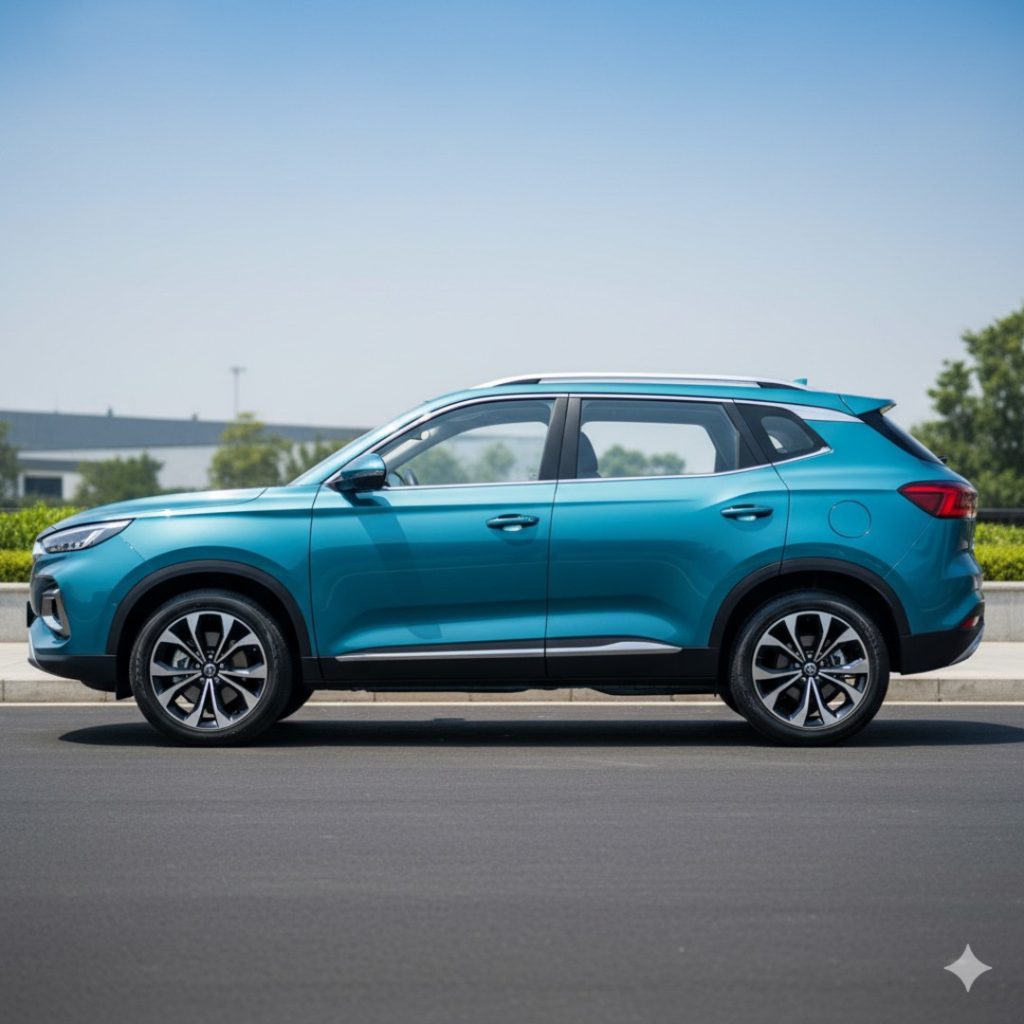
From the side, the proportions remain long, courtesy of the segment-leading 2750 mm wheelbase. The introduction of the redesigned 18-inch alloy wheels adds a much-needed freshness to the profile, breaking the monotony of the large body panels. At the rear, the connected LED tail-lamps continue, giving it a premium, modern look, especially at night.
Does it turn heads on the road? Absolutely. Especially in the new Celadon Blue or Pearl White shades. The size and the upright stance ensure that smaller cars give way instantly. It looks like a proper, large SUV, not just a crossover.
MG Hector Facelift 2026 in Celadon Blue, parked on a clean asphalt road.
Interior, Comfort & Features
If the exterior is a facelift, the interior is a comprehensive upgrade focused on user experience.
Dashboard: The King-Size Screen
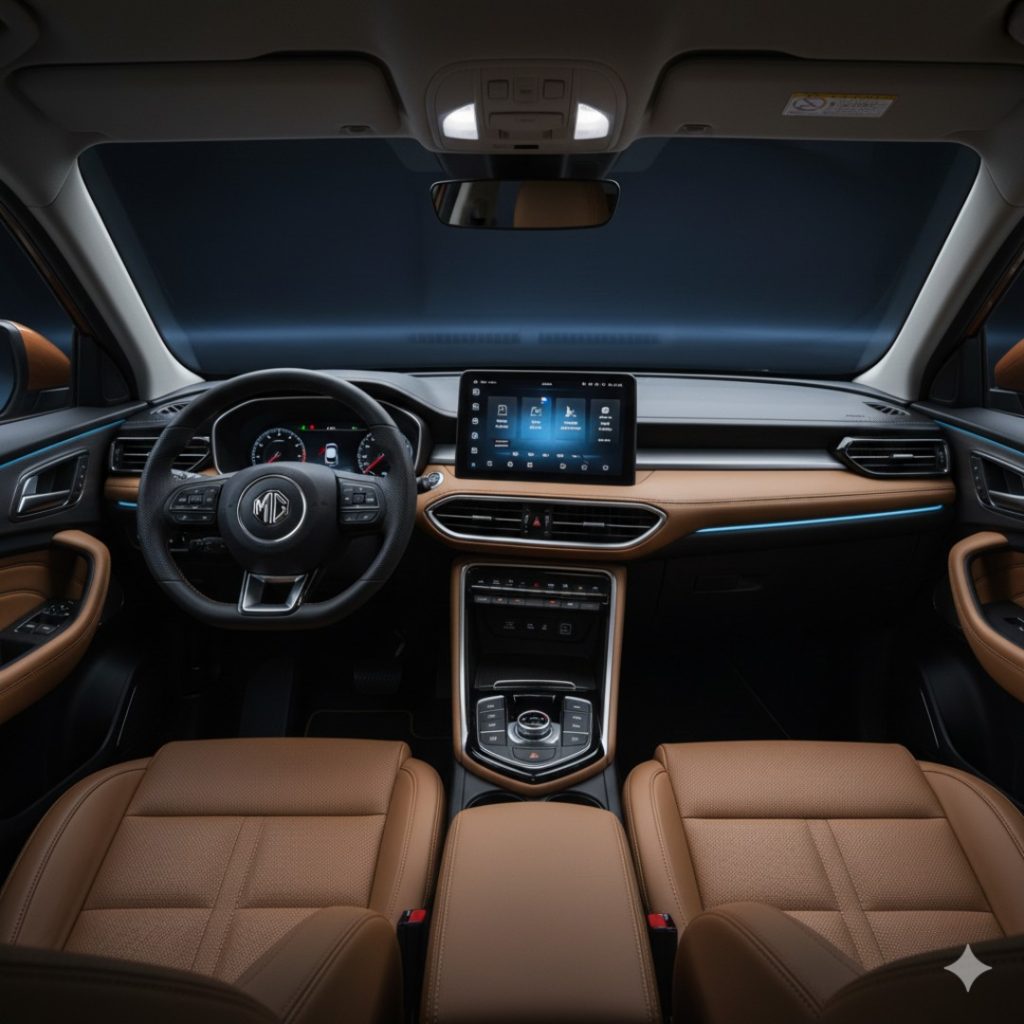
The centerpiece is, of course, the revised 14-inch portrait-style HD touchscreen. MG has worked on the biggest complaint—sluggishness. The system now gets an upgraded VRAM module (expandable up to 10GB!), making the touch response much snappier and faster. This improvement is massive.
The new dual-tone Urban Tan cabin theme (available in the Hector Plus) and dual-tone Ice Grey (in the 5-seater Hector) are brilliant, instantly lifting the cabin’s ambiance and making it feel more luxurious and airy compared to the all-black options. The use of soft-touch materials on the dash and door pads in the top variants still makes it feel more premium than many of its rivals.
Space & Comfort: A Lounge on Wheels
This is where the Hector truly shines. The 2,750mm wheelbase means class-leading legroom, both in the front and back.
Rear Seats: Three average-sized adults can sit comfortably at the back without fighting for shoulder room, which is a rare feat in this segment. The reclinable seats and dedicated rear AC vents ensure long-distance comfort is excellent.
Boot Space: With 587 litres, the luggage space is cavernous—enough for two large suitcases and multiple smaller bags for a family trip.
Features: Technology to the T
MG packs the feature list to the brim, sticking to its core value proposition.
Must-Have Features: Ventilated front seats (a boon for Indian summers), a massive panoramic sunroof, digital instrument cluster, wireless charger, and a powerful Infinity by Harman audio system that sounds fantastic.
New Tech: The updated i-Smart system now supports i-Swipe Gesture Controls—a two-finger swipe for climate control, three fingers for audio—which is a nifty gimmick but works surprisingly well once you get used to it. It also retains the Digital Auto Key with proximity lock/unlock.
The Missing Link: While it retains the 360-degree camera, it still misses out on the highly capable Level 2 ADAS suite offered by rivals like the XUV700. Safety features like this are becoming mandatory, and its absence in the top-spec is a clear disadvantage.
Focus on the 14-inch vertical touchscreen and the new dual-tone Urban Tan dashboard theme.
Engine Performance & Driving Dynamics
The Hector’s driving experience has always been geared toward comfort and cruising, and that remains the philosophy for the 2026 model.
City Drive: Smooth but not Zippy
Steering: The steering is light at low speeds, which makes maneuvering this large SUV surprisingly easy in tight city traffic. Parking is also simplified thanks to the 360-degree camera.
Clutch (Manual): The clutch on both the Turbo Petrol and Diesel manuals is relatively light, reducing fatigue in stop-and-go traffic.
Petrol-CVT: This automatic gearbox is the choice for the city commuter. It’s incredibly smooth, with no noticeable jerkiness. However, put your foot down for a quick overtake, and you’ll notice the typical rubber-band effect of a CVT—it gets loud without a corresponding surge of speed. It’s best driven with a light foot.
Highway Drive: Cruiser, not a Racer
2.0L Turbo Diesel: This Fiat-sourced engine, with its powerful 170 PS and massive 350 Nm of torque, is the pick for highway runs. It provides a punchy mid-range, making overtakes effortless, and it sits happily at 100-120 kmph all day long. This is the more enthusiastic engine option.
Petrol Turbo: The 143 PS petrol motor is adequate. It feels refined and is a decent cruiser, but the sheer weight of the Hector means it doesn’t feel ‘punchy’ like a Harrier or XUV700. It performs best when driven in a relaxed manner.
Body Roll: Given its size and comfort-oriented suspension tuning, there is noticeable body roll if you push it hard through corners. It’s not meant for aggressive driving.
Suspension: The Pothole Absorber
This is where the Hector excels on Indian roads. The suspension setup is soft and plush. The suspension absorbs potholes easily and rides over bad patches with a reassuring thud, isolating the occupants from the road’s imperfections very effectively. The long wheelbase contributes to excellent straight-line stability, making high-speed cruising feel planted and safe.
Safety (Crucial Section)
The new Hector is equipped with all the modern safety essentials.
Airbags: Top variants come with 6 Airbags (Driver, Passenger, Side, and Curtain).
Mandatory Tech: Standard features include ABS with EBD, Electronic Stability Program (ESP), Traction Control System (TCS), Hill Hold Control, and disc brakes on all four wheels.
ADAS Status: The crucial point: the MG Hector still misses out on the full Level 2 ADAS suite found in rivals. It offers some basic functions, but not the comprehensive system that includes Adaptive Cruise Control and Lane Keep Assist.
Build Quality/NCAP: The Hector’s build quality feels solid and sturdy. However, the Hector has not been tested by Global NCAP yet. Given the competitive pressure, MG needs to get this done to reassure safety-conscious Indian buyers. Until then, its rivals with 5-star ratings (like the XUV700) hold a significant advantage.
REAL WORLD MILEAGE (The Truth)
Let’s address the elephant in the room. The Hector is a big, heavy SUV, and physics dictates that it will have to work hard, impacting fuel economy. The automatic variants, in particular, will see a drop from the ARAI figures.
Variant
ARAI Claimed Mileage (kmpl)
Real World City Mileage (kmpl)
Real World Highway Mileage (kmpl)
1.5L Turbo Petrol (CVT Auto)
12.34
8.5 – 9.5
11.0 – 12.0
1.5L Turbo Petrol (Manual)
13.79
9.5 – 10.5
12.5 – 13.5
2.0L Turbo Diesel (Manual)
15.58
11.0 – 12.5
14.0 – 15.5
The real mileage in city traffic, especially in the Petrol CVT, hovers around the 9 kmpl mark. Don’t expect miracles. The diesel manual, with its stronger low-end torque, is significantly more fuel-efficient and the smarter choice if your monthly running is high. The petrol engine is for those who prioritize a refined, relaxed city drive and whose annual mileage is low.
THE COMPETITION
The MG Hector Facelift competes in the crowded but booming mid-size SUV segment ( ₹11 Lakh to ₹20 Lakh ex-showroom). Its biggest rivals are not just in the 5-seater space but also its three-row competitors like the Hector Plus. For a direct comparison, we pit it against the current market champions.
MG Hector vs Tata Harrier vs Mahindra XUV700
Feature
MG Hector Facelift 2026
Tata Harrier (5-Seater)
Mahindra XUV700 (5-Seater)
Engine (Diesel)
170 PS / 350 Nm
170 PS / 350 Nm
185 PS / 450 Nm (Auto)
Engine (Petrol)
143 PS / 250 Nm
Not Available
200 PS / 380 Nm
Touchscreen Size
14-inch HD Portrait
12.3-inch Landscape
10.25-inch Landscape
ADAS
Basic (No Level 2)
Level 2 ADAS Available
Level 2 ADAS Available
Safety Rating
Not Tested
Global NCAP: 5-Star
Global NCAP: 5-Star
Wheelbase
2750 mm (Longest)
2741 mm
2750 mm (Shared Longest)
Ex-Showroom Price (Starts)
₹11.99 Lakh (Introductory)
Approx. ₹15.49 Lakh
Approx. ₹14.01 Lakh
Winner: Value For Money (VFM)
The Mahindra XUV700 is the outright winner for Performance & Safety (200PS Petrol, 5-Star GNCAP, Level 2 ADAS).
The Tata Harrier offers a more Engaging Drive and proven 5-star safety.
However, the MG Hector Facelift 2026 provides the better Value For Money (VFM) proposition, especially at its introductory price point. You get a larger, more comfortable cabin, an industry-leading screen, ventilated seats, and excellent ride comfort for a starting price that is lakhs lower than its direct rivals. For the buyer focused on features and comfort over outright performance, the Hector is the clear VFM winner.
FINAL VERDICT
The 2026 MG Hector facelift is a textbook example of a manufacturer listening to its customers and fixing the small annoyances. The primary gripe—the laggy infotainment system—is largely gone. The new grille is subjective, but the interior refinement is undeniable. It is still the ‘Big SUV’ for the family man who prioritizes space, comfort, and gadgets over sporty driving dynamics and pure performance.
Is it worth the upgrade? If you own an older Hector and the screen lag drove you crazy, yes. If you are a new buyer coming from a compact SUV and want a massive step up in space and features without spending for an outright premium brand, then the answer is a resounding yes.
Buy it if:
You prioritize cabin space, comfort, and a plush ride over outright sporty handling.
You want the largest and most feature-packed cabin in the segment, complete with a fantastic 14-inch screen and ventilated seats.
You are looking for the best value-for-money large SUV under the ₹19 Lakh mark (ex-showroom).
Skip it if:
You are an enthusiast and demand punchy performance (go for the XUV700 Petrol or Harrier Diesel).
Your priority is the highest proven safety rating (until the Hector is GNCAP tested).
You need excellent fuel efficiency (the Petrol-CVT’s 8-9 kmpl city mileage is hard to digest for some).
FAQs (People Also Ask)
What is the on-road price of the MG Hector Facelift 2026?
The on-road price will depend on your city’s RTO and insurance charges. Based on the introductory ex-showroom price starting at ₹11.99 Lakh, expect the base model’s on-road price to be roughly ₹13.5 Lakh to ₹14 Lakh. The top-spec Petrol Savvy Pro (₹18.99 Lakh ex-showroom) will likely cross ₹22 Lakh on-road.
Is there an ADAS system in the new MG Hector?
The Hector includes basic ADAS features like a 360-degree camera and Electronic Stability Program (ESP). However, it does not offer the full-fledged Level 2 ADAS suite, which includes features like Adaptive Cruise Control, Lane Keep Assist, and Autonomous Emergency Braking, unlike its key competitor, the Mahindra XUV700.
What is the waiting period for the MG Hector 2026?
MG has opened bookings, and deliveries are expected to begin soon. Initial waiting periods are typically 4 to 6 weeks for the popular variants (Sharp Pro and Savvy Pro), but this can increase depending on the immediate demand for the introductory pricing.
Does the MG Hector Facelift 2026 come with a CNG option?
The MG Hector Facelift 2026 is offered only with the 1.5L Turbo Petrol and the powerful 2.0L Turbo Diesel engine options. There is currently no plan for a factory-fitted CNG variant for the Hector.
Garima Thakur is the founder of Udaan eBike and an automobile/EV content writer. He shares simple, research-based insights on electric bikes, scooters, motorcycles, and cars to help Indian buyers choose the right vehicle with confidence.