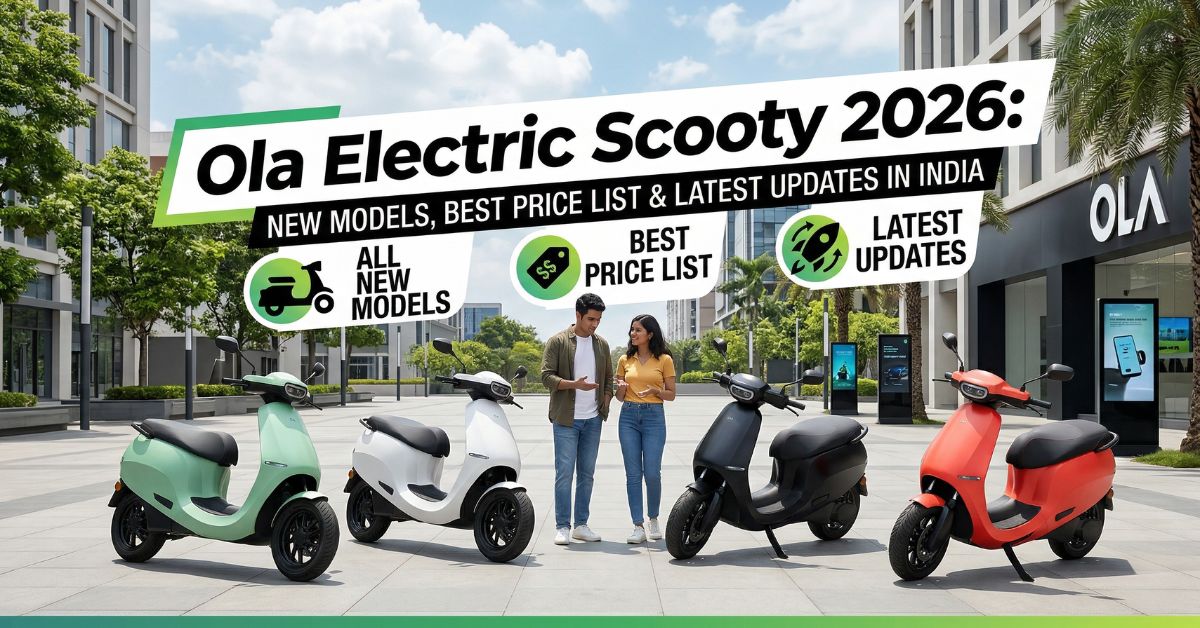
Ola Electric has undeniably been the catalyst that transformed India’s electric two-wheeler market from a niche segment into a mainstream, performance-driven battleground. With an aggressive product pipeline, vertical integration (including the indigenous 4680 ‘Bharat Cell’ battery), and a commitment to software-defined mobility via its MoveOS platform, Ola has defined the modern approach to electric scooters. In late 2025, the company faces its toughest challenge yet: maintaining its market dominance against established players like TVS and Bajaj while addressing long-term concerns regarding service and stability.
This comprehensive review provides an expert analysis of Ola Electric’s 2025 portfolio, dissecting the engineering excellence of their top models, the true potential of their charging network, and the crucial factors buyers must weigh before investing in this pioneering brand.
The 2025 Ola Scooter Lineup: Range and Performance Matrix
Ola Electric’s strategy in 2025 is to saturate the market with a tiered offering, ensuring an electric scooter exists for every budget, from the utilitarian to the enthusiast. The key technical differentiation across the lineup is in the battery capacity and the corresponding motor tuning, all built around a highly modular platform.
Flagship Performance: The S1 Pro Plus (Gen 3)
The undisputed top-tier model is the Ola S1 Pro Plus (Gen 3). This scooter sets the industry benchmark for range and speed, utilizing the indigenously developed 4680 ‘Bharat Cell’ battery technology.
- Engine & Power: Equipped with a 13 kW peak motor, allowing for instant acceleration and a claimed top speed of 141 km/h.
- Battery & Range: Features a large 5.3 kWh battery pack. The IDC-certified range stands at an unprecedented 320 km. While real-world range will vary depending on the chosen mode (Eco, Normal, Sports, Hyper), this capacity effectively eliminates range anxiety for inter-city travel and long-distance commuting.
- Price (Ex-Showroom): Starting at approximately ₹ 1,48,999 (excluding regional subsidies and RTO).
Premium All-Rounder: The S1 Pro (Gen 2)
The core best-seller in the premium segment, the Ola S1 Pro (Gen 2), offers high performance with better value. This model was crucial in establishing Ola’s reputation for speed and features.
- Engine & Power: Delivers high peak power (up to 11 kW) with a certified top speed of 120 km/h.
- Battery & Range: Uses a 4 kWh battery pack, offering an IDC range of 176 km. This provides a practical true range of around 135-145 km in Normal mode, making it an excellent urban performer.
- Price (Ex-Showroom): Approximately ₹ 1,19,000 – ₹ 1,39,000.
The Value Segment: S1 Air and S1 X Plus
For the mass market, Ola focuses on affordability without sacrificing core features like the touchscreen interface.
- Ola S1 X Plus: This mid-tier scooter provides a powerful combination of range and features. It uses a 4 kWh battery and offers an impressive certified range of up to 242 km. Its lower top speed of 90-95 km/h compared to the Pro models is a trade-off for better range efficiency at a starting price of ₹ 1.10 – ₹ 1.25 lakh.
- Ola S1 Air: Positioned for budget-conscious daily commuters, the S1 Air offers multiple battery options (2/3/4 kWh) with a maximum range of 165 km and a top speed of 95 km/h, starting at a highly competitive ₹ 84,999.
Features and Software: The MoveOS Ecosystem
The defining feature of the Ola platform is its software layer: MoveOS. This operating system, which receives continuous Over-The-Air (OTA) updates, transforms the scooter from a mechanical commuter into a digital device.
The centerpiece is the large 7-inch touch-enabled TFT display. Key features include:
- In-built GPS Navigation: Seamless mapping integration visible directly on the dash.
- Proximity Unlock: Keyless ignition via smartphone proximity.
- Hyper/Sport/Normal/Eco Modes: Four distinct riding modes that drastically alter power delivery and range.
- Regenerative Braking: Adjustable levels of regenerative braking assist in recouping energy during deceleration, further extending range.
- Smart Features: Includes cruise control, simulated motor noises (optional), smartphone communication via Bluetooth, and key sharing functionality.
The continuous software updates through MoveOS are a double-edged sword: they introduce new features like hill hold and advanced battery management, but early versions historically suffered from bugs, signaling the risk of continuous development in a consumer vehicle. However, by late 2025, MoveOS has matured significantly, enhancing stability and reliability.
Read More: Tata Electric Bike
Charging Network and Service: The Ecosystem Challenge
Ola Electric’s strategy hinges on creating a comprehensive ecosystem, but this area presents both its greatest promise and its most persistent challenges.
Charging Network (Hypercharger)
Ola’s proprietary Hypercharger network provides fast-charging points primarily located at partner establishments and charging hubs in major cities. While the network is essential for inter-city travel and quick top-ups, the rollout has been slower than initially promised. Most owners still rely heavily on the portable 750W home charger (which takes 6.5 hours for a 4 kWh battery to fully charge). The recent focus on indigenous 4680 cells suggests a push toward better thermal management, which is critical for maximizing public fast-charging speeds.
After-Sales Service and Reliability
Historically, Ola faced significant criticism regarding after-sales service, marked by long service wait times and spare parts delays due to its reliance on a direct-to-consumer sales model without a traditional dealer network. In late 2025, Ola has responded with the nationwide rollout of its ‘Hyperservice’ in-app appointment feature and an expanded service center network. Crucially, the company has announced plans to scale its service infrastructure by opening up spare parts and diagnostics to independent garages and fleet operators. This strategic move aims to significantly improve service accessibility and speed, which is a vital step in rebuilding long-term consumer trust, a factor essential to their future growth.
Pros & Cons: An Expert Summary
Pros
- Unmatched Performance & Range: Flagship S1 Pro Plus offers best-in-class power (13 kW) and certified range (320 km).
- Feature Rich: The MoveOS platform with a 7-inch touchscreen, OTA updates, and Hyper mode provides a highly modern user experience.
- Vertical Integration: Manufacturing its own 4680 ‘Bharat Cell’ batteries offers better cost control, supply chain resilience, and superior thermal management.
- Aggressive Pricing: Ola offers the lowest entry price point (S1 Z/Gig) for a feature-loaded electric scooter lineup.
- Low Running Cost: High efficiency and low maintenance ensure substantial savings over petrol scooters.
Cons
- Service and Reliability History: Early models faced significant reliability issues, and the service network is still playing catch-up, leading to brand skepticism among some buyers.
- Charging Dependency: Heavy reliance on the home charger; the Hypercharger network, while growing, is not as ubiquitous as competitors’ networks (e.g., Ather Grid).
- Software Reliance: Heavy dependence on MoveOS means critical functions, including unlocking and diagnostics, are reliant on software stability.
- Resale Uncertainty: The rapid launch of new generations (Gen 2 to Gen 3) and frequent price revisions can affect the perceived resale value of older models.
Price Details and Market Positioning in India
Ola Electric leverages aggressive, dynamic pricing and local manufacturing to compete directly with traditional ICE scooters like the Honda Activa. The prices are ex-showroom, Bengaluru, and do not include insurance, RTO, or additional accessories.
| Ola Scooter Model | Battery Capacity | Certified Range (IDC) | Top Speed | Avg. Ex-Showroom Price (Late 2025) |
| S1 Z (Budget Entry) | Portable | 75 – 146 km | 70 km/h | ₹ 59,999 – ₹ 64,999 |
| S1 Air (Mid-Range) | 2/3/4 kWh | Up to 165 km | 95 km/h | ₹ 84,999 – ₹ 1,09,999 |
| S1 X Plus (Value Range) | 4 kWh | Up to 242 km | 90–95 km/h | ₹ 1,10,000 – ₹ 1,25,000 |
| S1 Pro (Gen 2) | 4 kWh | 176 km | 120 km/h | ₹ 1,19,000 – ₹ 1,39,000 |
| S1 Pro Plus (Gen 3) | 5.3 kWh | 320 km | 141 km/h | ₹ 1,48,999+ |
On-Road Price Context: The on-road price in major cities typically adds ₹10,000 to ₹15,000 (for RTO, insurance, and taxes) to the ex-showroom price, varying by state and local subsidies.
Final Verdict: The Unstoppable Disruptor
Ola Electric remains the most ambitious and influential brand in India’s electric mobility space. The S1 Pro Plus (Gen 3), powered by the indigenous 4680 ‘Bharat Cell’, is a statement of technical capability, offering the best range and speed currently available. While early issues regarding service and product reliability created significant turbulence, the company’s aggressive investments in stabilizing its software (MoveOS) and expanding its service ecosystem through ‘Hyperservice’ show a firm commitment to long-term quality. For the buyer willing to embrace a digitally integrated vehicle and ride the wave of innovation, Ola Electric offers an unbeatable package of performance and future-ready technology.