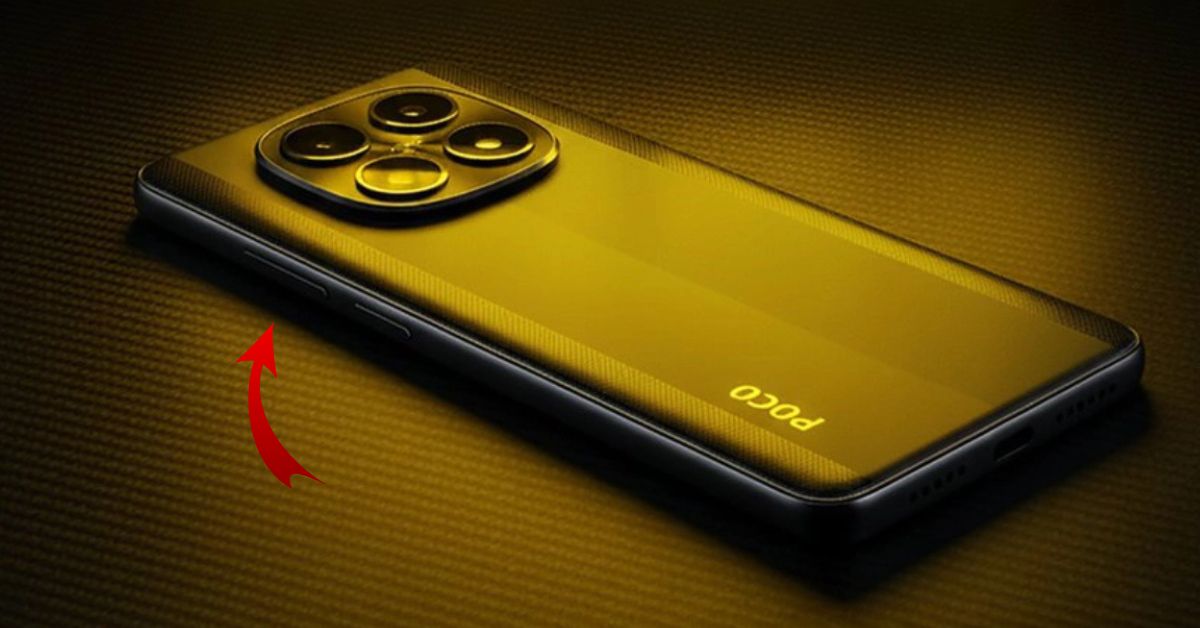
It is January 2026, and the budget smartphone war in India just got a new “Slayer.” POCO has officially dropped the POCO M8 5G, and the specs are frankly hard to believe for a phone starting at an expected ₹11,999.
The real truth is that POCO is tired of being called a “rebranded Redmi” brand. This time, they’ve introduced a 3D Curved OLED display—a feature usually reserved for phones costing ₹25,000—into the sub-15k segment. With the first Snapdragon 6 Gen 3 in this price bracket and a “Carbon Fiber” design language, the hype is real. But don’t waste your money if you’re expecting a flagship camera. Let’s peel back the marketing and see what the POCO M8 actually delivers.
QUICK SPECS TABLE:
| Feature | Specification |
| Processor | Qualcomm Snapdragon 6 Gen 3 (4nm) |
| Display | 6.77-inch 3D Curved AMOLED, 120Hz |
| Peak Brightness | 3,200 Nits |
| RAM/Storage | 8GB LPDDR4X |
| Rear Camera | 50MP AI Main (Sony Sensor) + 2MP Depth |
| Front Camera | 20MP Selfie |
| Battery | 5,520mAh Silicon-Carbon Battery |
| Charging | 45W Wired (0-50% in 28 minutes) |
| Build | 7.35mm Slim, IP66 Water/Dust Resistant |
| OS | HyperOS 2.0 (Based on Android 15) |
DESIGN & BUILD (Deep Dive):
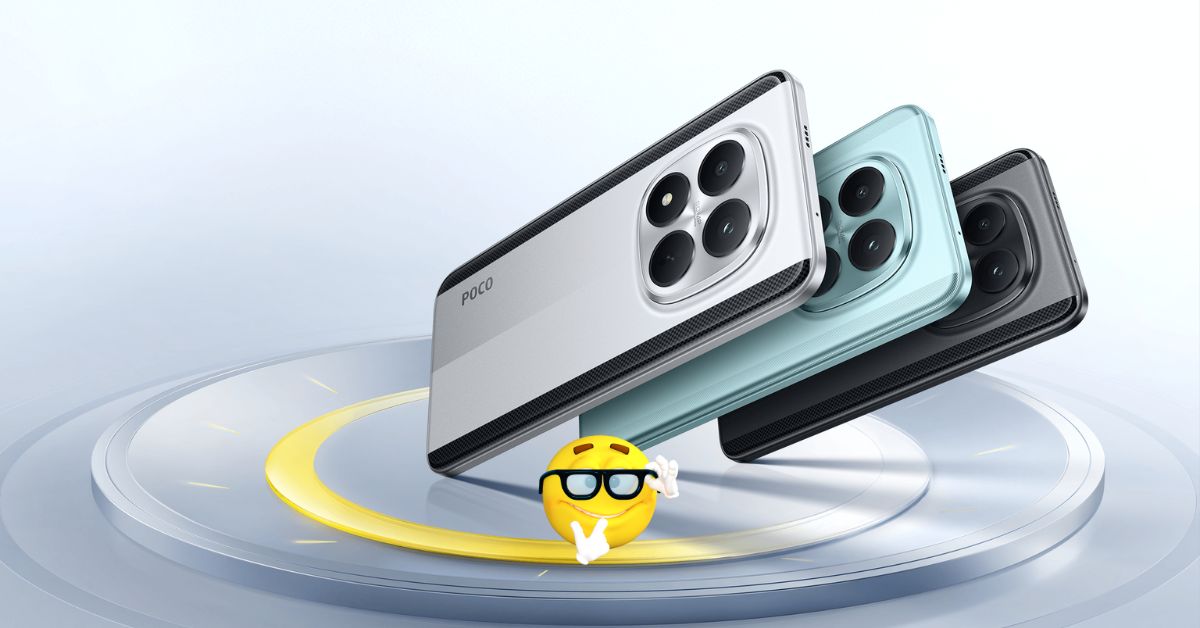
At just 7.35mm thick and weighing 178 grams, the POCO M8 is officially the slimmest M-series phone ever. When you hold it, the “in-hand feel” is surprisingly premium. The edges are curved, so it doesn’t dig into your palm like the boxy phones from a few years ago.
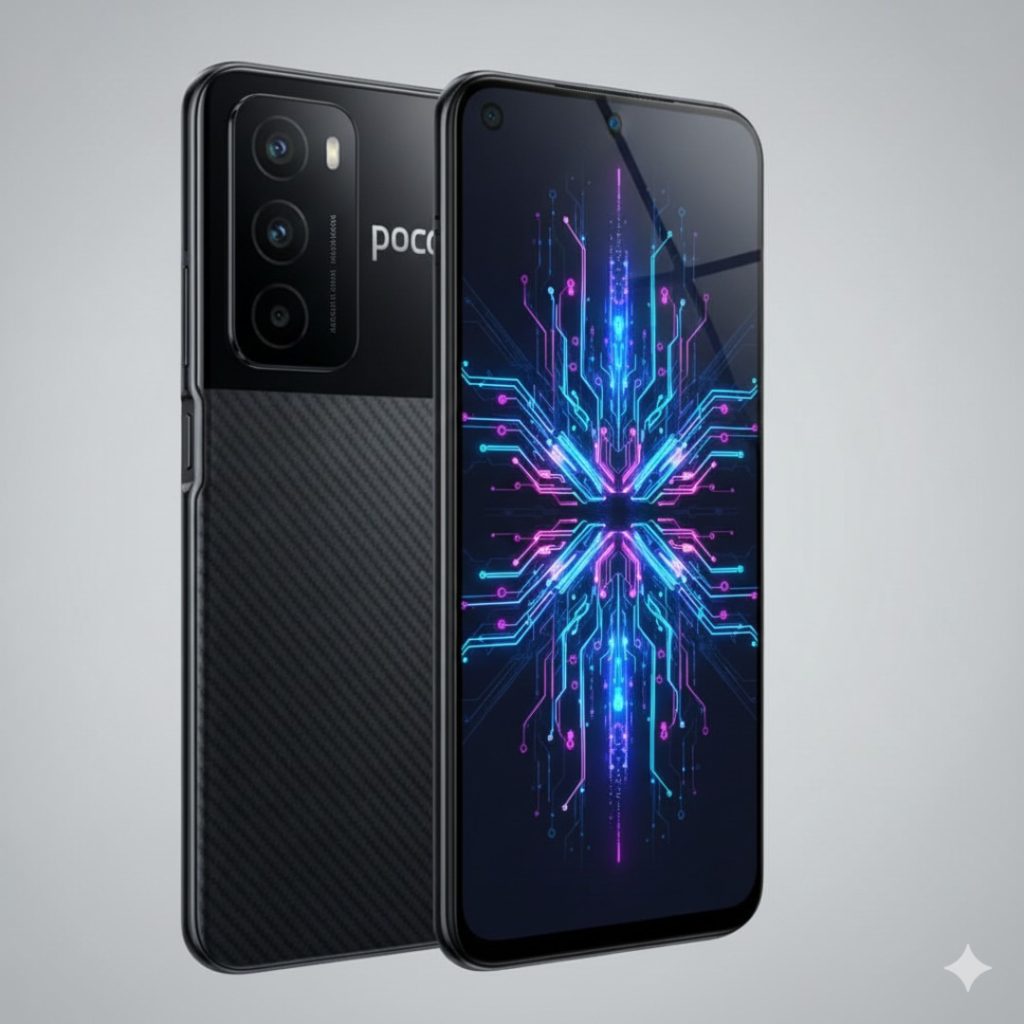
The back features a dual-tone aesthetic. One side has a smooth, matte finish, while the camera strip has a textured, carbon-fiber pattern that screams “Performance.” The real truth is that the back is still high-quality polycarbonate (plastic), not glass, but it’s finished so well that most people won’t care. It also carries an IP66 rating, meaning it can survive a heavy rain shower but don’t take it for a swim.

DISPLAY & VISUALS:
This is the POCO M8’s “Masterstroke.” You are getting a 6.77-inch 3D Curved AMOLED panel.
- Brightness: It hits a peak of 3,200 nits. Even under the harsh midday sun in Delhi or Mumbai, you won’t have to squint.
- Fluidity: The 120Hz refresh rate makes scrolling through Instagram and Reddit feel buttery smooth.
- Protection: It features Wet Touch 2.0 technology, so if your hands are sweaty or there’s a drop of water on the screen, it still responds perfectly.
For a phone under ₹13,000, this screen makes every other competitor look outdated by five years.
Read more : OPPO A3 Pro 5G
PERFORMANCE & GAMING:
The POCO M8 is powered by the Snapdragon 6 Gen 3 (4nm). In our real-world stress test, it scored over 8,25,000 on AnTuTu.
- Gaming: You can play BGMI at 60fps (Extreme settings) with very few frame drops. It even supports 120fps in lighter titles.
- Multitasking: With 8GB of RAM (expandable via Virtual RAM), we kept 15 apps open, including YouTube and Chrome, and the phone didn’t reload once.
- Heating: Thanks to the 4nm architecture, the phone stays cool during 30 minutes of gaming. It only starts to feel warm near the camera module after about an hour of intense play.
CAMERA PERFORMANCE:
Don’t waste your money if you are a professional photographer. While the 50MP main sensor (Sony Light Fusion 400) is excellent for daytime shots, the secondary 2MP sensor is basically a filler.
- Main Camera: In daylight, colors are punchy and dynamic range is surprisingly good. It supports 4K video recording, which is a huge win in this segment.
- AI Features: It comes with AI Magic Eraser Pro and AI Sky Replacement. You can literally “erase” annoying tourists from your photos directly in the gallery app.
- Selfies: The 20MP front camera is a big jump over the usual 8MP sensors found in budget phones. Skin tones look natural, though it tends to over-smooth in low light.
BATTERY & ENDURANCE:
The POCO M8 uses a 5,520mAh Silicon-Carbon battery. Silicon-carbon is the new tech that allows for higher capacity in a thinner body.
- Battery Life: It easily lasts 1.5 days on a single charge with moderate use.
- Charging Speed: The 45W charger is included in the box. It charges from 0-50% in exactly 28 minutes and takes about 65 minutes for a full 100% top-up.
- Bonus: It supports 18W reverse charging, so you can use your phone as a power bank to charge your TWS earbuds in an emergency.
THE COMPETITION:
POCO M8 vs Samsung Galaxy M17 vs Realme Narzo 90X
| Feature | POCO M8 5G | Samsung Galaxy M17 | Realme Narzo 90X |
| Display | 3D Curved AMOLED (120Hz) | Super AMOLED (90Hz) | IPS LCD (120Hz) |
| Chipset | Snapdragon 6 Gen 3 | Exynos 1330 | Dimensity 6300 |
| Charging | 45W | 25W | 60W |
| Weight | 178g | 198g | 210g |
The Winner: The POCO M8 is the clear winner for anyone who wants the “Premium Look.” The curved screen and slim design make the Samsung and Realme look bulky. However, if you want the absolute fastest charging, the Realme Narzo 90X is still slightly ahead.
FINAL VERDICT:
Buy it if:
- You want the best-looking display (Curved AMOLED) in the budget segment.
- You need a slim, lightweight phone that doesn’t feel like a brick.
- You want a solid 5G performer for gaming and multitasking.
Skip it if:
- You need an Ultra-Wide camera (The M8 lacks one).
- You prefer a clean, “Stock Android” experience (HyperOS has some pre-installed apps).
- You are okay with a thicker phone if it means getting a massive 7000mAh battery.
FAQs (People Also Ask):
Q1: Does the POCO M8 have a headphone jack?
No, the 3.5mm jack has been removed to keep the phone ultra-slim (7.35mm). You’ll need to use Type-C earphones or Bluetooth.
Q2: How many Android updates will it get?
POCO has promised 4 years of Android OS updates and 6 years of security patches, which is insane for a budget phone.
Q3: Is the curved screen prone to accidental touches?
No, POCO’s software includes a “Mistouch Prevention” algorithm that works quite well along the edges.
Q4: Is it available on Amazon or Flipkart?
In India, the POCO M8 is exclusive to Flipkart and the Xiaomi official website.
Q5: Does it support 5G on all Indian bands?
Yes, it supports all major 5G bands in India (n1/n3/n5/n8/n28/n77/n78), including both Jio and Airtel networks.