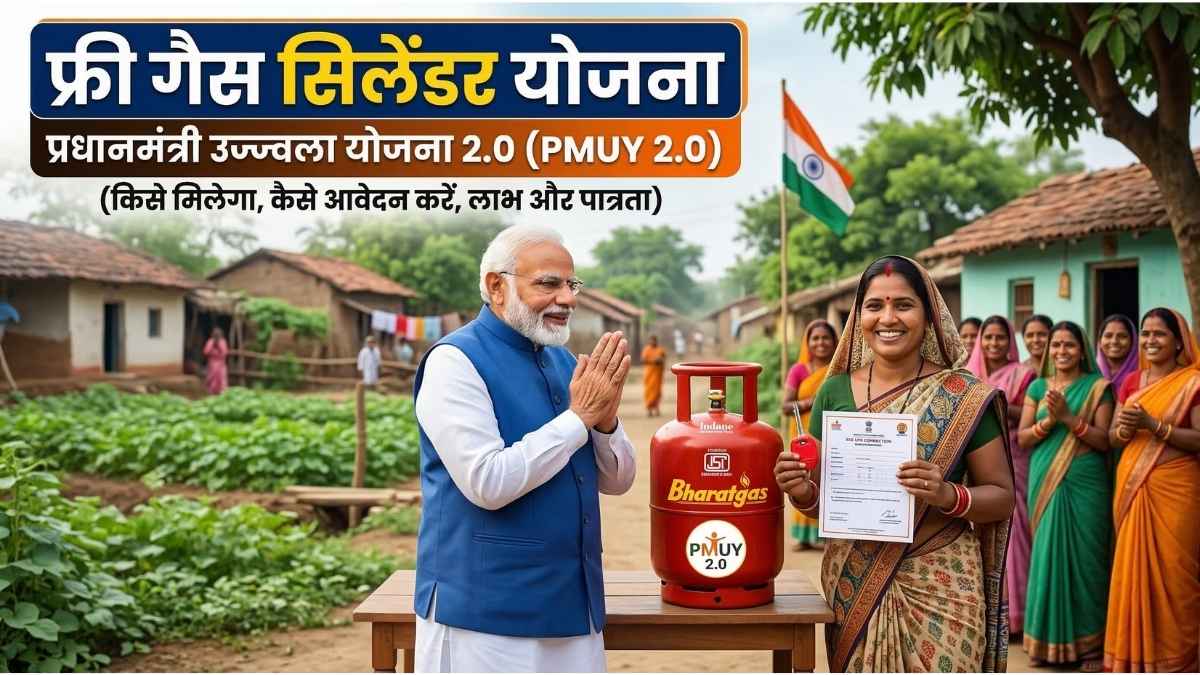
If you are searching for Pradhan Mantri Ujjwala Yojana 2.0, you probably do not want a long policy lecture. You want clear answers: who can apply, what is really free, which papers are needed, whether migrant families can apply, and how to avoid rejection. That is exactly what this guide covers in simple English.
Apply for Free Gas Cylinder Yojana
Fill your details and click Apply Now.
Pradhan Mantri Ujjwala Yojana was started to help poor households shift from traditional cooking fuels like firewood, coal and cow-dung cakes to LPG. The official PMUY website says the scheme began in May 2016, Ujjwala 2.0 added more LPG connections with special support for migrant households, and the overall target has now been raised to 10.6 crore connections, with additional connections currently being released.
Why Pradhan Mantri Ujjwala Yojana 2.0 matters for families today
The biggest value of this scheme is practical, not just symbolic. It gives an eligible woman a deposit-free LPG connection, and under the current Ujjwala 2.0 setup the first refill and stove are also provided free of cost. Official FAQs also say the beneficiary does not have to pay the distributor for the covered connection items.
For families that worry about refill cost after getting the connection, there is another important point. The Union Cabinet approved continuation of a targeted subsidy of ₹300 per 14.2 kg cylinder for up to 9 refills in FY 2025-26, with proportionate support for 5 kg cylinders. So the scheme is not only about getting the first connection; it is also meant to support continued LPG use.
Pradhan Mantri Ujjwala Yojana 2.0 benefits and what you get
Under the official PMUY material, the support includes the security deposit for the cylinder, pressure regulator, hose, consumer card and installation charges. In plain words, the connection setup cost is covered. On top of that, the first refill and stove are also free for PMUY beneficiaries.
One useful detail many articles miss is the cylinder choice. You are not forced into only one option. The official FAQs and PIB material say applicants can choose 14.2 kg single bottle, 5 kg single bottle, or 5 kg double bottle connection. This matters because some households prefer a smaller cylinder for easier budgeting and handling.
Who can apply for Pradhan Mantri Ujjwala Yojana 2.0
At the most basic level, the applicant must be an adult woman, she must belong to a poor household, and there must be no existing LPG connection in the same household. The PMUY FAQ says the poor-household test is based on the required deprivation declaration. The official PMUY website also lists recognised categories such as SC households, ST households, PMAY-Gramin, AAY, SECC households and poor households covered under the 14-point declaration.
There are also some clear restrictions. A male member cannot apply in place of the beneficiary. If there is no adult female in the household, the connection is not released under PMUY. A minor girl also cannot be treated as the applicant. These are common points of confusion, so it is better to know them before filling the form.
Documents for Pradhan Mantri Ujjwala Yojana 2.0
Keep your documents ready before starting. In simple terms, the official list includes the KYC form, Aadhaar of the applicant, Aadhaar of all adult family members shown in the family document, address proof if the Aadhaar address is different, ration card or another government document showing family composition, bank account details with passbook or cancelled cheque, and the deprivation declaration. For migrant applicants, a self-declaration can be used for proof of address and family composition.
This migrant rule is one of the biggest reasons Ujjwala 2.0 became more practical. At launch, the government specifically highlighted that migrants would get minimum paperwork and could use self-declaration instead of the usual ration card and address proof requirement. That is a major help for families living away from their native place for work.
How to apply for Pradhan Mantri Ujjwala Yojana 2.0 without confusion
You can apply in two ways. The first is online through the official PMUY route and the linked OMC portals. The second is offline by submitting the form to the nearest LPG distributor of the public sector oil companies. The PMUY FAQ also says you can take help from a CSC if needed.
The cost part is simple. If you submit the form yourself online, there is no fee. If you use a CSC for application submission, the official FAQ says a ₹20 service charge applies. For the actual PMUY connection, the official answer is that the customer does not have to pay anything, apart from any state stamp fee if applicable.
The process after submission is also worth understanding. PIB says applications go through system-driven de-duplication checks and then physical verification by OMC officials before the subscription voucher is issued and the LPG connection is installed. So if approval takes time, that does not always mean rejection; it can simply mean verification is still running.
Where applicants usually face delays
In practice, delays usually happen because the documents do not match the official requirements. The most common problem is Aadhaar mismatch or inactive Aadhaar. The PMUY FAQ clearly says correct Aadhaar details are mandatory and should be updated before applying.
Another common issue is family composition mismatch. The form requires Aadhaar details of all adult family members listed in the ration card or family document, and the household must not already have an LPG connection in the name of any listed family member. So even if one person in the same household already has a connection, the new PMUY application can fail.
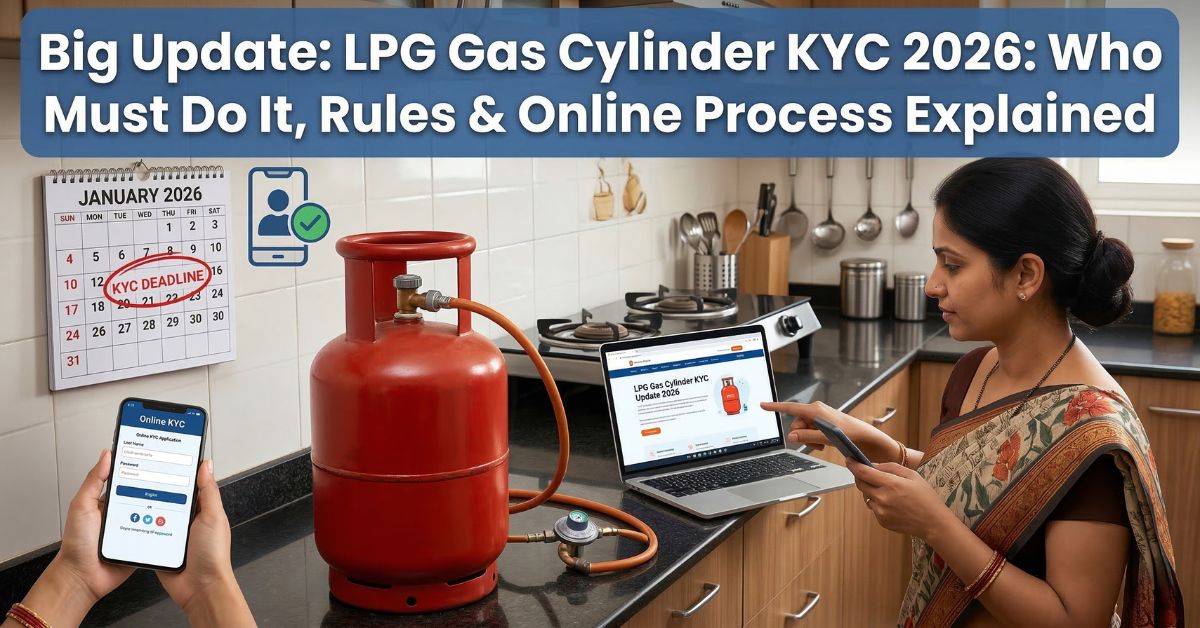
A third issue is incomplete KYC or eKYC. The FAQ says biometric Aadhaar authentication is mandatory and is carried out by the LPG distributor. That means you should not assume the form alone is enough; identity verification must also be completed properly.
A simple way to decide whether this scheme is right for your home
If your family still cooks mainly on wood, coal or similar fuel, and an adult woman in the house meets the PMUY conditions, this scheme can reduce the upfront burden of moving to LPG. A smaller 5 kg option can also make refill planning easier for families that buy in smaller monthly budgets. At the same time, it is smart to keep expectations practical: the connection may be free, but regular refill use still depends on household budget, local delivery access and correct subsidy linkage to the bank account.
FAQs on Pradhan Mantri Ujjwala Yojana 2.0
Is Pradhan Mantri Ujjwala Yojana 2.0 completely free?
The official PMUY FAQ says the beneficiary does not have to pay for the covered connection items. Under Ujjwala 2.0, the first refill and stove are also free. Self-submission of the online application has no fee, though a CSC may charge ₹20 for application assistance.
Can migrant families apply for Pradhan Mantri Ujjwala Yojana 2.0?
Yes. Ujjwala 2.0 specifically added easier rules for migrant applicants. A self-declaration can be used for proof of address and family composition, which reduces paperwork for families living away from their home state or district.
Can a man apply under Pradhan Mantri Ujjwala Yojana 2.0?
No. The PMUY FAQ clearly says the connection is released only in the name of an adult female member of a poor household. A male member cannot apply as the beneficiary under the scheme.
Which cylinder size is better under Pradhan Mantri Ujjwala Yojana 2.0?
There is no single best option for everyone. If the family prefers fewer bookings and standard household use, 14.2 kg may suit better. If monthly cash flow is tight or handling a smaller cylinder is easier, the 5 kg option can be practical. The official scheme allows all three choices: 14.2 kg single bottle, 5 kg single bottle and 5 kg double bottle.
What should I do if my application is not moving forward?
First, check whether Aadhaar details are correct for the applicant and all adult family members. Then confirm that the family document is correct, bank details are active, and no existing LPG connection is already registered in the same household. Since official processing includes de-duplication, eKYC and physical verification, mismatched records are a common reason for delay.