The idea of calling a taxi with no human driver Robotaxi Services once sounded like science fiction. But in 2026, robotaxi services are becoming a reality in several parts of the world. Tech companies and carmakers are investing billions into self-driving vehicles that can pick up passengers automatically using apps, sensors, and artificial intelligence.
This article explains what robotaxi services are, where they are already operating, and what the future may look like for India.
What Are Robotaxi Services?
A robotaxi is a self-driving vehicle that provides ride-hailing services without a human driver. Passengers book the ride using a mobile app, just like traditional cab services such as Uber or Ola. The difference is that the vehicle drives itself using advanced technology.
These vehicles rely on several systems to operate safely:
- Cameras and sensors to detect roads, traffic, and pedestrians
- Radar and LiDAR technology to map surroundings
- Artificial intelligence software to make driving decisions
The goal is to create a transport system where cars can safely move passengers without human intervention.
Global Expansion of Robotaxi Services
Robotaxi services are already being tested or deployed in multiple cities worldwide. Technology companies and automakers are racing to lead the autonomous mobility market.
Recent developments show how quickly this sector is growing:
- A commercial robotaxi service launched in Las Vegas through a partnership between Uber and Motional, allowing passengers to book driverless rides via the Uber app.
- Uber, Nissan, and AI startup Wayve are planning a robotaxi pilot in Tokyo by late 2026, using Nissan electric vehicles with self-driving technology.
- Amazon-owned Zoox is expanding robotaxi testing across multiple U.S. cities, including Dallas and Phoenix.
Companies such as Waymo, Tesla, Zoox, and Baidu are among the global leaders developing self-driving taxi technology.
Some services are already operating commercially in certain cities, offering thousands of rides every week.
How Robotaxis Work
Robotaxis operate using advanced autonomous driving systems. These systems analyze data from multiple sensors and cameras in real time to navigate roads.
The basic process is simple for passengers:
- A user books a ride through an app.
- The robotaxi arrives automatically at the pickup location.
- The passenger enters the car and confirms the destination.
- The vehicle drives to the destination without human control.
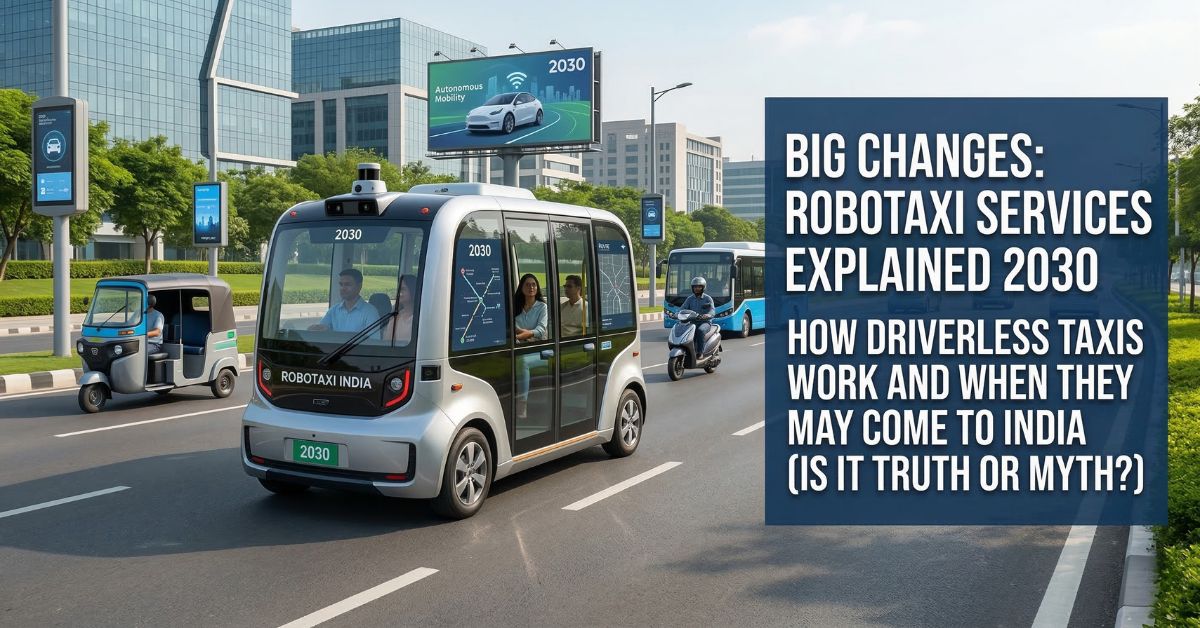
Inside the vehicle, screens usually display route information and sensor data to help passengers understand how the car is navigating.
Why Tech Companies Are Investing in Robotaxis
Robotaxi services are expected to change urban transportation in several ways.
First, they could significantly reduce the cost of ride-hailing. Without a human driver, companies can operate fleets of autonomous vehicles more efficiently.
Second, they could improve road safety. Autonomous systems are designed to follow traffic rules precisely and avoid risky driving behavior.
Third, robotaxis could reduce congestion and pollution if integrated with electric vehicles and smart mobility systems.
Industry forecasts suggest the global robotaxi fleet could reach hundreds of thousands of vehicles by 2035, potentially creating a market worth around $100 billion.
Can Robotaxi Services Work in India?
India presents both opportunities and challenges for robotaxi technology.
On one hand, India has a rapidly growing urban population and heavy demand for ride-hailing services. Autonomous taxis could eventually help manage traffic and improve transport efficiency.
On the other hand, Indian roads are among the most complex driving environments in the world. Mixed traffic, unpredictable road behavior, and infrastructure differences make autonomous driving more difficult.
Some Indian startups are already experimenting with autonomous vehicle technology. For example, a Bengaluru-based company developed an experimental autonomous vehicle designed to handle chaotic traffic conditions.
However, large-scale robotaxi deployment in India will likely require major advances in AI technology, road infrastructure, and government regulations.
When Could Robotaxi Services Launch in India?
There is no official timeline yet for robotaxi services in India. Most industry experts believe that fully driverless taxis may take several more years to arrive.
Before that happens, India may see gradual steps such as:
- Advanced driver-assistance systems in cars
- Semi-autonomous taxis with safety drivers
- Pilot projects in controlled environments like tech campuses or smart cities
Regulatory approval will also play a key role, as governments must establish safety standards and legal frameworks for autonomous vehicles.
Why Robotaxis Matter for the Future of Mobility
Robotaxis represent a major shift in how transportation works. Instead of owning a car, people may rely more on on-demand autonomous vehicles for daily travel.
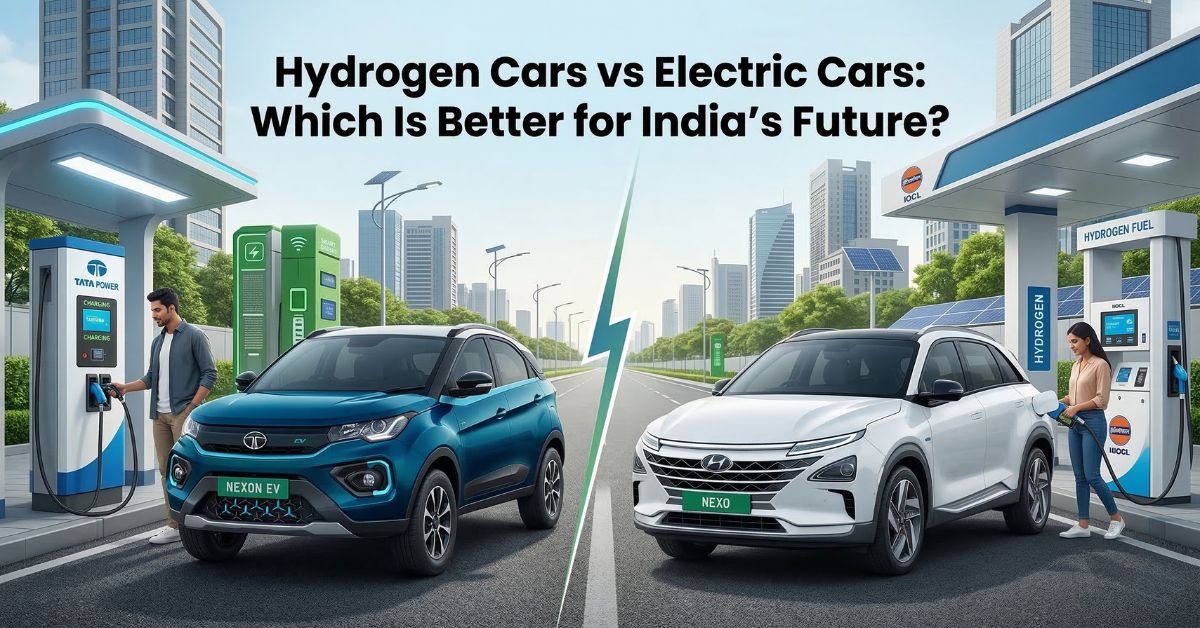
Read More: Hydrogen Cars vs Electric Cars
If the technology becomes reliable and affordable, it could transform cities by reducing traffic accidents, lowering transport costs, and improving accessibility for people who cannot drive.
For India, the technology could become important in the long term as cities expand and demand for efficient transport grows.
FAQs(Robotaxi Services)
What is a robotaxi?
A robotaxi is a self-driving car that works like a taxi service. Passengers can book rides through an app, and the vehicle drives itself without a human driver.
Are robotaxis already available?
Yes. Robotaxi services are already operating or being tested in cities in the United States, China, and the Middle East.
Which companies are developing robotaxis?
Major companies include Waymo, Tesla, Zoox, Baidu, and several car manufacturers and technology firms.
Are robotaxis safe?
Yes. Robotaxi services are already operating or being tested in cities in the United States, China, and the Middle East.
Which companies are developing robotaxis?
Major companies include Waymo, Tesla, Zoox, Baidu, and several car manufacturers and technology firms.
Are robotaxis safe?
Robotaxis use sensors, AI systems, and advanced software to detect obstacles and follow traffic rules. However, safety testing and regulations are still evolving.
When will robotaxis come to India?
There is no confirmed launch date yet. Experts believe it may take several years before fully driverless taxi services are introduced in India.