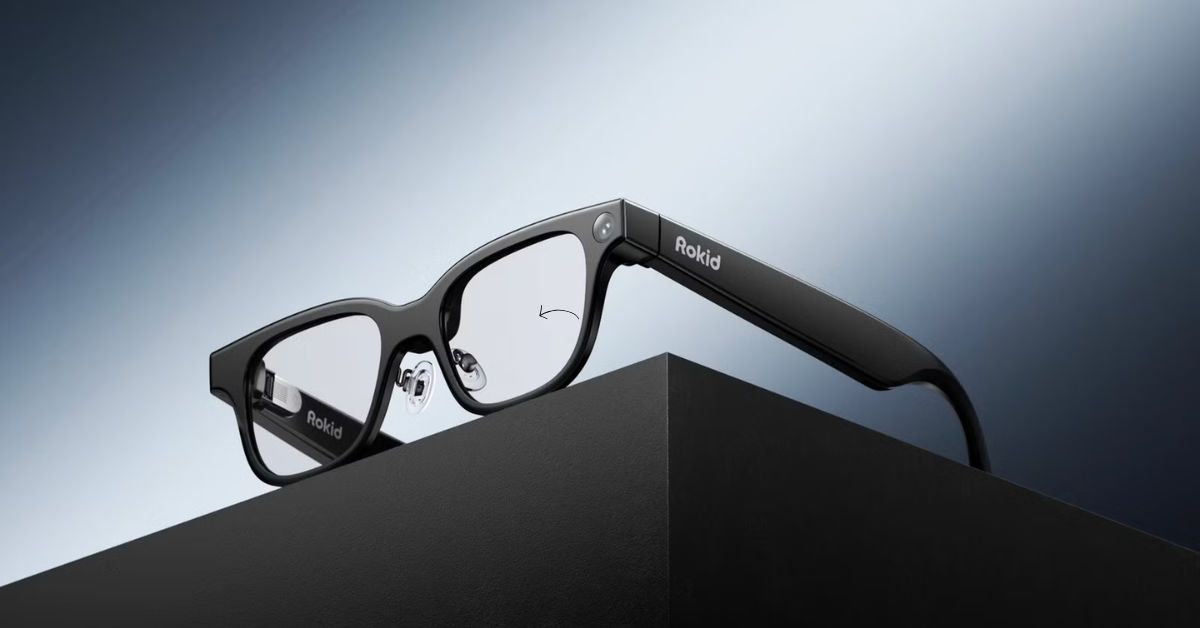
The world of wearable technology has just seen a major shift with the global launch of the Rokid AI Glasses Style. Unveiled at CES 2026 and officially shipping as of late January, these smart glasses are designed to look like high-end fashion eyewear while packing the intelligence of multiple AI models. Unlike previous AR headsets that were bulky and wired, the Rokid Style focuses on a “voice-first” and “display-free” experience, making them comfortable enough to wear from morning to night.
For tech enthusiasts in India, the arrival of these glasses marks a significant alternative to the Meta Ray-Ban series. Rokid is positioning itself as an “open ecosystem” choice, allowing users to switch between different AI assistants like ChatGPT, DeepSeek, and Qwen, rather than being locked into a single brand’s software.
Key Features and Design: Lighter Than Ever
The most impressive physical feat of the Rokid AI Glasses Style is its weight. At just 38.5 grams, it is significantly lighter than its main competitor, the Meta Ray-Ban (which usually weighs around 50 grams). Rokid achieved this by removing the internal display screen found in its earlier “Rokid Glasses” models, focusing instead on audio and AI interactions.
The frames use aviation-grade titanium alloy hinges and air-cushioned silicone nose pads to ensure they don’t slip, even if the wearer is active. They also feature a 12MP Sony camera capable of recording high-definition video in three different formats: 4:3, 3:4, and the 9:16 vertical format favored by Instagram and TikTok creators.
Why the “Open AI Ecosystem” Matters
Most smart glasses today force you to use the manufacturer’s proprietary AI. Rokid is taking a different route by supporting a global AI strategy. Users can interact with various Large Language Models (LLMs) depending on their needs.
- Multilingual Support: The glasses support voice interaction in 12 languages and can translate 89 different languages in real-time.
- Navigation and Tools: Integration with Google Maps and Microsoft AI Translation means you can get walking directions or meeting summaries directly through the open-ear speakers.
- Hands-Free Control: The glasses recognize head gestures—you can nod to answer a phone call or shake your head to decline it.
Battery Life and Everyday Use
Battery life has long been the “impossible triangle” of smart glasses. Rokid claims the Style model offers up to 12 hours of typical daily use and over 24 hours of standby time. This is powered by a dual-chip architecture: a low-power NXP chip handles simple tasks like voice recognition, while a Qualcomm AR1 platform manages the heavy-duty AI and imaging workloads.
Charging is handled via a proprietary pogo-pin attachment on the right stem. While this means you have to carry a specific cable, it allows the glasses to remain slim and water-resistant. For those who need vision correction, Rokid has launched a global prescription service that supports lenses from myopia to astigmatism, which can be swapped easily.
Impact in India and Pricing
While Rokid has not yet announced a localized Indian “launch event” with Rupee pricing, the glasses are available via their global website and major international retailers like Amazon. The global starting price is $299 (approximately ₹25,000).
In India, where the Meta Ray-Ban glasses are often difficult to source or lack full AI feature support due to regional restrictions, Rokid’s open ecosystem is a major advantage. Since Rokid’s AI services are not region-locked, Indian users can access the full suite of ChatGPT and translation features without needing a VPN or
What Happens Next?
The launch of the Style model is just the beginning of Rokid’s 2026 roadmap. A second colorway, “Translucent Gray,” is expected to arrive in March. Furthermore, the company has introduced a “Leave Nobody Behind” initiative, offering discounts to visually impaired users who can use the glasses as “digital eyes” for object recognition and navigation. As Google and Samsung prepare to launch their own “Android XR” glasses later this year, Rokid has set a high bar for comfort and open-source flexibility.
Frequently Asked Questions (FAQs)
1. Do the Rokid AI Glasses Style have a screen?
No, the “Style” model is display-free to keep the weight down to 38.5 grams. It uses open-ear speakers and a 12MP camera to interact with you via voice and AI.
2. Can I use these glasses if I wear prescription power?
Yes. Rokid offers a comprehensive prescription service. You can order custom lenses for myopia, astigmatism, and even progressive lenses that fit directly into the frames.
3. Which AI models does it work with?
Unlike Meta glasses, Rokid supports multiple AI engines including ChatGPT (GPT-5), DeepSeek, and Qwen. It also integrates with Google Maps for navigation.
4. Is the camera safe for privacy?
The glasses include a privacy indicator LED that lights up whenever the 12MP camera is recording, alerting people around you that a video is being captured.
5. How long does the battery last?
The glasses are designed for all-day wear, offering about 12 hours of active use and up to 24 hours on standby on a single charge.