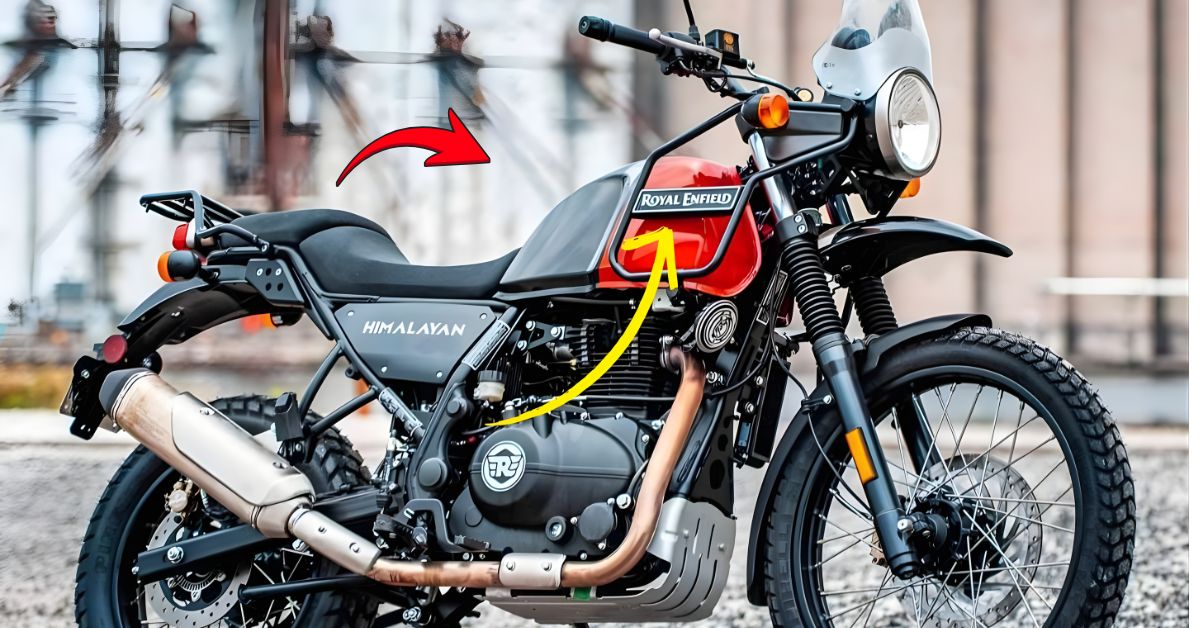
The anticipated launch of the Royal Enfield Himalayan 650 is arguably the most significant event on the horizon for the Indian and global adventure touring community, representing a crucial and long-awaited evolution of Royal Enfield’s highly successful adventure platform. The original Himalayan carved out a unique space by offering accessible, rugged, and low-cost adventure capability. Now, with the $450\text{cc}$ Sherpa engine having redefined the entry-level, the $650\text{cc}$ twin-cylinder version is set to push the brand firmly into the competitive middleweight segment, directly challenging established international players. This motorcycle is not merely an engine swap; it is a meticulously engineered machine designed to leverage the proven platform’s off-road DNA while injecting the smooth, effortless power of the 1$650\text{cc}$ parallel-twin.2 This expert breakdown dives deep into the anticipated specifications, financial outlay, and the powerful rationale for choosing the Royal Enfield Himalayan 650 as the definitive adventure machine for long-distance touring and challenging terrains.
The Twin-Cylinder Heart: Royal Enfield Himalayan 650 Power and Performance Dynamics
The core of the Royal Enfield Himalayan 650‘s appeal lies beneath the tank, utilizing the universally acclaimed 3$648\text{cc}$ parallel-twin, air and oil-cooled engine that currently powers the Interceptor 4$650$ and Continental GT 5$650$, renowned for its robust and tractable performance.6 While the exact state of tune for the adventure application will likely be recalibrated, emphasizing strong, accessible low-end and mid-range torque rather than peak high-RPM horsepower, the engine is expected to deliver approximately 7$47\text{ PS}$ of power at 8$7,250\text{ rpm}$ and a substantial 9$52\text{ Nm}$ of torque at a usable 10$5,250\text{ rpm}$.11 This power figure is crucial, as it transforms the motorcycle from a capable explorer into a comfortable, high-speed tourer, capable of effortlessly maintaining $120\text{ km/h}$ highway speeds while fully loaded with luggage and a pillion, a significant upgrade over the existing single-cylinder versions. The smooth, vibration-free nature of this twin-cylinder unit, coupled with the slick 6-speed gearbox and slip-and-assist clutch, will enhance long-distance comfort immeasurably, mitigating the fatigue often associated with higher-capacity single-cylinder engines on extended rides, thereby fulfilling the true promise of a middleweight ADV motorcycle.12
The performance characteristics of the Royal Enfield Himalayan 650 extend beyond the engine, relying heavily on a dedicated adventure chassis and suspension setup, likely based on a newly developed split-cradle frame designed to handle the increased weight and power with superior composure both on and off the road.13 The inclusion of long-travel suspension, expected to feature Up-Side Down (USD) front forks and a mono-shock at the rear with potential adjustability, ensures class-leading ground clearance and excellent bump absorption over treacherous terrain, allowing the rider to maintain stability and control across diverse landscapes, from broken tarmac to rocky mountain trails.14 The standard ADV wheel configuration of 15$21$-inch front and 16$17$-inch rear, likely spoked for durability and running on robust dual-purpose tyres, is essential for serious off-roading, offering the necessary attack angle and stability.17 This comprehensive engineering approach means the Himalayan $650$ will offer a refined on-road experience for the daily commute and effortless highway travel, while retaining a genuine, rugged capability for authentic adventure touring.
Efficiency and Financial Commitment: Anticipating the Mileage and On-Road Price
In the middleweight segment, where performance often dictates the primary engineering focus, the discussion of efficiency, or Royal Enfield Himalayan 650 mileage, becomes a matter of balancing power with practicality. Based on the performance of its $650\text{cc}$ siblings—the Interceptor and Continental GT, which deliver real-world mileage in the $20\text{ kmpl}$ to $23\text{ kmpl}$ range—the Himalayan $650$, with its adventure tuning and potentially greater weight, is projected to offer a competitive real-world mileage of approximately $20\text{ kmpl}$ to $25\text{ kmpl}$. Considering the expected fuel tank capacity of around $15$ to $18$ litres, this efficiency translates into a highly practical touring range of over $300\text{ km}$ on a single tank, minimizing stops and enhancing the ability to tackle remote sections of a journey with confidence. For a bike that offers this level of power and capability, this mileage figure is entirely acceptable and competitive within its class, striking a judicious balance between spirited riding and operational economy.
Read More: TVS iQube
Determining the final Royal Enfield Himalayan 650 On-Road Price requires careful consideration of its positioning within Royal Enfield’s premium $650\text{cc}$ lineup, given the expected addition of high-specification components like USD forks, twin disc brakes at the front, and a comprehensive TFT display with integrated navigation. Industry experts estimate the ex-showroom price to start in the region of $\text{₹}4.0\text{ Lakh}$ to $\text{₹}4.5\text{ Lakh}$ for the base variant. Translating this to the final on-road price in major metropolitan areas, factoring in RTO registration, road tax, and comprehensive insurance, the final outlay is likely to be between $\text{₹}4.75\text{ Lakh}$ to $\text{₹}5.25\text{ Lakh}$. This aggressive pricing strategy positions the Himalayan $650$ as a disruptive force, significantly undercutting established middleweight ADV competitors like the Kawasaki Versys $650$ and the Suzuki V-Strom $650$ XT, providing a truly exceptional value proposition that brings premium twin-cylinder adventure touring within reach of a much wider audience.
The Compelling Rationale: Why Invest in the Royal Enfield Himalayan 650
Choosing the Royal Enfield Himalayan 650 is a decision rooted in a desire for genuine, versatile motorcycling capability combined with enduring ownership benefits. The primary reason to buy this motorcycle is its unmatched blend of accessible performance and rugged capability at an unbeatable price point. No other motorcycle in the Indian market is projected to offer the smooth, refined power of a twin-cylinder engine, paired with a dedicated adventure chassis featuring long-travel suspension and a $21$-inch front wheel, all while maintaining an on-road price near the five-lakh rupee mark. This accessibility democratizes middleweight adventure touring, making high-speed highway cruising and serious off-road exploration equally possible for the average enthusiast. The inclusion of modern rider aids like switchable Dual-Channel ABS, traction control, and a full TFT instrument cluster with Bluetooth connectivity and navigation further enhances its daily usability and safety, ensuring the bike is not just tough but also intelligent and connected.18
The second critical factor is the inherent Royal Enfield ecosystem advantage. Purchasing the Royal Enfield Himalayan 650 grants access to the brand’s ubiquitous service network, offering easy availability of spares, affordable maintenance costs, and experienced mechanics across even the most remote parts of India, a practical benefit that cannot be overstated for an adventure motorcycle intended for long, multi-state journeys. Furthermore, Royal Enfield’s focus on its customers translates into a vast array of proprietary accessories, touring gear, and the active support of a worldwide motorcycling culture that adds significant social and community value to the ownership experience, reinforcing the long-term desirability of the machine.
Future Benefits: Longevity, Customization, and Resale Value
The future benefits of owning the Royal Enfield Himalayan 650 are deeply tied to its platform’s quality and the brand’s market strength. Firstly, the long-term reliability and serviceability of the $650\text{cc}$ parallel-twin engine are well-established across multiple continents, promising enduring mechanical health and predictable, low maintenance requirements over its lifespan, leading to a favourable total cost of ownership. The engine is also robustly built to handle long touring hours, ensuring reliability is not compromised by the thirst for power.
Secondly, the motorcycle promises exceptional customization and accessory potential. The inherent adventure design, featuring mounting points for luggage, crash guards, and auxiliary lights, makes it the perfect canvas for personalization, allowing riders to evolve the bike’s capability and appearance over time without resorting to costly, complicated aftermarket modifications.19 This modularity ensures the bike can be easily adapted for anything from daily commutes to global expeditions. Finally, Royal Enfield motorcycles, especially those in the $650\text{cc}$ segment, have demonstrated excellent residual value in the used market. The high demand, limited initial production capacity, and the enduring aspirational status of a twin-cylinder Himalayan are expected to result in a slower depreciation curve compared to many of its rivals, meaning the owner recoups a significant portion of their initial investment when they eventually decide to upgrade, making the Royal Enfield Himalayan 650 a financially sound and emotionally rewarding long-term investment.
The arrival of the Royal Enfield Himalayan 650 will initiate a dramatic shakeup in the middleweight adventure touring segment, a space currently defined by a small number of well-established, but often significantly more expensive, international motorcycles. The $650\text{cc}$ Himalayan’s strategic price point and the backing of Royal Enfield’s massive, reliable service infrastructure will make it a formidable competitor to a host of existing and upcoming models, creating a clear line of alternatives for the discerning adventure rider who prioritizes different aspects of performance, handling, or budget.
One of the most direct and crucial rivals to the Himalayan $650$ will be the Kawasaki Versys 650, a machine renowned for its exceptional highway manners, comfortable ergonomics, and the smooth, powerful delivery of its $649\text{cc}$ parallel-twin engine, which offers notably higher power output than the Royal Enfield unit, albeit at a significantly higher price point, typically closer to $\text{₹}8\text{ Lakh}$ ex-showroom. The Versys $650$ is primarily a road-biased adventure tourer with excellent long-distance capability and refinement, making it the choice for riders who spend most of their time on tarmac but still desire the upright posture and robust feel of an ADV, contrasting with the Himalayan $650$’s more pronounced off-road bias demonstrated by its $21$-inch front wheel and long-travel suspension.
Another key international competitor that occupies a similar performance band is the Honda NX500, the successor to the successful CB500X, which is expected to be priced in the $\text{₹}6\text{ Lakh}$ to $\text{₹}6.5\text{ Lakh}$ ex-showroom range. The NX500 utilizes a highly refined $471\text{cc}$ parallel-twin engine, renowned for its linearity and impeccable reliability, and offers a balanced road-touring package with competent, if slightly less aggressive, off-road ability compared to the Royal Enfield. The Honda appeals to riders who value Japanese engineering perfection, reliability, and ease of use, making it a compelling alternative for those prioritizing finesse and brand trust over the raw, go-anywhere ruggedness that the Himalayan $650$ embodies. Similarly positioned in terms of cubic capacity but at a premium price point is the Suzuki V-Strom 650 XT, which relies on a uniquely charismatic 1$645\text{cc}$ V-twin engine and offers a highly capable, albeit dated, design philosophy with excellent performance and a strong reputation for durability, appealing to a dedicated niche of experienced adventure riders willing to pay more for the Suzuki nameplate and V-twin charm.2
Within the domestic and emerging international landscape, the Himalayan $650$ will also have to contend with higher-specification single-cylinder alternatives and potential new entrants. The KTM 390 Adventure, especially its upcoming 2026 iteration, serves as a compelling counterpoint by offering segment-leading power-to-weight ratio from its $398\text{cc}$ single-cylinder engine, along with a rich suite of modern electronics, including cornering ABS and traction control. The KTM caters to the younger, more aggressive rider who prioritizes sharp handling, advanced technology, and raw agility, often at a price point that is significantly lower than the projected $650$ twin, around $\text{₹}4\text{ Lakh}$ ex-showroom. Furthermore, the Benelli TRK 502 also competes in the middleweight displacement class with its $500\text{cc}$ twin-cylinder engine and imposing stance, though it typically focuses more on road comfort and visual bulk than on the hardcore off-road performance that defines the Himalayan $650$ platform. The market is also buzzing with anticipation for new or heavily revised adventure models from brands like Triumph, such as a potential higher-capacity Triumph Scrambler variant, and the expected launch of the Moto Morini X-Cape, both of which promise to compete fiercely with the Himalayan $650$ by offering distinct European styling and alternative engine configurations in the highly active $\text{₹}5\text{ Lakh}$ to $\text{₹}7\text{ Lakh}$ bracket. Ultimately, the Royal Enfield Himalayan 650 distinguishes itself by being the only truly rugged, twin-cylinder ADV with a $21$-inch front wheel positioned to dominate the sub-$\text{₹}5.5\text{ Lakh}$ on-road segment, a price-to-performance ratio that forces all its rivals, whether Japanese, European, or domestic, to significantly justify their own higher price tags.
The entry of the Royal Enfield Himalayan 650 into the middleweight adventure segment fundamentally alters the competitive landscape by introducing the first truly rugged, twin-cylinder ADV at an exceptionally accessible price point, forcing a reevaluation of value among its rivals. The motorcycle’s most direct and formidable international competitor in the twin-cylinder space remains the Kawasaki Versys 650, a machine that commands a significantly higher premium but justifies it through its proven, high-revving $649\text{cc}$ parallel-twin engine, renowned for delivering potent performance and a plush, road-focused ride that makes it an exceptional choice for continent-crossing touring with a strong emphasis on paved highways and fast sweepers, appealing to the rider who prefers refinement and speed over hardcore off-road capability. Similarly positioned at a higher price is the Suzuki V-Strom 650 XT, which offers a compelling, character-rich riding experience powered by its distinct $645\text{cc}$ V-twin engine, a configuration favoured by purists for its unique sound and torque delivery, and while the XT variant incorporates spoked wheels and capable suspension, its core design and feature set lean more towards comfortable, reliable touring than aggressive trail bashing, making it a reliable, high-quality benchmark that the Himalayan $650$ must undercut on both price and ruggedness.
Moving into the mid-capacity adventure touring category, the Honda NX500, the successor to the highly respected CB500X, stands as a critical rival, utilizing a refined $471\text{cc}$ parallel-twin engine known for its bulletproof reliability, linear power band, and superior build quality, and while its peak power is lower than the $650\text{cc}$ Royal Enfield, its Japanese precision and ease of maintenance appeal directly to buyers who prioritize peace of mind and effortless daily usability, often serving as a highly balanced, road-biased intermediate ADV. On the domestic and performance-focused front, the KTM 390 Adventure presents a compelling, albeit single-cylinder, alternative, catering to the younger enthusiast with its aggressive power-to-weight ratio, advanced electronics package including cornering ABS and bi-directional quickshifter in its latest iteration, and a chassis designed for sharp, exhilarating handling, appealing to the rider who values advanced technology and pure agility over the relaxed, long-haul grunt of a larger twin. Furthermore, new emerging players continue to crowd the space, including the visually imposing Benelli TRK 502, which competes directly on displacement and twin-cylinder configuration, offering a commanding road presence and comfortable ergonomics, often at a highly aggressive price point, alongside the arrival of European alternatives such as the Moto Morini X-Cape, which is quickly gaining traction by offering a unique, stylish alternative with Italian flair and competitive componentry. The Royal Enfield Himalayan 650, by effectively combining the highly capable $650\text{cc}$ twin with a dedicated, rugged chassis and its inevitable sub-$\text{₹}5.5\text{ Lakh}$ on-road positioning, creates a disruptive value proposition that uniquely targets the adventurous enthusiast seeking a powerful yet affordable, genuinely off-road capable twin-cylinder platform, segmenting itself distinctly from both the technologically advanced, single-cylinder performance machines and the pricier, more road-oriented middleweight twins.