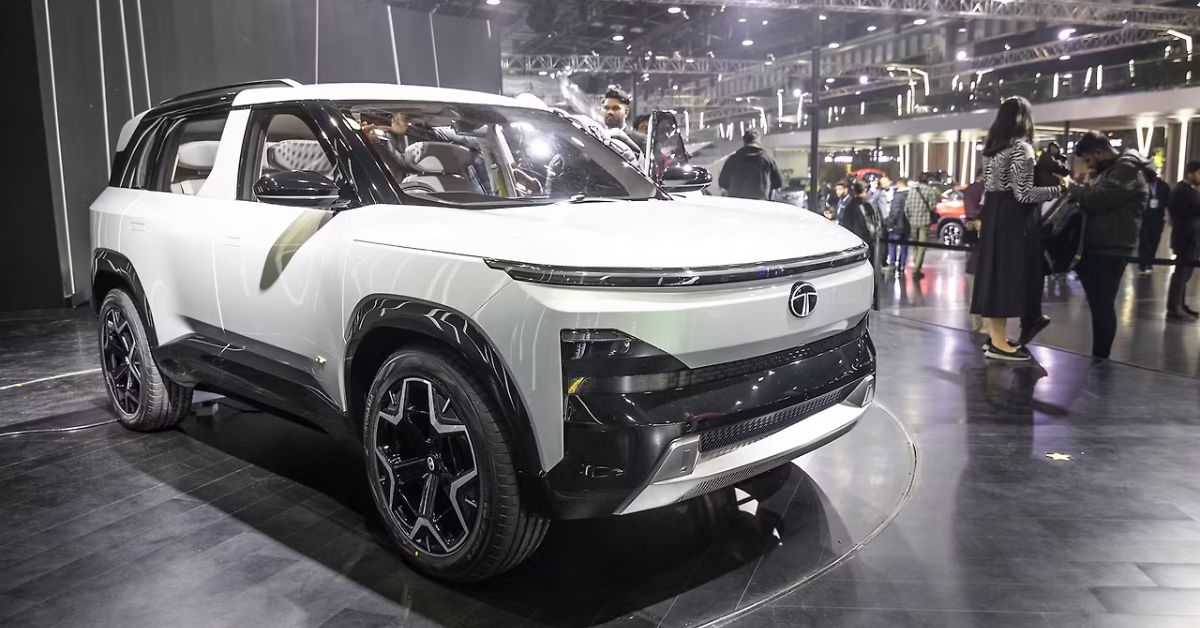
For years, Indian buyers asked for one thing: “Kitna deti hai?” (How much mileage does it give?). While Hyundai gave us features and Tata gave us safety, Toyota (in partnership with Maruti Suzuki) dropped the Urban Cruiser Hyryder to answer the mileage question once and for all.
Starting at an ex-showroom price of ₹11.14 Lakh for the base petrol and going up to ₹20.19 Lakh for the top-spec Strong Hybrid, the Hyryder isn’t exactly “cheap.” But it promises something no diesel car can offer today—peace of mind and phenomenal fuel efficiency.
Is it just a rebadged Maruti Grand Vitara, or does it have that legendary Toyota reliability? I drove the Strong Hybrid variant for 600km across city jams and open highways to see if it’s truly the “Diesel Killer” we were promised.
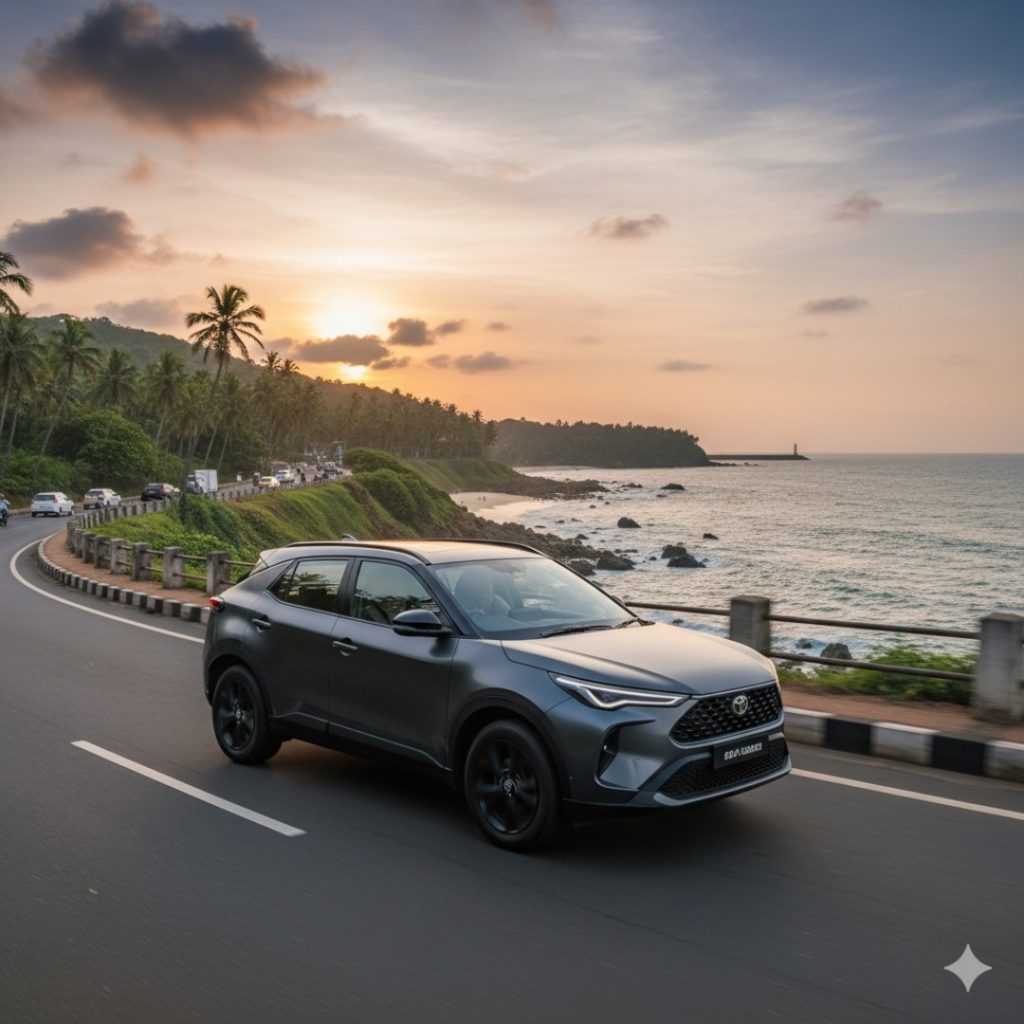
2. Quick Specs Table: Hybrid vs Neo Drive
| Feature | 1.5L Neo Drive (Mild Hybrid) | 1.5L Strong Hybrid (e-Drive) |
| Engine | 1.5L K-Series Petrol | 1.5L TNGA Atkinson Cycle |
| Power | 103 PS @ 6000 rpm | 116 PS (Combined System) |
| Torque | 137 Nm @ 4400 rpm | 141 Nm (Engine) + 122 Nm (Motor) |
| Transmission | 5-MT / 6-AT | e-CVT |
| Claimed Mileage | 21.12 kmpl | 27.97 kmpl |
| Boot Space | 373 Litres | 255 Litres (Battery eats space) |
| Ground Clearance | 210 mm | 210 mm |
| Fuel Tank | 45 Litres | 45 Litres |
Export to Sheets
3. Exterior Design & Road Presence
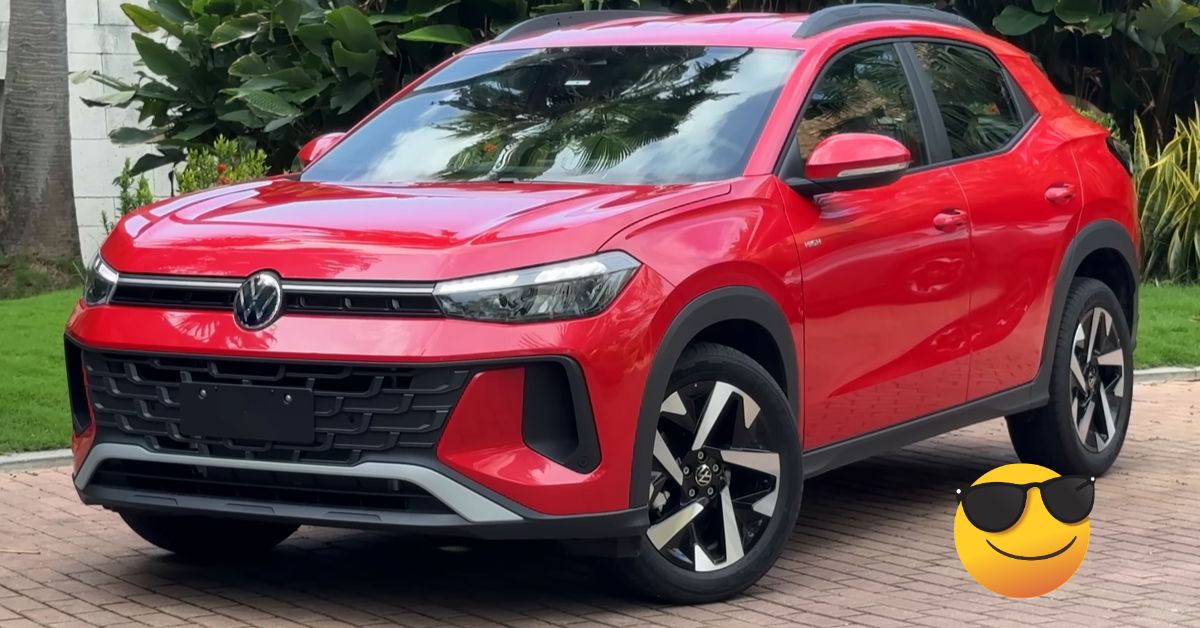
Read more: Volkswagen Tera SUV
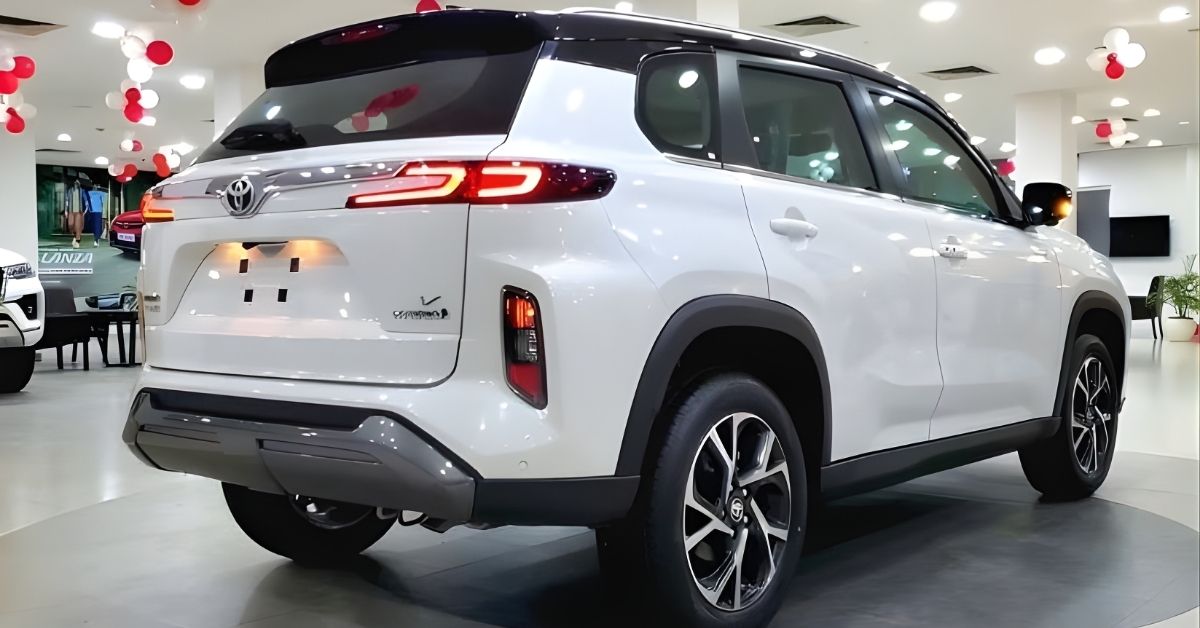
Unlike the Maruti Grand Vitara which looks a bit “softer,” the Toyota Hyryder looks aggressive and distinct.
- The Front: The “Crystal Acrylic” upper grille gives it a unique EV-like face. The twin LED DRLs look sharp, and the chrome strip dividing the face adds a premium touch. It definitely looks more “Toyota” than “Maruti.”
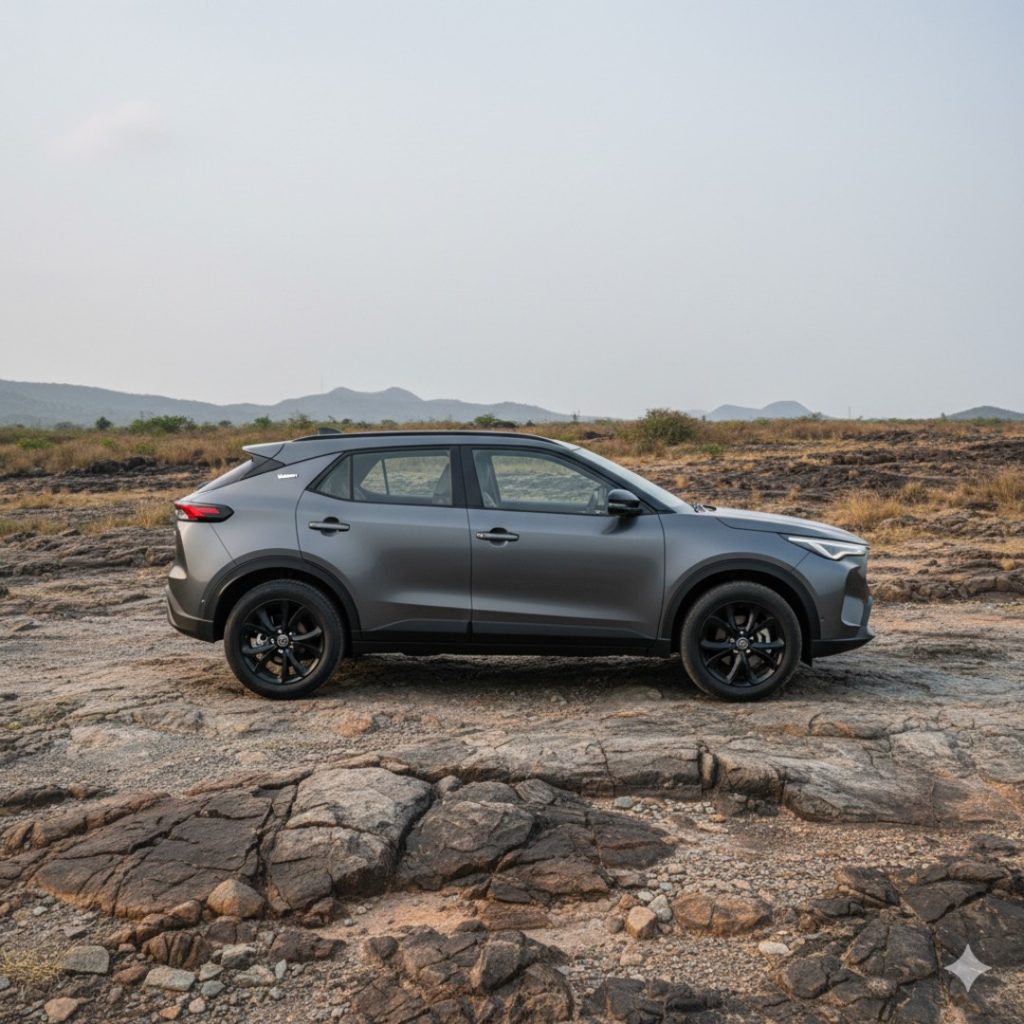
- The Stance: It sits high. With 210mm of ground clearance, it towers over sedans. The squared-off wheel arches and 17-inch alloy wheels give it a rugged SUV vibe.
- The Rear: The C-shaped LED taillights are sleek. It looks wider than it actually is from the back.
Does it turn heads? In the dual-tone Cafe White + Black roof, yes. It has a sophisticated road presence that appeals to mature buyers more than the flashy styling of the Kia Seltos.
4. Interior, Comfort & Features
Step inside, and the story is a mix of highs and lows.
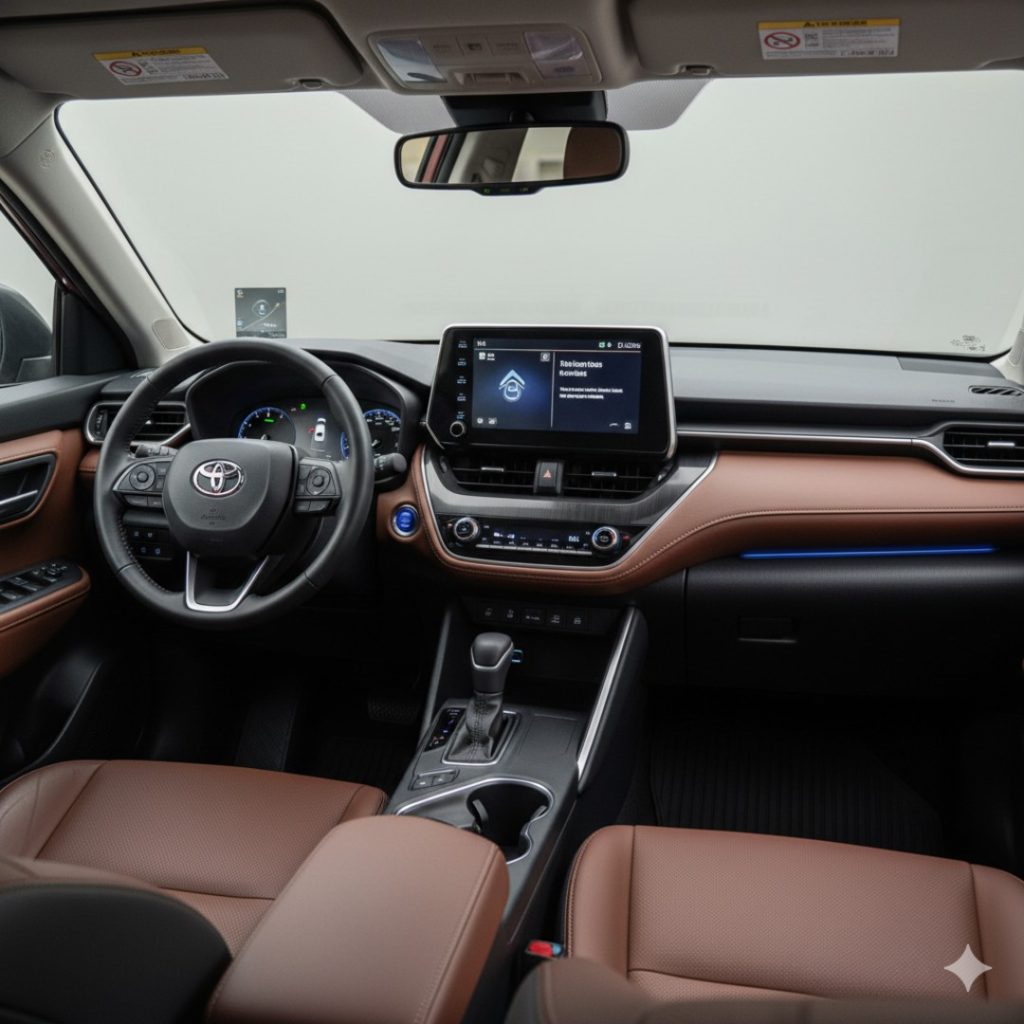
- Dashboard & Quality: The soft-touch leather on the dashboard with brown stitching (in the Hybrid) feels premium. However, the window switches and door panels are straight from the Maruti parts bin, which feels a bit cheap for a ₹20 Lakh car.
- Comfort:
- Front Seats: Broad and comfortable. Ventilated seats are a godsend for Indian summers.
- Rear Seats: This is a weak point. The placement of the Hybrid battery under the seats means the floor is slightly raised. If you are 6ft tall, under-thigh support is lacking, and headroom is tight due to the panoramic sunroof mechanism.
- The Boot Space Issue: In the Strong Hybrid, the battery sits in the boot, reducing space to roughly 255 Litres. You can barely fit two medium suitcases. If you are an airport-run heavy family, this is a dealbreaker.
- Features: Panoramic Sunroof (opens very wide!), Head-Up Display (HUD), 360-degree Camera (grainy quality), and Wireless Charger.
5. Engine Performance & Driving Dynamics
I tested the Strong Hybrid (e-CVT), which is the USP of this car.
- The Silent Start: Press the start button, and… silence. The car starts in EV mode. You can crawl out of your parking lot without burning a drop of petrol. It’s eerie and cool.
- City Drive: The transition from Electric Motor to Petrol Engine is seamless. You only hear the 3-cylinder engine growl when you push it hard. In traffic, it runs 60% of the time on battery, making it incredibly smooth.
- Highway Drive: It’s not a racer. The combined 116 PS is adequate for cruising at 100-110 kmph, but if you want to overtake a fast bus, the engine revs loud (rubber-band effect) before the speed builds up. It lacks the “punch” of the Creta Turbo or VW Taigun.
- Suspension: This is where Toyota/Maruti nailed it. The suspension is fantastic. It glides over bad roads. You don’t feel the sharp thuds. It feels rugged and abuse-friendly.
6. Safety: Robust but not 5-Star (Yet)
The Hyryder is built on Suzuki’s Global C platform (like the Brezza), which is known to be stable.
- Safety Kit: 6 Airbags, ABS with EBD, ESP, and Hill Hold Assist are standard across most variants.
- Build Quality: The doors feel heavier than a typical Maruti, but lighter than a Volkswagen. The hood has decent weight.
- Missing Tech: Unlike the new Creta and Seltos, the Hyryder misses out on ADAS (Advanced Driver Assistance Systems). In 2026, selling a ₹20 Lakh car without ADAS is a significant omission.
7. Real World Mileage: The Truth (Prepare to be Shocked)
This is why you buy the Hyryder. Period.
| Driving Condition | ARAI Claimed | Real World Mileage (Tested) |
| Neo Drive (Mild Hybrid) City | 21.12 kmpl | 13.5 – 14.5 kmpl |
| Neo Drive (Mild Hybrid) Highway | – | 17.0 – 18.5 kmpl |
| Strong Hybrid (City Traffic) | 27.97 kmpl | 24.0 – 26.5 kmpl |
| Strong Hybrid (Highway) | – | 21.0 – 23.0 kmpl |
Export to Sheets
Journalist Note: The Strong Hybrid defies physics. The worse the traffic, the better the mileage, because it runs more on the battery. I achieved 28 kmpl on a slow ring road drive. It is a wallet-saver.
8. The Competition: Hyryder vs Creta vs Grand Vitara
The C-SUV segment is a battlefield.
| Feature | Toyota Hyryder | Hyundai Creta (Facelift) | Kia Seltos | Maruti Grand Vitara |
| Primary USP | Insane Mileage (Hybrid) | Features & Comfort | Sporty Looks & Turbo | Service Network |
| Engine Punch | Low (Relaxed cruiser) | High (Turbo Petrol) | High (Turbo Petrol) | Low (Relaxed cruiser) |
| Rear Space | Average | Best in Class | Good | Average |
| Boot Space | Poor (Hybrid) | Excellent (433 L) | Excellent (433 L) | Poor (Hybrid) |
| Verdict | The Efficiency King | The All-Rounder | The Enthusiast’s Pick | The Twin Sibling |
Export to Sheets
- Comparison Verdict: If your daily running is high (50km+), the Toyota Hyryder pays for itself in fuel savings. If you want performance, ADAS, and a premium cabin feel, the Hyundai Creta is superior.
9. Final Verdict: Should You Buy the Toyota Hyryder?
The Toyota Urban Cruiser Hyryder is a car for the mind, not the heart. It won’t set your pulse racing with its speed, but it will make you smile every time you pass a petrol pump without stopping.
Buy the Toyota Hyryder if:
- You hate visiting petrol pumps: A full tank (45L) can realistically give you a range of 1000 km+. That is diesel-beating range.
- You drive mostly in the city: The Hybrid system is smoothest and most efficient in stop-go traffic.
- You want reliability: It’s a Toyota (backed by Suzuki tech). It will likely run for 15 years with just oil changes.
Skip the Toyota Hyryder if:
- You need Boot Space: The tiny boot in the Hybrid version is a joke for family vacations.
- You are an Enthusiast: The performance is dull. Overtaking requires planning.
- You want ADAS & Tech: It lacks the modern safety tech (ADAS) that rivals offer at the same price.
10. FAQs (People Also Ask)
Q: What is the on-road price of Toyota Hyryder Hybrid top model?
The top-spec Hyryder V Hybrid costs approximately ₹23.00 Lakh to ₹23.50 Lakh (On-Road, Bangalore/Mumbai) due to high road taxes on non-EVs in some states. UP has waived taxes on hybrids, making it much cheaper there.
Q: Is the Toyota Hyryder safer than the Creta?
While neither has a fresh GNCAP rating, the Hyryder’s platform (Global C) historically scores 4 stars, while the old Creta scored 3. The Hyryder feels more ruggedly built.
Q: Can the Hyryder run only on electric mode?
Yes, it has a dedicated EV Mode button. However, it only works for 2-3 kms at low speeds provided the battery is sufficiently charged.
Q: Is the Hyryder CNG worth buying?
If your budget is tight and you can’t afford the Strong Hybrid, the CNG is a great option. It delivers roughly 26 km/kg, offering low running costs with Toyota branding.
Q: Does the sunroof open fully?
Yes, both glass panes of the panoramic sunroof slide back, offering a massive opening area—one of the biggest in the segment.