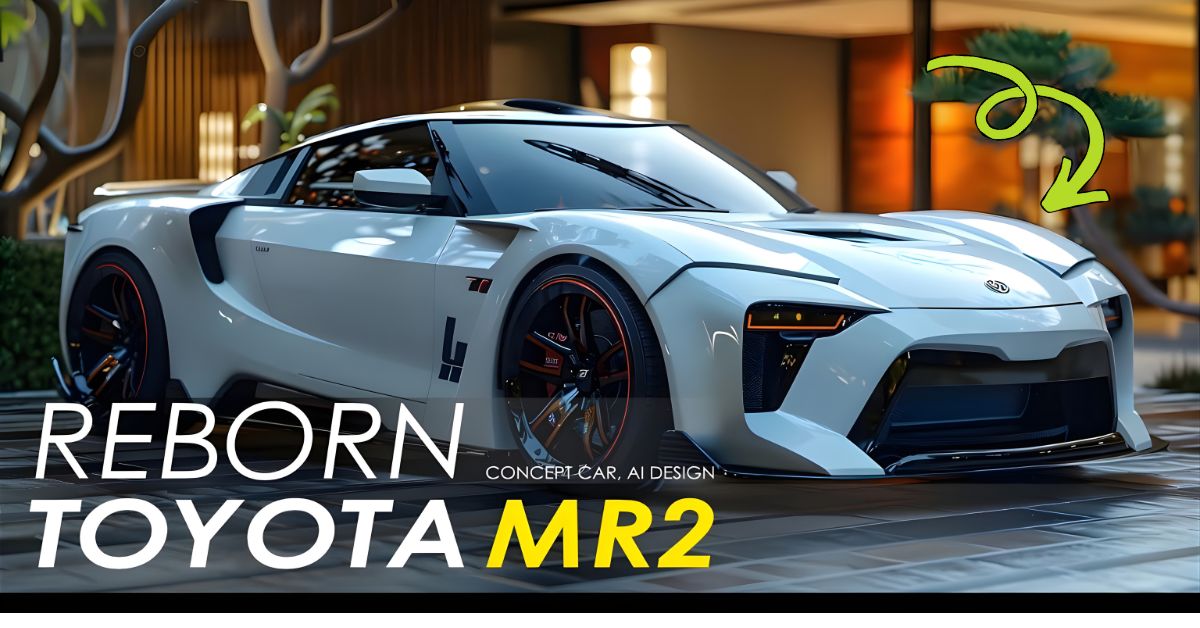
The Toyota MR2 remains one of the most iconic lightweight sports cars ever produced, admired for its agile handling, compact mid-engine design and accessible performance that made enthusiasts fall in love with driving again. Even decades after its final production run, the MR2 continues to hold a special place in the hearts of purists who appreciate simplicity, mechanical precision and a driving experience unfiltered by electronic interference. In today’s world of increasingly complex and technology-heavy vehicles, the MR2 stands as a reminder of what makes a true driver’s car: balance, feedback, and the joy of connection between machine and driver. Across all three generations—AW11, SW20 and ZZW30—the MR2 offered unique characteristics, evolving with each iteration while staying true to the spirit of lightweight performance.
In 2025, the Toyota MR2 is more relevant than ever thanks to a strong global community, rising collector interest, accessible modification potential and an increasingly attractive used-car market. For enthusiasts seeking a fun weekend car, a track-ready project or a lightweight daily driver, the MR2 offers an engaging blend of reliability, drivability and affordability that few alternatives can match. This article explores the MR2’s real-world performance, handling behavior, generational differences and used market pricing, offering a detailed overview of why this car continues to endure long after production ended.
Evolution of the Toyota MR2 and Its Enthusiast Legacy
Toyota introduced the MR2 in the mid-1980s during a time when manufacturers were experimenting with lightweight, economical sports cars that offered driver engagement without requiring massive horsepower. The first generation, known as the AW11, set the tone with its sharp, angular styling and mid-engine layout borrowed from performance icons. The later SW20 became more powerful and refined, while the final ZZW30 returned to the lightweight purity that made the MR2 special. Over the years, the MR2 forged a strong community dedicated to maintaining, modifying and preserving these cars due to their solid engineering and robust aftermarket support.
The MR2’s legacy is built not on straight-line power but on balance, steering feel and an analog interaction that modern sports cars rarely replicate. Its mid-engine configuration offered point-and-shoot precision through corners, making it a favorite among autocross and track enthusiasts. The compact size, predictable chassis and naturally aspirated or turbocharged engine options ensured that drivers always felt connected to the road. Even today, the MR2’s driving dynamics are compared to much more expensive sports cars because of the raw engagement it delivers.
Lightweight Handling and Cornering Dynamics
The defining trait of the Toyota MR2 is its exceptional lightweight handling. The mid-engine layout distributes weight near the center of the chassis, dramatically improving turn-in response and reducing rotational inertia. This allows the car to change direction quickly, offering sharp and intuitive steering feedback. Drivers often describe the MR2 as feeling like an extension of their own reflexes, particularly in tight corners or on winding roads.
The AW11 generation offered razor-sharp steering and kart-like agility, making it highly responsive and rewarding for drivers who enjoy precise inputs. The SW20, slightly heavier and more powerful, brought stability at higher speeds while retaining the MR2’s engaging cornering personality. The ZZW30 (MR2 Spyder) returned to a purist design, weighing significantly less and offering excellent balance with a more playful rear-wheel-drive feel. Across all generations, the MR2 demands respect, as the mid-engine layout can challenge inexperienced drivers, particularly during sudden direction changes. However, once mastered, the MR2 provides an unmatched level of feedback and control.
Read More: Harley-Davidson X440T
Real-World Performance and Driving Experience
While the MR2 was never designed to be a horsepower monster, its real-world performance remains impressive thanks to its low weight and balanced dynamics. The earliest AW11 models offered lively acceleration with a high-revving engine that felt energetic on backroads. The SW20 introduced turbocharged power, giving the MR2 legitimate sports-car performance that challenged competitors of its time. Turbo models could easily outperform larger, more powerful cars due to their superior traction and throttle responsiveness.
In real-world driving, the MR2 excels not because of raw speed, but because of how it delivers performance. Acceleration feels immediate, shifts are satisfying, and every input—braking, turning or throttle—creates a predictable response. The MR2 Spyder, while not as powerful as the SW20 turbo, offered a beautifully tuned chassis that emphasized driver involvement. Whether used on city streets, mountain roads or track environments, the MR2 shines through its mechanical purity and minimal driver aids.
Modern drivers often praise the MR2’s balance of efficiency and excitement. It remains fuel-efficient, easy to maintain and surprisingly comfortable for daily use, while still offering spirited performance when pushed. Few cars today offer such a harmony of practicality and engagement.
Engine Options and Tuning Potential
One of the MR2’s greatest strengths is its engine versatility and tuning friendliness. The AW11 offered reliable naturally aspirated engines beloved for their durability. The SW20 introduced turbocharged powertrains capable of substantial tuning gains. The ZZW30, equipped with a high-revving lightweight engine, became popular among enthusiasts seeking a responsive platform for modifications such as ECU tuning, intake upgrades and suspension improvements.
The aftermarket for the MR2 is extensive, with options for engine swaps, turbo upgrades, coilovers, brake enhancements and custom aero components. Enthusiasts often use the SW20 turbo as a foundation for track builds, while the MR2 Spyder is favored by tuners who prioritize lightweight agility. The MR2’s robust chassis and simple mechanical layout make it ideal for both beginners learning to modify cars and advanced tuners seeking a capable platform.
Interior Comfort, Practicality and Daily Usability
Although the MR2 is primarily a sports car, it offers surprising comfort and practicality for its size. The cockpit is driver-centered, with intuitive controls and good visibility. Seats offer strong support during spirited drives, and the compact proportions make the car easy to maneuver in tight urban environments. Storage space varies by generation, with the AW11 and SW20 offering frunk and trunk compartments, while the ZZW30 focuses more on minimalism.
Daily driving the MR2 feels enjoyable thanks to its compact dimensions, responsive steering and predictable ride quality. The car’s simplicity means fewer distractions and more focus on the road. While not a family vehicle by any means, it remains a great option for solo drivers or couples who want a fun, reliable machine for both commuting and weekend adventures.
Reliability, Maintenance and Ownership Costs
Toyota engineered the MR2 with reliability in mind, making it one of the most dependable used sports cars available today. Routine maintenance such as oil changes, timing belts and cooling system care ensures longevity. The engines, especially naturally aspirated units, are known for their durability. Turbocharged models require more attention, but when properly maintained, they remain exceptionally reliable.
Parts availability remains strong thanks to Toyota’s global support network and the thriving enthusiast community. Ownership costs are generally lower than those of European sports cars, making the MR2 attractive for budget-conscious enthusiasts. Insurance premiums vary depending on location and vehicle condition, but overall, the MR2 remains affordable compared to other classic sports cars from its era.
Used Price and Market Trends in 2025
As of 2025, the used price of the Toyota MR2 has experienced steady appreciation due to rising collector demand. Prices vary significantly based on generation, condition, originality and rarity. Well-maintained AW11 models typically range from affordable entry-level prices to higher premiums for rare supercharged variants. The SW20 turbo has seen the largest increase due to its performance appeal, commanding much higher prices in good condition. The ZZW30 remains a popular budget-friendly option but is also slowly rising in value due to its lightweight appeal.
The global trend toward analog sports cars is pushing MR2 prices higher, and enthusiasts expect values to continue climbing. Buyers seeking investment potential alongside driving enjoyment will find the MR2 a strong long-term choice.
Why the Toyota MR2 Remains an Enthusiast Favorite
The Toyota MR2 stands out because it delivers a pure, engaging and mechanically honest driving experience that modern cars rarely replicate. Its combination of lightweight handling, balanced chassis, compact design, and real-world performance makes it deeply rewarding for drivers who appreciate responsiveness and control. The MR2 is also one of the most accessible mid-engine sports cars ever produced, offering a unique experience without requiring supercar-level expenses.
Its reliability, tuning potential, timeless design and growing collector interest further amplify its appeal. For drivers seeking a fun, character-filled sports car with heritage and personality, the MR2 remains one of the best choices in the used market.
Additional Explanation
You can further strengthen your article by discussing generational differences in more detail, highlighting key performance upgrades, explaining the nuances of mid-engine driving for beginners, comparing the MR2 to alternatives like the Mazda Miata, Honda S2000 or Toyota GT86, and exploring future collector market predictions. Adding ownership stories, common modification paths and maintenance tips can also enrich the content and boost SEO for automotive enthusiast searches.
As the years pass, analog sports cars are becoming rare. The MR2 has already begun appreciating in value, especially the SW20 Turbo and clean AW11 models.
In the future, prices will likely continue to rise because:
Classic mid-engine sports cars are disappearing.
Enthusiasts prefer pure, mechanical driving experiences.
Toyota’s reliability makes the MR2 a safe collectible.
The MR2 provides a driving feeling that modern cars cannot replicate due to heavy electronic assistance.
It gives:
Sharp steering feedback
Mid-engine handling
Lightweight agility
This ensures the MR2 will always have a place in car culture, no matter how advanced future cars become.
Yes — The Toyota MR2 is an excellent future choice if:
You want a collectible car.
You enjoy driving, not just commuting.
You plan to take care of it.
You value mechanical purity over modern technology.
But No — if you want:
A daily commuter.
Advanced features and safety tech.
Family practicality.