The arrival of the Yamaha XSR 155 in India (launched in late 2025) was one of the most anticipated moments for performance enthusiasts and design purists alike. Long available in international markets, its Indian debut finally gives local riders access to Yamaha’s “Sport Heritage” line in the lucrative 150cc segment.
The XSR 155 is a masterful execution of the Neo-Retro design philosophy. It takes the timeless, rugged aesthetics of classic Yamaha roadsters—often drawing comparisons to the legendary RX series—and grafts them onto the most technologically advanced and performance-oriented chassis in its class: the potent Deltabox platform shared with the R15 and MT-15.
This comprehensive, 1500-word article serves as a deep dive into the XSR 155, analyzing every aspect from its class-leading engine performance and handling dynamics to its retro-modern design and real-world ownership value.
Design and Aesthetics: Neo-Retro Done Right
The XSR 155’s design is its single biggest selling point, offering a stark contrast to the aggressive, sharp lines of its platform siblings. It succeeds by integrating genuinely modern components seamlessly into a classic silhouette.
The Retro Elements
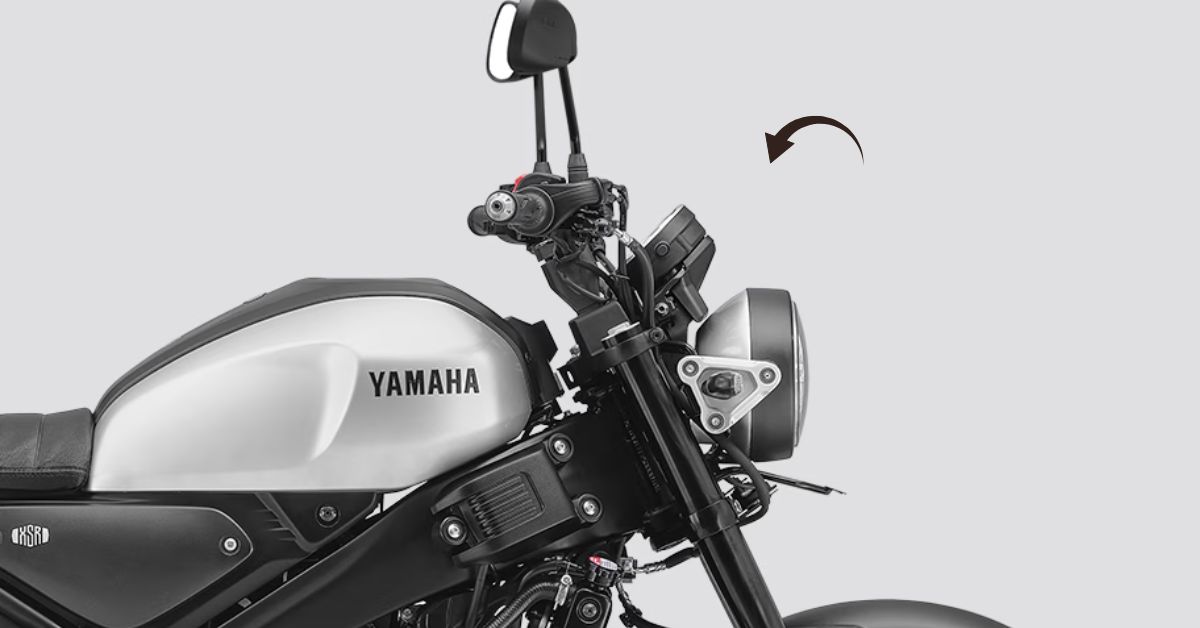
- Circular Theme: The motorcycle is dominated by circular elements, starting with the iconic Round LED Headlamp. This unit uses modern LED illumination while maintaining a nostalgic appearance, complete with a minimalist frame mount.
- Teardrop Fuel Tank: The 10 Litre sculpted fuel tank, with its classic teardrop shape and the old-school ‘Yamaha’ lettering (instead of the tuning fork logo), is a direct nod to vintage racers.
- Flat Bench Seat: Unlike the stepped, aggressive seats of the R15 and MT-15, the XSR features a long, flat, single-piece seat with a tuck-and-roll pattern. This not only enhances the retro look but also significantly improves rider and pillion comfort.
- Minimalist Panels: The side panels are triangular and compact, reminiscent of the panels seen on Yamaha’s older roadsters, keeping the focus entirely on the exposed chassis and engine.
The Modern Blends
- Golden USD Forks: The 37 mm Upside Down (USD) front forks are an undeniable symbol of premium performance, contrasting beautifully with the simple headlamp assembly.
- Mono-Shock and Deltabox: The aggressive, high-rigidity Deltabox frame is fully visible, housing the performance engine and connecting to a modern, link-type mono-shock at the rear.
- Full Digital LCD Console: The circular instrument cluster is a fully digital LCD unit. While it maintains the classic round shape, it provides all modern metrics: digital speed, tachometer, fuel gauge, gear position indicator, and VVA activation light.
Design Verdict: The XSR 155 provides the style and soul of a classic motorcycle without sacrificing the benefits of modern engineering. It is a visually distinct motorcycle that manages to look sophisticated and sporty simultaneously
Engine Performance: The VVA Advantage
The Yamaha XSR 155 shares its mechanical heart with the benchmark of the 150cc segment: the Yamaha R15 V4. This gives the XSR a profound advantage over rivals by offering race-derived technology in a relaxed roadster package.
Engine Specifications
| Specification | Details |
| Engine Type | 155 cc, Liquid-Cooled, 4 Valve, SOHC |
| Key Technology | Variable Valve Actuation (VVA), Fuel Injection (FI) |
| Max Power | 18.4 PS @ 10,000 rpm |
| Max Torque | 14.1 Nm @ 7,500 rpm |
| Transmission | 6-Speed Constant Mesh |
| Clutch | Assist & Slipper Clutch (A&S) |
| Kerb Weight | 137 kg |
Export to Sheets
The Power of VVA
The Variable Valve Actuation (VVA) system is the secret sauce of this engine. It uses two intake valve cams (one for low-to-mid RPMs and one for high RPMs).
- Below 7,400 RPM: The low-RPM cam operates, ensuring excellent low-end torque and better fuel efficiency, making city commuting smooth and effortless.
- Above 7,400 RPM: The system automatically switches to the high-RPM cam, dramatically improving top-end power delivery, transforming the XSR into a high-revving performance machine.
This combination allows the XSR 155 to be both a calm, torquey city commuter and an exhilarating weekend sportbike, all in one package—a feat few single-cylinder engines can match.
A&S Clutch and Gearbox
The Assist and Slipper (A&S) Clutch enhances the riding experience significantly:
- Assist Function: Reduces clutch lever pull effort by about 20%, easing the stress in city traffic.
- Slipper Function: Prevents rear wheel hop during aggressive downshifts, providing stability and safety, especially important for high-performance riding.
Chassis, Handling, and Safety Features
Performance isn’t just about power; it’s about how the power is managed. The XSR 155’s components give it handling capabilities that far exceed the expectations of the 150cc segment.
The Deltabox Advantage
The Deltabox Frame is the backbone of the XSR 155. It is a perimeter frame design known for its exceptional lateral rigidity and balance.
- Handling: This rigid structure, combined with the low 137 kg kerb weight, makes the XSR 155 incredibly nimble and precise. It corners with confidence, holds its line well at high speeds, and feels significantly more planted than its lightweight suggests. It feels agile in city chaos yet competent on the twisties.
- Suspension: The USD front forks and the lightweight aluminium swingarm with link-type mono-shock provide outstanding damping. The ride quality is tuned for sport-touring—firm enough for enthusiastic riding but forgiving enough to absorb most urban bumps without unsettling the rider.
Class-Leading Safety Technology
The Indian-spec XSR 155 sets a new standard for safety in the segment, inheriting premium features from its elder siblings.
- Dual-Channel ABS: Unlike many rivals that offer only single-channel ABS, the XSR 155 comes with Dual-Channel ABS as standard, providing independent anti-lock braking on both the front and rear disc brakes.
- Traction Control System (TCS): This feature, once reserved for litre-class superbikes, is a segment-first. TCS detects wheel spin on slippery surfaces (like wet roads or gravel) and instantly cuts engine power momentarily, preventing loss of control. This significantly boosts rider safety in adverse conditions.
Read more :Suzuki Access 125
Price, Mileage, and Practicality (The Trade-Offs)
The XSR 155 is available in a single, fully-loaded variant, making the purchasing decision straightforward.
Latest Price and Value
- Ex-Showroom Price (Approximate): ₹1.50 Lakh.
- Value Proposition: The XSR 155 is priced strategically, undercutting the R15 V4 while being slightly more premium than the MT-15. Considering it offers a 155cc liquid-cooled VVA engine, a Deltabox frame, USD forks, Dual-Channel ABS, and Traction Control, the value for money is extremely high for the technology offered. It directly competes with the more expensive 350cc neo-retro bikes while delivering performance far superior to most 160cc naked bikes.
Mileage and Fuel Range
The XSR 155 benefits from Yamaha’s refined FI and VVA technology, offering commendable efficiency given its power output.
- Claimed Mileage (ARAI/Owner Expected): 45−48 kmpl.
- Real-World City Mileage: Owners generally report 42−46 kmpl.
- Real-World Highway Mileage: With careful riding, figures can touch 48−50 kmpl.
The Practicality Trade-Off: The biggest practical drawback is the 10 Litre fuel tank. While the mileage is good, the small capacity limits the total range to around 400 km per tank, requiring more frequent stops on long touring days compared to competitors with 13 L to 15 L tanks.
Comfort and Ownership Experience
The XSR 155 is not a track bike, nor is it a cruiser; it finds a comfortable middle ground.
Ergonomics and Riding Comfort
The riding triangle is the most relaxed of the three 155cc siblings (R15, MT-15, XSR 155).
- Handlebar: Wide and slightly raised, giving an upright, confident roadster stance.
- Footpegs: Mid-set, neither aggressively rear-set nor forward-set.
- Seat Height: At 810 mm, the seat height is slightly tall for shorter riders, but the narrow profile of the bike helps flat-footing.
- Long-Distance: The comfortable ergonomics and the smooth VVA engine, which allows for effortless 90−100 kmph cruising, make the XSR surprisingly capable of long highway stretches.
Visibility and Features
The full-LED lighting system ensures excellent visibility, both for the rider and for other road users. The Bluetooth connectivity offers call/SMS alerts, a handy feature, though riders hoping for full-fledged turn-by-turn navigation (available on some rivals) might be slightly disappointed.
Full Technical Specifications Summary
| Component | Dimensions & Details |
| Engine | 155 cc, 18.4 PS, 14.1 Nm, VVA |
| Brakes | Disc (F&R) with Dual-Channel ABS |
| Safety | Traction Control System (TCS), A&S Clutch |
| Frame | Deltabox |
| Suspension (F/R) | USD 37 mm Telescopic Forks / Mono-shock (Link Suspension) |
| Tyres (F/R) | 100/80−17 / 140/70−17 (Tubeless) |
| Kerb Weight | 137 kg |
| Fuel Tank | 10 Litres |
| Ground Clearance | 170 mm (Good for Indian roads) |
| Seat Height | 810 mm |
Export to Sheets
Conclusion: The Modern Classic Sweet Spot
The Yamaha XSR 155 is much more than a re-skinned MT-15. It is a carefully curated product that delivers the emotional appeal of a classic roadster without the reliability, power, or technological shortcomings of old-school mechanics.
It successfully carves out a niche between the heavy, long-stroke Royal Enfield Hunter 350 and the sharp, hyper-naked TVS Ronin. It appeals directly to the rider who wants premium performance, lightweight agility, and sophisticated, head-turning style.
For the rider looking for the absolute best blend of style, performance, and cutting-edge safety technology in the sub-200cc segment, the Yamaha XSR 155 is an unparalleled choice and a worthy successor to Yamaha’s street legacy.
Given the XSR 155’s lightweight, powerful character, would you like to see a direct comparison of its handling and performance against its closest neo-retro rival, the TVS Ronin?